

Recent experiments using Netflix's Runway's AI video generation technology show not only a high-tech upgrade, but also a profound shift ongoing in the Hollywood creative ecosystem.
Under the leadership of Ted Sarandos, the streaming giant has openly adopted AI to speed up production of visual effects and make it cheaper, turning once-hard labor into something that can be achieved in just a few days.
This may seem like an easy improvement in efficiency, but the impact will ripple far beyond production schedules and budget sheets. The integration of AI tools reconstructs the nature of storytelling, the economic lifelines of creative workers, and the dynamics of the power that dominates the industry.
Where does the algorithm end and does the artist begin?
Historically, Hollywood has always adapted to technological revolutions (sound, colour, CGI), but the arrival of AI is different. It's not just a new tool. This is an autonomous creativity that allows you to generate images, animate sequences, and propose editing without direct human command.
This blurs the line between artists and algorithms and encourages a re-examination of what constitutes creativity and craftsmanship. For visual effects, artists and engineers (backbone of the blockbuster spectacles) are threatening to thrust into entry-level and middle-class positions. The painstaking frame-by-frame work that once provided a path to the industry was at risk of being replaced by automation. This allows for less creative control to concentrate on the hands and reduce the diversity of voices that shape visual culture.
Possibility of decentralization
However, paradoxically, AI also has the potential to democratize. Tools like Runway's can enhance small creators, independents, and digital native artists who lack large budgets to generate effects-rich content. Suddenly, one person's surgery can evoke a world once reserved for teams of hundreds.
This will disperse Hollywood's long-standing gatekeeping and nurture fresh storytelling. But the doubt remains. Will the industry embrace this decentralization or will it use AI to entrench existing hierarchies, commercialize creativity, and optimize content for algorithmic consumption?
The next war over content creation
The interests go far beyond workers and artistry. For Netflix and other streaming behemoths, AI is a strategic lever in an increasingly intense entertainment situation. Meta's Mark Zuckerberg is witnessing runway AI for acquisitions, highlighting the looming technological warfare that owns the future of content creation.
The ability to quickly generate and repeat special effects provides unprecedented control for the studio. The luxury of endless testing of content for reduced costs, faster transformations, and maximum audience engagement. However, this could lead to a leaning storytelling towards formulaic data-driven output where algorithms that optimize clicks and viewing times are suppressed for creative risks.
What will happen to the Hollywood workforce as these changes unfold? AI will inevitably replace certain manual tasks, but it will also create new roles, such as AI supervisors, creative technists, and machine learning editors. The challenge is that these roles often require access to professional skills and training. In other words, shifts are neither seamless nor fair.
Mid-level artists with no resources to reskill can remain drifting. This disruption in labor is layered above an industry already marked by unstable freelance jobs and systematic inequality, and could deepen the division between those who control AI tools and those displaced by them.
Creator Rights and Other Troublesome Ethical Questions
There is an ethical quagmire beyond economics. As I recently covered, AI-generated images complicate traditional concepts of authorship and ownership. When a machine remixes and generates new visuals based on millions of previous works – what are the creator's rights, often without consent or compensation to the original artist? Legal frameworks struggle to maintain the pace and envelop many people.
Viewers may also question the credibility of content created or heavily manipulated by AI. The unique human spark of performance and artistry puts dilution at stake when the machine is responsible for the creative burden.
Transparency and collaboration
Despite these tensions, the best path embraces human-machine collaboration. AI should be a co-creator, not a cold exchange. Industry needs to involve creative workers in the way AI tools are developed and deployed, ensuring that technology is amplified rather than erasing human skills and expression. Unions and guilds need to negotiate protections that reflect this new reality, ensure fair pay for AI-supporting work, and retrain programs that democratize access to new creative roles.
Transparency is important. Viewers are increasingly demanding not only to maintain ethical clarity, but also to know how content is created. Imagine a future in which Productions discloses the extent of AI involvement and allows viewers to understand the hybrid nature of modern storytelling. This openness can inspire a new appreciation for the artistry in overseeing AI, just as visual effects artists are celebrated with their skills.
Netflix's Runway AI embrace is not just a new chapter in production technology, but a moment of Hollywood's creative and economic future basin, just as much a deep and dangerous as its dazzling possibilities.
The industry is facing a crossroads. Equipped with AI, it becomes a blunt instrument that empowers a wider range of storytellers, enhances human artistry, deepens inequality, commercializes creativity, and concentrates control in the hands of several data-rich studios.
This is more than a technical upgrade. This is a fundamental calculation of who can shape culture in an AI-driven world. The question is not just whether machines can be created, but what happens to those who hold the reins when algorithms generate the world we run away from, and to the millions of people who first built Hollywood. If we can't keep humanity in the center, we trade artistry for efficiency and risk losing the soul of the storytelling itself.
In the race to automate imagination, Hollywood needs to choose whether AI is its muse or master. You need to choose whether the future of film is written by many hands or by some cold algorithms.
Aron Solomon is Amplify's Chief Strategy Officer. He received a law degree, taught entrepreneurship at McGill University and the University of Pennsylvania, and was named FastCase 50 in recognition of the world's top 50 legal innovators. His writings have been featured in Newsweek, The Hill, Fast Company, Fortune, Forbes, CBS News, CNBC, USA Today, and many other publications. He was nominated for the Pulitzer Prize for his independent op-ed to publish the NFL's “racial establishment” policy.
Related readings:
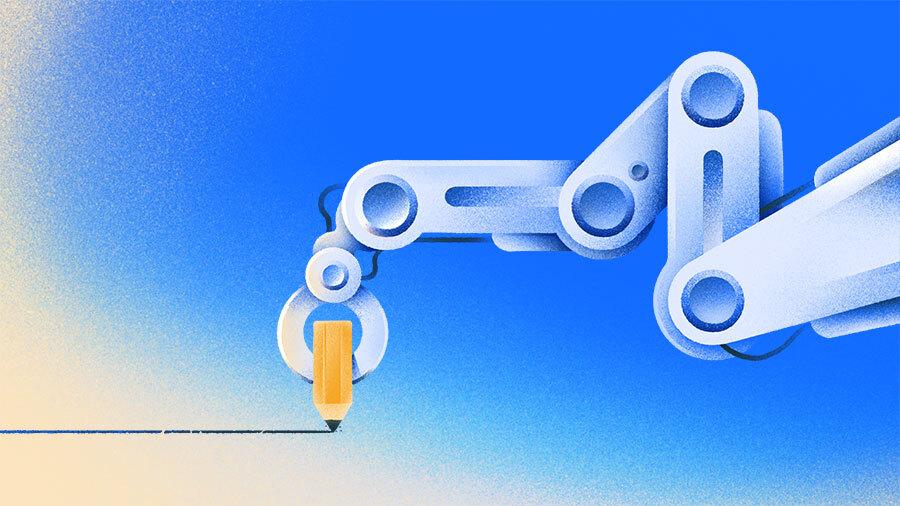
Illustration: Dom Guzman
Keep your CrunchBase up to date with recent funding rounds, acquisitions and more.


