

After Lobster became very popular, the entire Internet’s attention focused on how to use it: local deployment or cloud, one-click installation or command line input, and whether to connect to WeChat or Feishu. Instead, no one seriously asked the old question: Is the “brain” that powers Lobster smart enough?
This is not surprising. All new models recently released by OpenAI and Google are Mini or Flash versions. The underlying message from the official side is mostly written on their faces. They are specially prepared for agents to spend large amounts of tokens.
Instead, the boundaries of the capabilities of the model itself have become the least discussed topic.
A model that is truly suitable for lobsters must not only have cost-effective, high-capacity tokens, but also be smart enough and have strong hands-on and learning capabilities.
Recently, MiniMax officially launched the new MiniMax M2.7 model, which focuses on “.The beginning of AI’s self-evolution“And existence”The strongest Cowork Agent modelYou can handle code work and common Office tasks, and you can also actively learn how to build stable agent systems.

in particular, Can handle a wider range of tasks than most models. When it comes to writing code, M2.7 truly understands what happens while your system is running and enables system reasoning at the SRE (site reliability engineering) level, including reading logs, correlating timelines, inferring root causes, and providing prioritized solutions. The new model scored 56.2% in SWE-Pro, almost catching up to the Opus 4.6.
Enough for office scenes. M2.7 brings significant improvements in complex edits and multiple rounds of revisions in Excel, Word, and PPT, especially in scenarios such as financial analysis that require specialized knowledge and formatted delivery. Although it cannot completely replace a professional, it can definitely act as a great assistant in your workflow.
Multi-agent collaboration doesn’t “break”. This is M2.7’s specialized ability. Maintains a high level of ability to follow directions, even in multi-role scenarios with clear boundaries, and in complex environments with over 50 skills.
Now, the highlight of this update is: begins to participate in its own optimization. MiniMax says the M2.7 is the first model to deeply participate in its own iterations, not just “assisting iterate” but “deeply participating in its own iterations.” Self-evolvable, M2.7 can independently iterate agent harnesses to handle most workflows.
Also, thanks to its improved practical capabilities, MiniMax M2.7 quickly rose up the lobster list after its release, reaching 4th place on the highest score leaderboard.
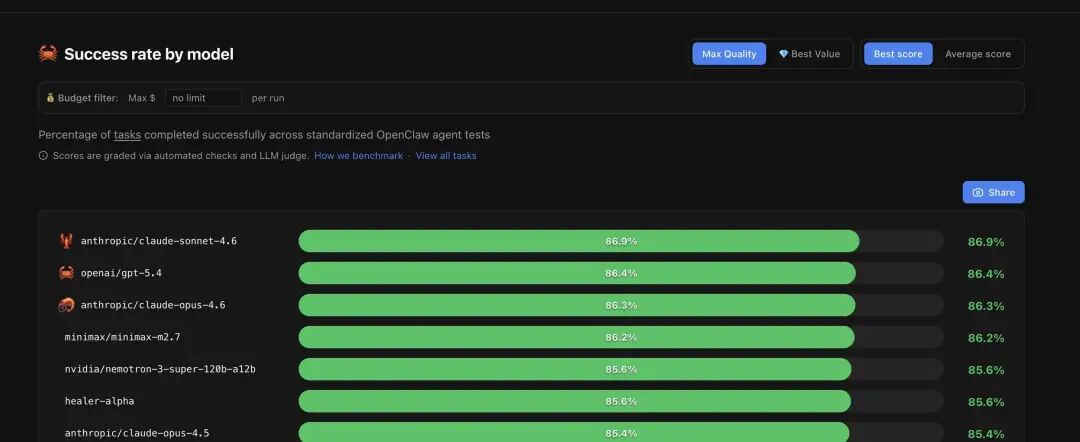
PinchBench Leaderboard is a model evaluation benchmark tailored for OpenClaw. Test the performance of large-scale models in real-world business scenarios in OpenClaw. The diagram shows the success rate metrics for the task. MiniMax M2.7 ranks fourth behind Claude Opus 4.6. https://pinchbench.com/
We also integrated the MiniMax M2.7 model and MaxClaw from MiniMax into Claude Code and locally deployed Lobster. We then handed over to the development process all the bugs, tedious financial data, and tons of tasks that take time to process that we encounter in the actual development process.
After two days of testing, we found that in addition to understanding human intent and producing satisfactory results, we not only need to redesign the software for AI, but also the AI model itself. You need to understand how AI works and its workflow, and learn how to optimize itself..
Use AI workflows as human assistants
After the proliferation of agent frameworks such as OpenClaw, a true “AI-era workflow” will be one in which the AI acts as a core operational hub, calling on numerous tools, issuing orders to other AI teammates, and even optimizing its own code.
Before testing how MiniMax M2.7 self-evolves, we first want to see what its AI workflow is like. Is this really a useful agent model, or is it just for nice looking benchmark results and difficult to use in practice?
We downloaded a set of historical stock data from the famous machine learning competition website Kaggle. Then, according to the competition requirements, we asked MiniMax M2.7 to help us with our corresponding needs, namely to perform appropriate data processing and feature engineering based on the given data and generate visual analysis reports.
The entire dataset is quite large, with over 3000 rows of tabular data and a total file size of 446.35 MB. After downloading five tabular data files locally, I completed this task using Claude Code integrated with MiniMax M2.7.
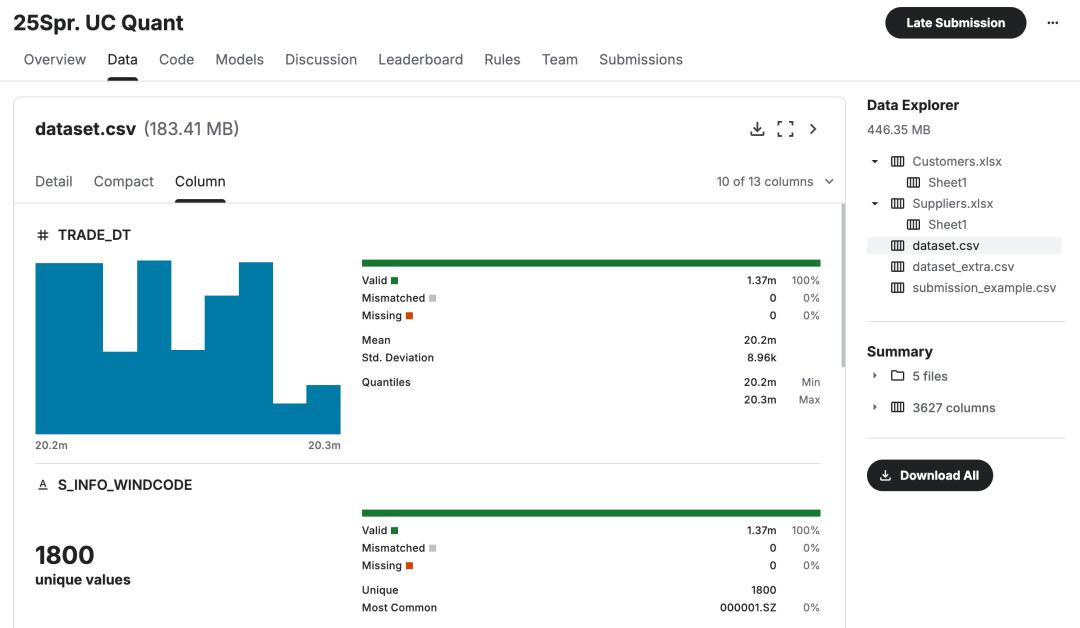
To do a good job in this analysis, the model needs to act as a data analyst who cleans and organizes the data, a macro analyst who gains insights about financial markets, a statistical analyst who performs preliminary mathematical modeling, an algorithmic engineer who builds the corresponding model, and finally a web engineer who provides a visual solution.
Faced with such a complex task, MiniMax M2.7 took full advantage of the various skills I had installed. I started by reading the information in the tabular data structure using xlsx provided by Anthropic official, then started writing the Python code, automatically installed the Pandas library (often used to process tabular data), and worked my way through it step by step.
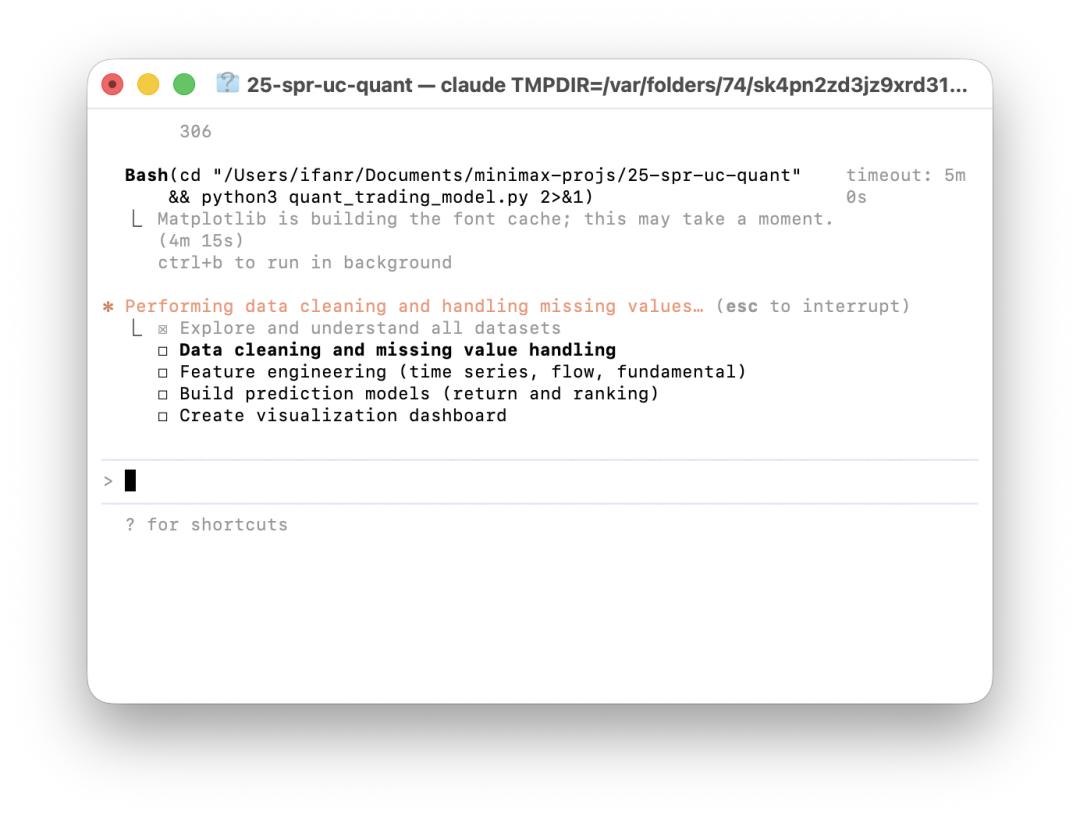
Finally, MiniMax M2.7 also provided a complete visual solution. Multiple images were generated showing the distribution of revenue, the importance of different features, ranking of categories, and a comprehensive dashboard.
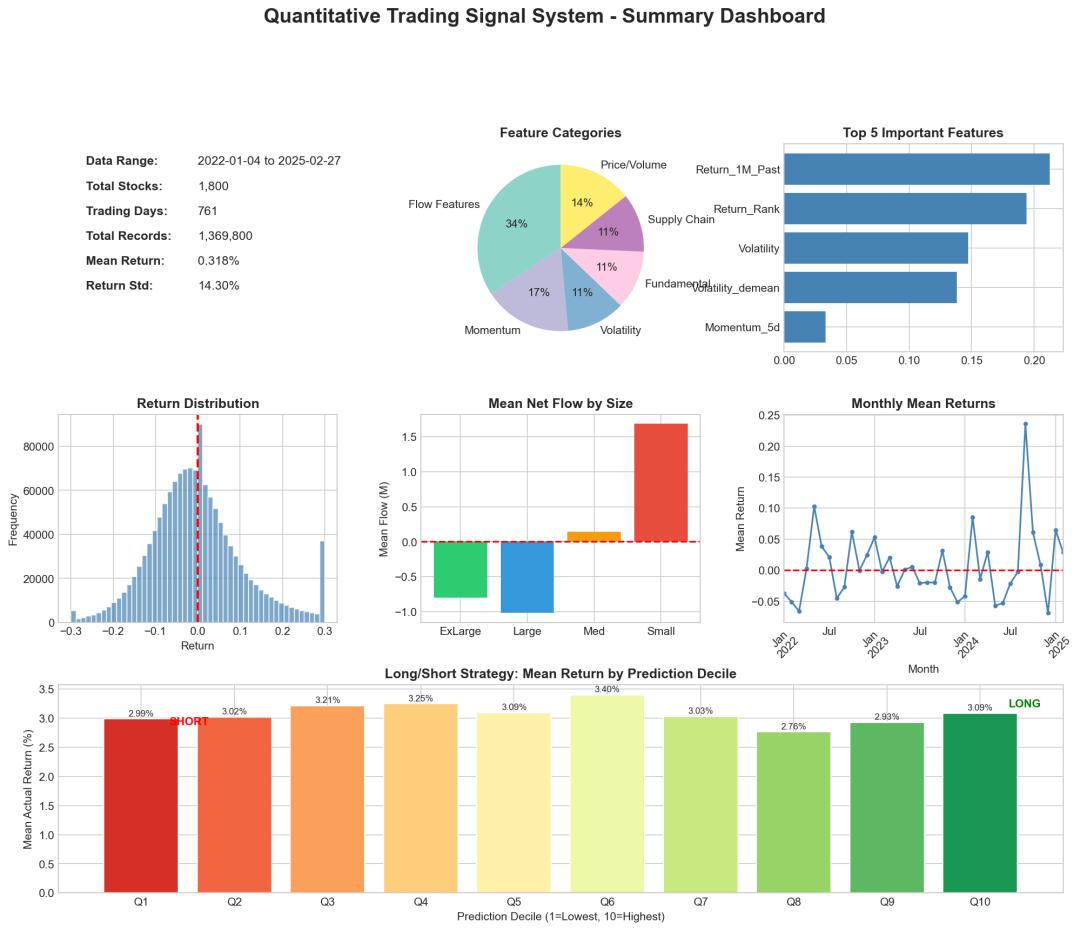
Visual web pages can use the Streamlit library to directly convert data scripts into interactive web systems that display all information dynamically.
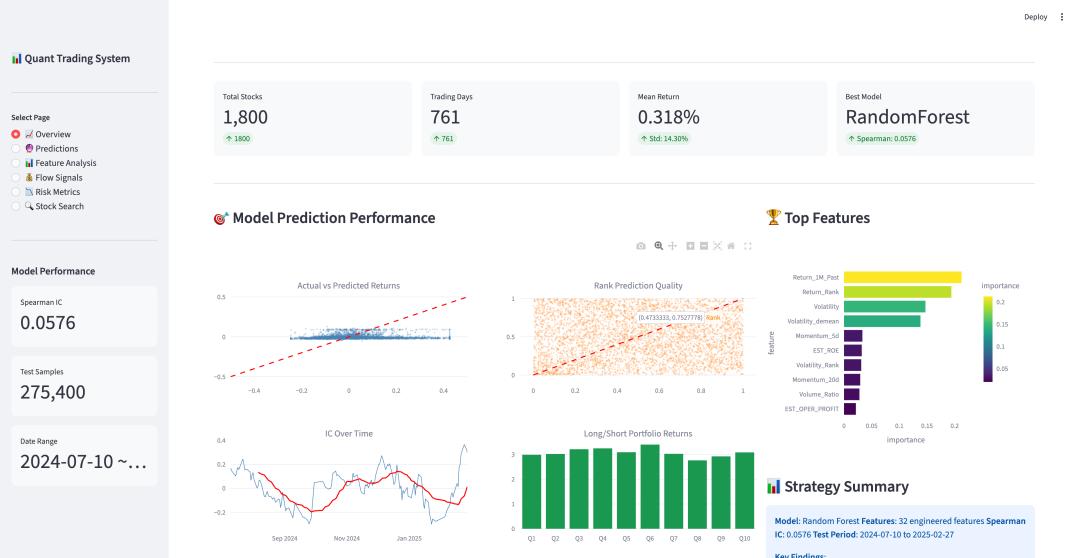
If MiniMax can successfully complete such large-scale project tasks, there is no need to mention mundane office or programming tasks.
First, I used Lobster on my phone to summarize the files on my computer. Next, I asked MiniMax M2.7 to create a research plan in a Word document based on this file, organize related papers in an Excel document, and finally create a PPT document for the group meeting report. All of this can be controlled directly on your mobile phone.
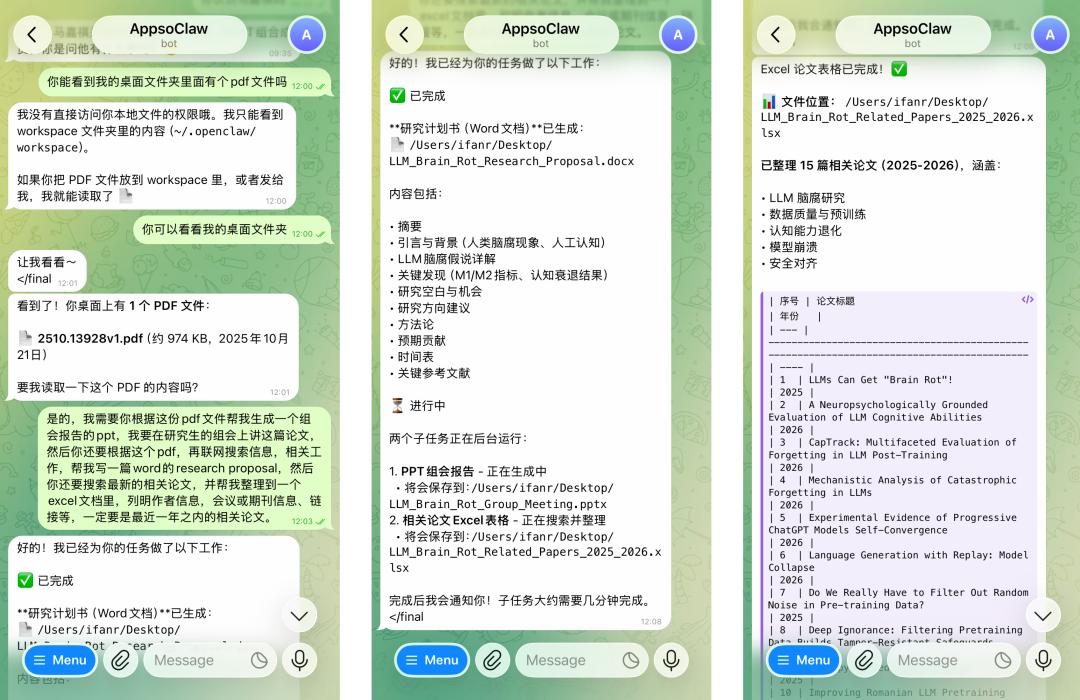
Lobster integrated with MiniMax M2.7 can respond to requests quickly
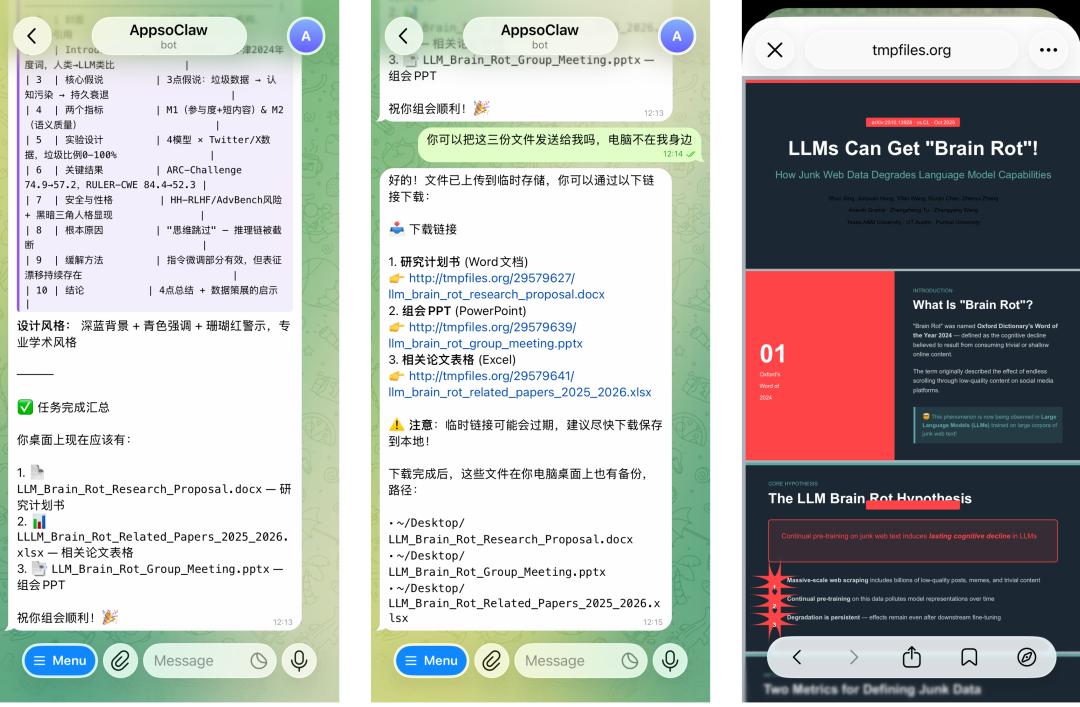
Working with three major Office applications just got easier
Additionally, due to its superiority in the office field, MiniMax M2.7 achieved an ELO score of 1495 in the GDPval-AA evaluation, which measures expertise and task performance, making it the highest score in the country.
A while ago, the visual panel of the AI work assistant was very popular. You can now place Lobster in a real anime-style office and install it in your own OpenClaw in just one sentence. We also managed to give Appso’s little lobsters their own home. But what if you want to change the layout of your anime room? Let Minimax do it for you.
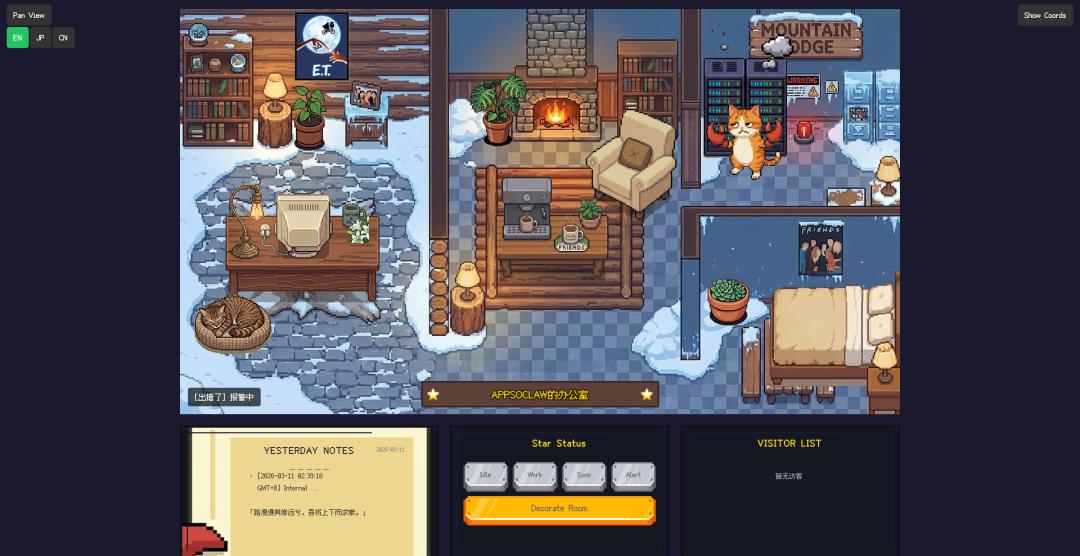
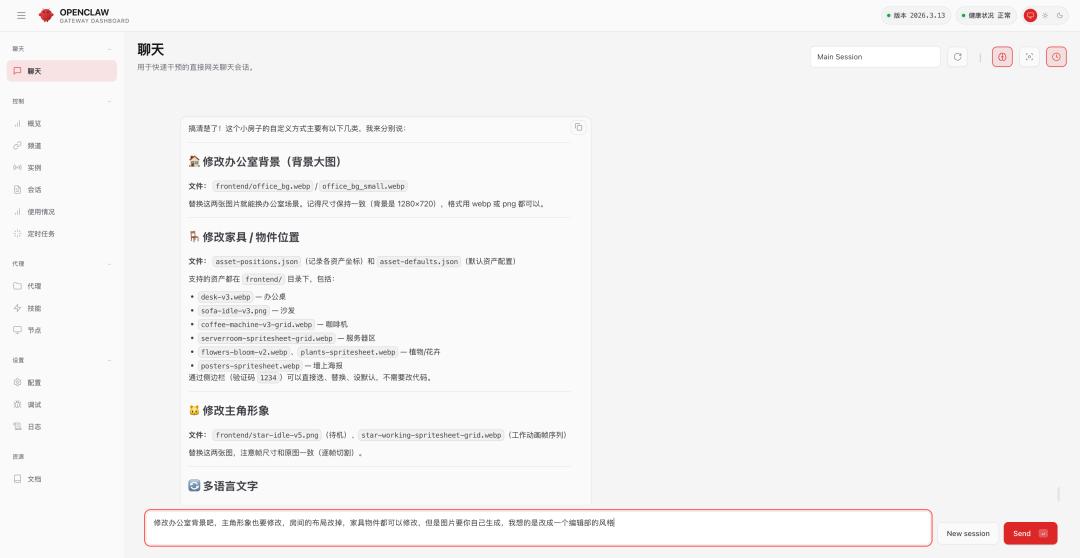
Directly in OpenClaw’s visual local interface, I sent the message, “How can I change the style of this tiny house?” MiniMax M2.7 automatically reads your project code and tells you what changes can be made and how.
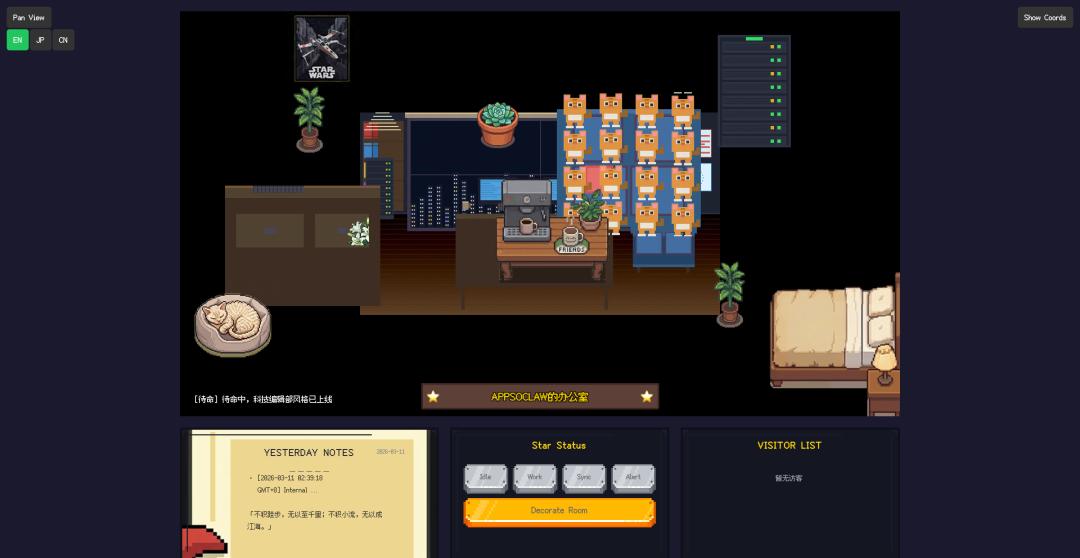
My request was for a technology editorial style, so I was able to modify it to include a Star Wars poster and add a dozen or so people sitting at computers typing.
However, since I did not configure the Nano Banana Pro’s API key in OpenClaw, OpenClaw’s MiniMax M2.7 decided to use code to generate a simple image.
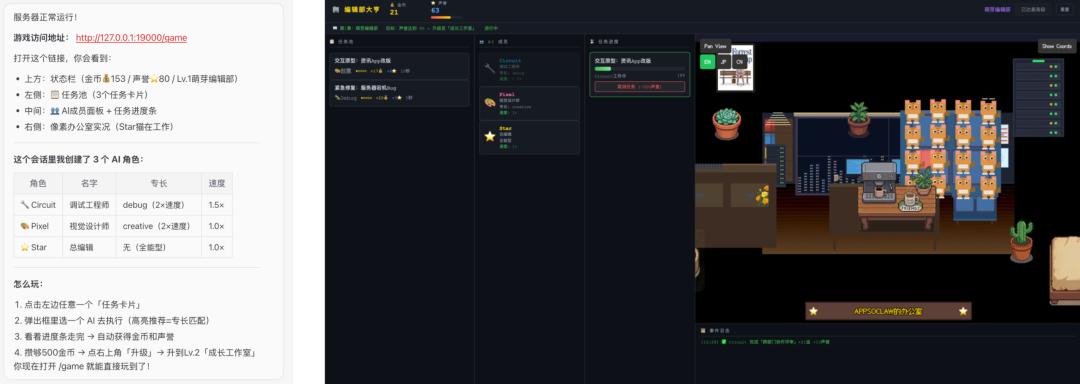
And by chatting with it, you can also design an editing tycoon game based on this style, where those who complete more tasks will have a bigger office and can level up.
MiniMax’s official MaxClaw directly supports multimodal generation, allowing you to generate video, audio, photos, and more in one step without configuring any additional APIs.
I used the official gif-sticker-maker Skill to generate some Elon Musk emojis. MaxClaw deployed in the cloud can secure the operating environment, but it does not allow you to install various library files as freely as you can when working with a local computer.
Finally, when converting a video to GIF, MaxClaw reminded me that I didn’t have sufficient permissions to install ffmpeg (an open source multimedia processing library) on the cloud server.
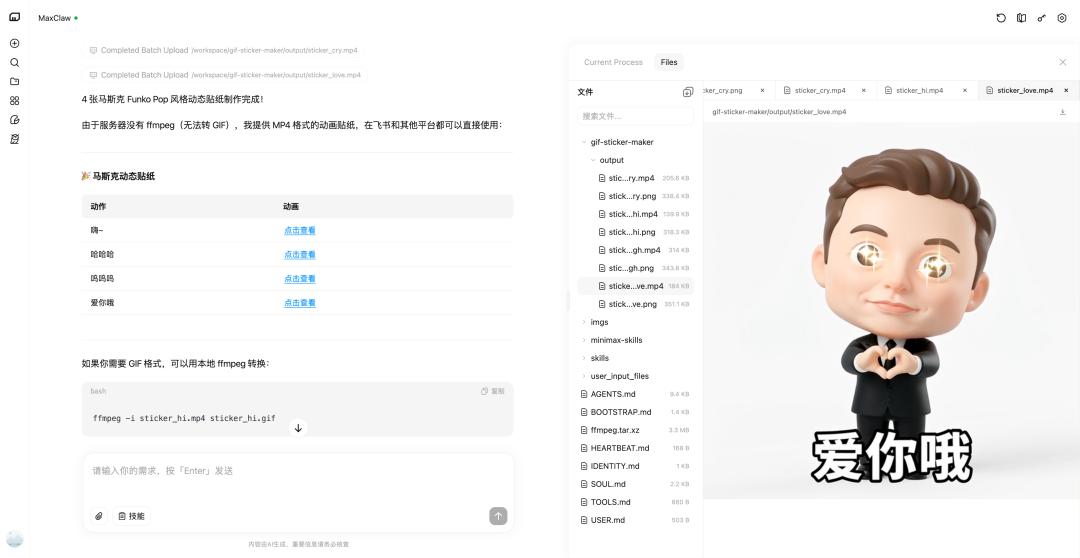
MiniMax M2.7 can be used directly with MaxClaw. Automatically call video, audio, and image generation models such as Conch to generate multimedia files without setting a dedicated API KEY.
You can view details for all skills installed in MaxClaw by clicking on the skill at the bottom of the MaxClaw dialog box. Then, when you click “Ask MaxClaw,” a message will automatically be created that says “Frontend – Tell me what developers can do and how to use it,” and you will be guided to learn how to use this skill.

In addition to GIF generation skills, MiniMax also offers a library of skills including front-end development, full-stack back-end development, Android and iOS application development, and GLSL shading technology to create stunning visual effects. You can directly send a message saying “Can you help me install it?”


