
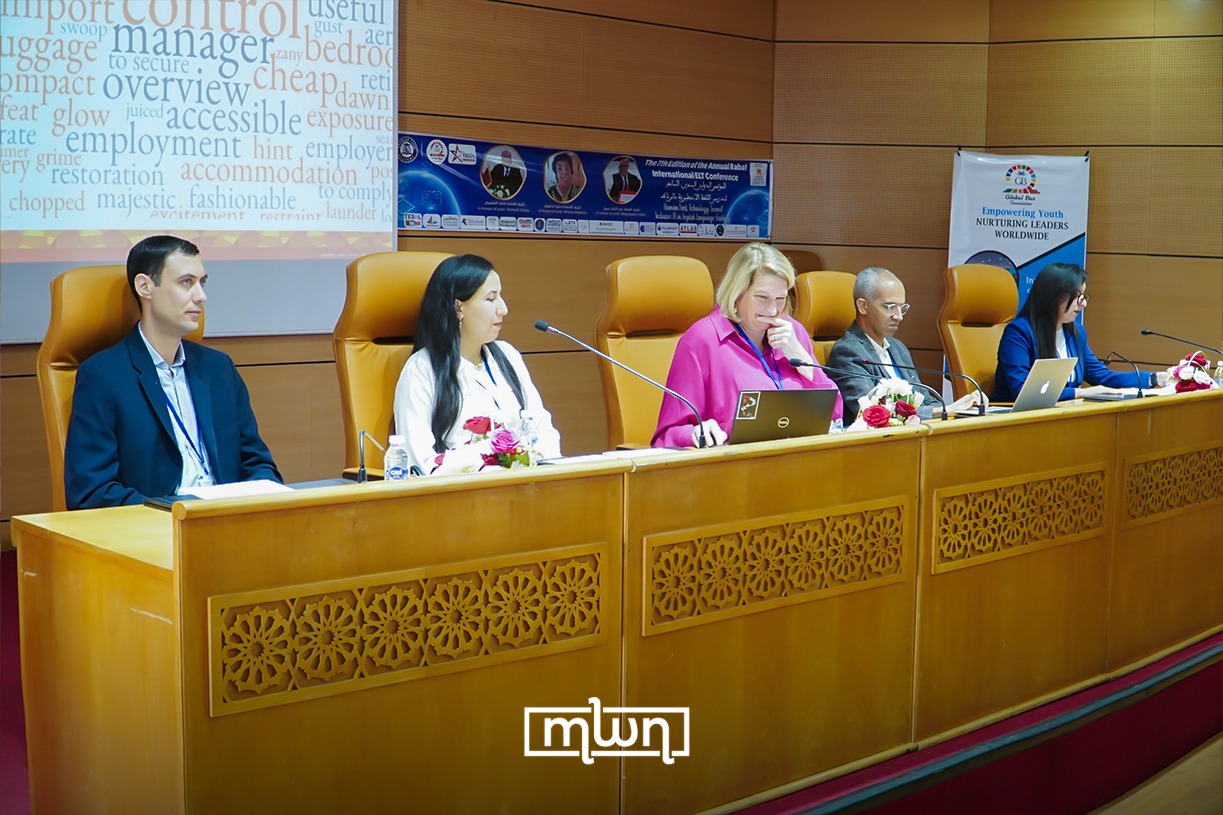
Fes – Rabat today hosted the annual International ELT Conference with the theme “People First, Technology Second: Inclusive AI English Teaching”, bringing together educators and experts to consider how artificial intelligence can be used responsibly in English language teaching.
The event brought together teachers, researchers and academic experts from all over Morocco, including Marrakech, Meknes, Agadir, Oujda and Kenitra, as well as international speakers from the UK, US, Finland, Egypt and Lebanon.
This provided a timely platform to discuss current challenges in English language teaching, with a clear focus on the growing influence of AI in education.
From its inception, the conference reflected a strong sense of collaboration between primary and secondary school teachers, university faculty, and researchers.
Discussions centered on the shared goal of understanding how to integrate AI into education in an effective and responsible manner.
A key message that emerged was that we needed to move beyond the debate over whether students should use AI.
Instead, participants emphasized the importance of rethinking teaching methods and assessment models to reflect the new realities of the classroom.
As one speaker pointed out, the real question is no longer whether we should use AI, but how.
In an interview with Morocco World News (MWN), Conference President Lucine Casellas emphasized the importance of keeping human values at the center of technological transformation.
He said AI is “not a replacement for teachers, but a tool that can support and enhance their work.”
His remarks demonstrate a balanced approach that combines innovation with the essential role of educators.
The conference also focused on practical solutions.
The workshops and presentations provided teachers with concrete tools and strategies to adapt to technological change, integrate AI into their lessons, and improve student outcomes.
David Rhys, Business Development Manager and Academic Consultant at Hamilton House Publishers UK, highlighted the importance of critical thinking.
“Students must be trained to carefully select and use AI tools,” he told MWN, stressing the need for responsible and informed use of technology.
Overall, the conference in Rabat resulted in a clear and constructive discussion about the future of education.
This reinforced the idea that, if used judiciously, AI can support teaching and learning without replacing the role of humans at the heart of education.


