A new toolset for quantum machine learning has arrived from National Cheng Kung University. Hsiang-Wei Huang and colleagues demonstrate the construction of both analog and hybrid quantum kernels, revealing their ability to compete with existing kernel methods in benchmark tests and in estimating non-Markovianity from limited data. Incorporating operational noise can significantly improve kernel performance by potentially increasing expressive power and model complexity. These findings represent a step forward in the practical application of quantum kernel methods, providing a more efficient means of assessing non-Markovianity with fewer experimental requirements.
Computational noise improves quantum kernel performance and enables non-Markovian nature of sparse data
Computational noise built into quantum kernels improves performance, overturning traditional expectations that noise degrades quantum systems. This counterintuitive discovery allows estimation of non-Markovianity, a measure of a system’s complete past dependence, from sparser data than previously possible. While previous methods required dense datasets to perform accurate evaluations, these newly developed analog and hybrid quantum kernels achieve competitive results with significantly reduced data requirements. Non-Markovianity occurs in systems where the future evolution is determined not only by the current state but also by the history of the system. Quantifying this “memory effect” is important in various fields such as open quantum systems, quantum control, and quantum thermodynamics. Traditional approaches to estimating non-markovinity often rely on calculations of Breuer-Petruccone-Komoda (BPK) measurements or similar quantities, which require extensive time-dependent data.
These kernels are built using analog quantum computing principles and provide a path to practical quantum machine learning applications and more efficient analysis of complex systems. Analog quantum computing exploits the natural dynamics of quantum systems to perform computations, as opposed to gate-based approaches that rely on discrete quantum gates. Analog quantum kernels are constructed by mapping input data to the parameters of a quantum system and measuring the overlap between the resulting quantum states. Hybrid quantum kernels combine elements of both analog and digital computation and have the potential to offer the benefits of both approaches. When applied to benchmark datasets, the kernel achieved competitive performance against both classical radial basis function kernels and digital quantum kernels. The study shows significant improvements over existing methods in estimating non-markovinity using sparse data, particularly demonstrating accurate estimation with data reduced by a factor of five compared to traditional methods.
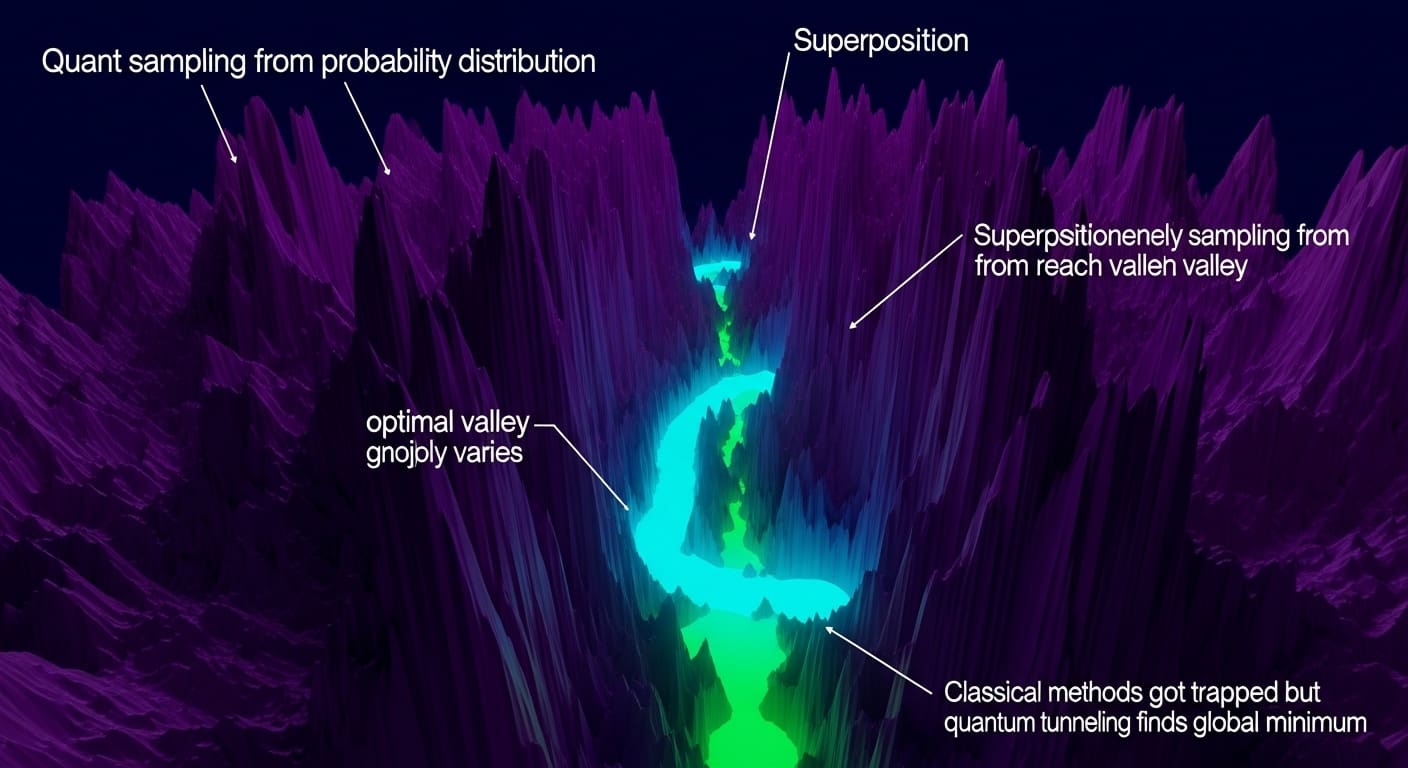
The performance characteristics of the kernel were investigated, revealing comparable accuracy to established methods and highlighting the potential for reducing computational costs. Incorporating manipulation noise increased the expressiveness and complexity and improved the performance of the model. Operational noise in this context refers to controlled imperfections introduced into a quantum system, such as small fluctuations in control pulses or environmental interactions. Although seemingly harmful, these imperfections can effectively extend the Hilbert space explored by the quantum kernel, leading to a richer representation of the input data and improved model power. Although the current results rely on simulations and have not yet demonstrated sustained benefits in real quantum devices with large qubit counts, this approach represents a departure from traditional gate-based quantum circuits. Combining elements of both analog and digital computation provides a potential means of overcoming the limitations imposed by noisy mesoscale quantum techniques, where maintaining coherence and suppressing errors are major challenges.
Quantum kernel techniques reduce data demands for tracking system memory
Estimates of how quantum systems evolve and whether they “remember” their past, a property called non-Markovianity, have long required vast amounts of experimental data. This work offers a potential shortcut, demonstrating that well-constructed quantum kernels can extract meaningful information from much sparser datasets. The ability to accurately determine non-Markovianity with fewer data points is particularly important for experimental quantum physics, where data acquisition is time-consuming, expensive, and limited by the lifetime of the quantum state. Dr. [Name] in [Institution] They acknowledge that there is an important gap in the research, as the study is silent about the specific “other kernel techniques” used in the comparison. Without knowing exactly which algorithms this new approach is better than, and by how much, it is difficult to fully assess the significance of the progress. The benchmarking process involved comparing the performance of the quantum kernel with a standard radial basis function (RBF) kernel, a widely used classical machine learning algorithm, and a digital quantum kernel implemented on a simulated quantum computer.
Despite concerns about direct comparisons with unspecified “other kernel methods,” the value of this work remains significant. New ways to analyze quantum systems have been created, potentially reducing the amount of data needed to understand how they change over time. This is important given the difficulty of collecting such data. Although non-Markovianity is notoriously difficult to quantify, these quantum kernels provide a more efficient approach and may enable more practical quantum machine learning applications as incorporating computational noise increases model complexity. The increased complexity allows the kernel to better capture complex relationships in the data, leading to improved predictive power and generalization ability. Additionally, reduced data requirements could significantly accelerate the development of quantum machine learning algorithms for applications in materials science, drug discovery, and financial modeling. The researchers employed a simulation framework based on the QuTiP library to model the quantum dynamics and build the kernels. This allowed us to systematically explore different noise levels and data sparsity conditions. Performance was evaluated using metrics such as root mean square error (RMSE) and R-squared values, providing a quantitative assessment of the accuracy and reliability of the estimates.
The researchers successfully constructed and tested both analog and hybrid quantum kernels, demonstrating competitive performance against existing kernel methods such as radial basis function kernels. This is important because it potentially provides a more efficient method for estimating non-Markovianity from limited data and addresses a long-standing challenge in quantifying the behavior of complex quantum systems. Surprisingly, including the operation noise actually improved the kernel’s performance. This is probably due to the increased expressive power and model complexity. The authors suggest that this work provides a path towards a practical implementation of quantum kernel methods, reducing the experimental demands for estimating non-Markov properties.