
Whether you want to believe it or not, the next generation of consoles is just around the corner. Just last month, Xbox announced that it was working on the next generation Xbox console, Project Helix. Sony has been quiet about what happens to the PS5, but we do know that it is hard at work on the next generation of game consoles, and recent rumors suggest that it will use a hybrid handheld format similar to the Nintendo Switch. Whatever it is, most rumors seem to agree that 2027 will be the year we get to experience both consoles.
Still, with so many questions swirling around and no answers in sight, we have to wonder. What do they bring? Well, we did some digging and found out a few things related to PlayStation’s next-gen console.
Next generation horror games and apps
I’d like to start this article with something we uncovered that is so obvious it’s anyone’s guess. The first concerns what appears to be intergenerational development. At the moment, it appears that Sony has people working on assets (both 2D and 3D) for the current console (PS5) and next-gen console (PS6). These assets are described as “AAA” quality. There’s not much else to add, but it might hint at cross-gen titles from Sony making the transition to the next generation, similar to how some PS5 games were released on PS4.
Another thing that’s clear is that Sony is looking to build more of its own social apps on the platform, which it’s calling “next generation social apps.” It’s probably a term used every time we move through generations, so there’s nothing unusual about it. Video streaming and multitasking is being built on the next generation of PlayStation consoles, just like on PS4 and PS5, and from our understanding it’s the same team leading it.
Again, it’s pretty obvious, so let’s take a look at some interesting things we discovered.
One of the big things we learned was; Sony is partnering with another studio to develop next-gen games featuring ‘immersive third-person horror shooter’ mechanicsbuilt with Unreal Engine 5. I don’t know the specific partner or title, but I’d like to point out that the wording doesn’t necessarily imply that it’s a full-on shooter set in some kind of horror setting. Rather, it is characterized by the mechanics of shooting. Please feel free to receive it. We also learned that motion performance capture was used and there was some kind of player progression system.
Coincidentally, Firesprite is rumored to be developing a survival horror game internally called “Project Heartbreak.” Back in 2024, we reported findings that this IP was clearly based on an established IP, leading to speculation that it could be Until Dawn 2 or a new Siren game. Firesprite faces layoffs in 2024; Several game cancellations, including the new Twisted Metal. I don’t know if Project Heartbreak is still alive, but I know it The mysterious next-gen horror shooter was still in development as of late (August-October) last year. I use both titles unreal engine 5So this could be that title, but at the time of reporting, the title was said to be platformed by PS5 and PC and being developed for next-gen.
Was it possible to move to the next generation? Or is this another IP?
Next-gen cloud game streaming runs on Gen5 SSD
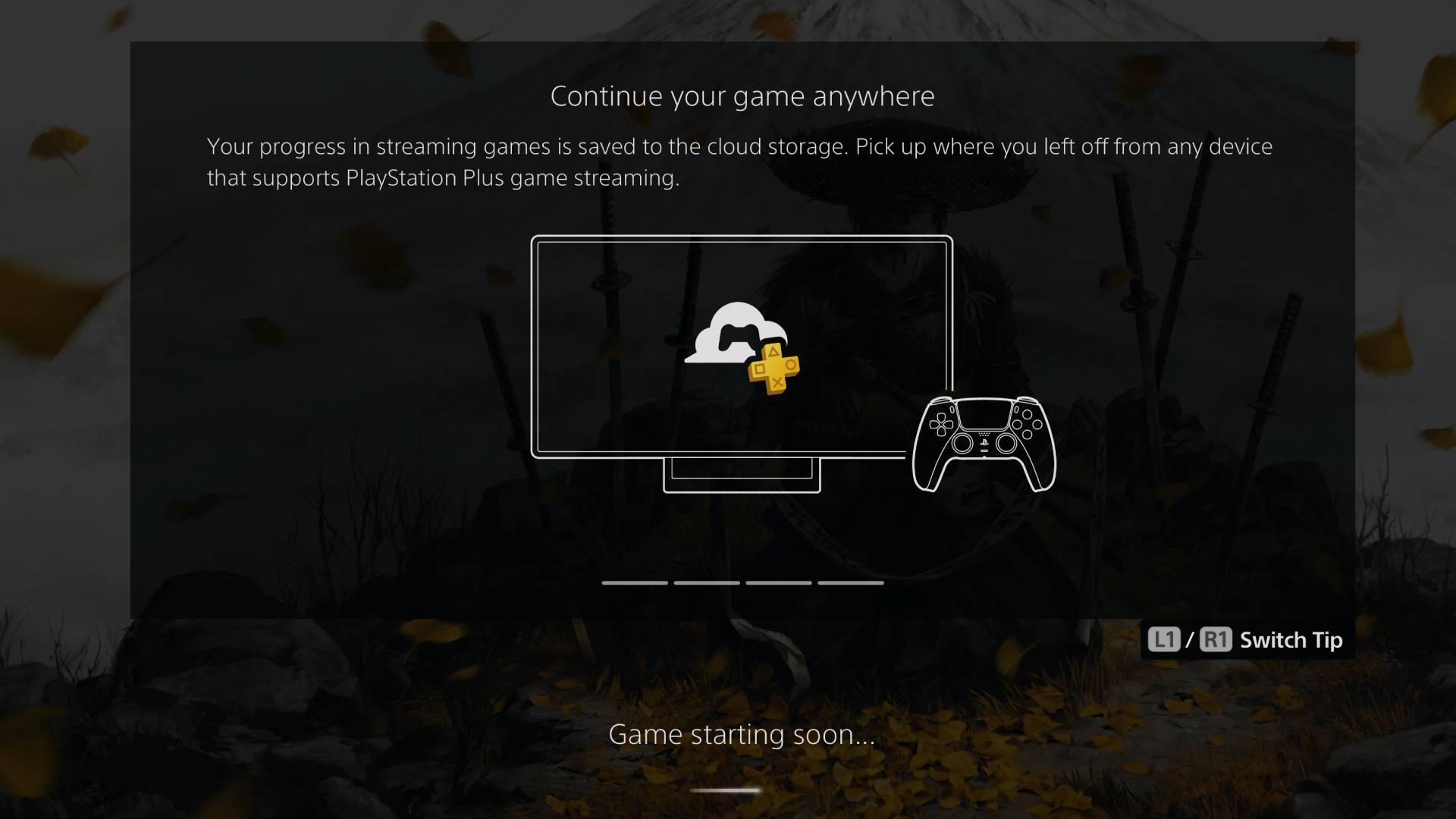
PlayStation has been ramping up its cloud game streaming services over the past few console generations, and that likely won’t change as we look to the next generation of PlayStation as we know SIE has no plans to move away from cloud game streaming services. It’s no surprise that support for PlayStation Cloud streaming has increased in recent years to include nearly every new major game release.
But this push goes beyond adding support for games, as we’ll see some upgrades to PlayStation’s cloud game streaming service based on the information we’ve uncovered. Work on the hardware infrastructure for next-generation cloud game streaming servers has been underway for approximately three to four years. This information shows that the hardware supporting PS5’s cloud game streaming infrastructure currently uses PCIe Gen4 NVMe as the storage server solution, and that the next-generation cloud game streaming infrastructure PCIe Gen5 NVMe. I think it’s safe to say that the PlayStation 6 (or whatever it’s called) also uses PCIe Gen5 NVMe.
This matches a recent leak from known AMD leaker Kepler_L2. Kepler_L2 previously stated that the console will likely feature a 1TB Gen5 SSD. Of course, we’re referring to the actual console hardware, which pertains to the cloud streaming service’s storage solution.
For comparison, here are the maximum speeds each PCIe Gen can reach:
- PCIe Gen4 NVMe: 7,500 MB/s sequential read and 7,000 MB/s sequential writes.
- PCIe Gen5 NVMe: 14,900 MB/s sequential read and 14,000 MB/s sequential writes.
Many current games already have instant loading between launch and save, so it’s hard to imagine what next-gen consoles could accomplish with twice the speed. This means faster asset streaming on local devices, but we don’t yet know how that will translate to our experience. Hopefully the pop-ins will go away.
Advances in machine learning
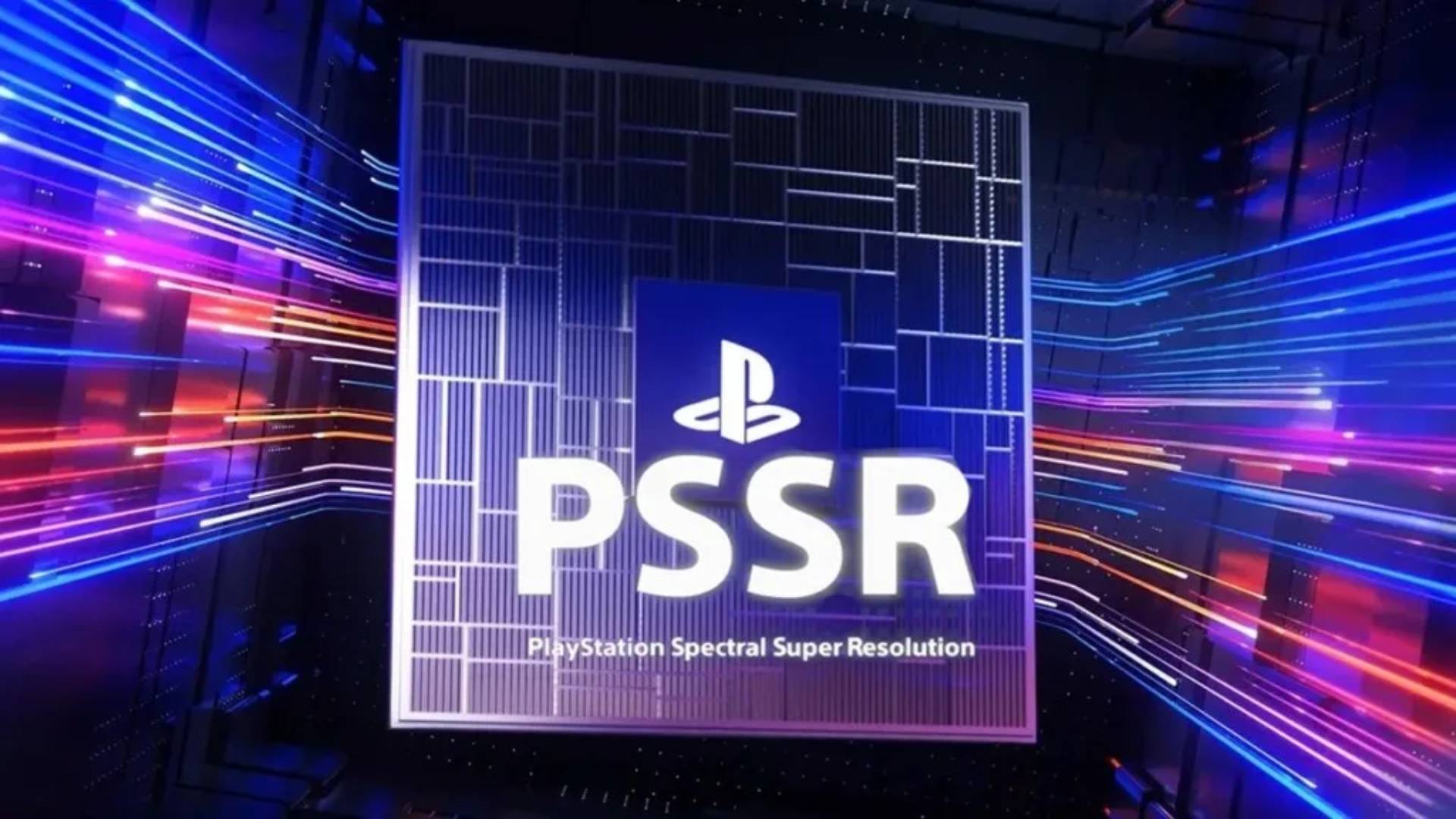
It’s been more than a year and a half since the release of PS5 Pro. Whether or not this console is worth its asking price, which has increased in price by $200 since its release, remains a hotly debated topic, but there’s no denying that PlayStation offers an impressive AI-based upscaler in the form of PSSR (PlayStation Spectral Super Resolution). In February of this year, we received a major upgrade that improved image clarity and performance across the game.
With both Nvidia and AMD having their own AI-based upscalers, Sony joining PSSR, and perhaps Xbox joining Project Helix, it’s probably safe to assume that the future of gaming will revolve around AI. As a case in point, all you have to do is go to LinkedIn and search for how many AI and machine learning professionals Sony Interactive Entertainment has hired and how many are still looking to hire. Whether you like AI or not, it looks like it’s here to stay as companies continue to pour resources into it and seek to incorporate it into every aspect of their business.
PlayStation is no exception and will be using AI in all kinds of workflows.
But sticking to the PSSR theme, it looks like Sony will continue to push PSSR to help “improve real-time visuals,” as stated on the LinkedIn profile of a senior PlayStation researcher.
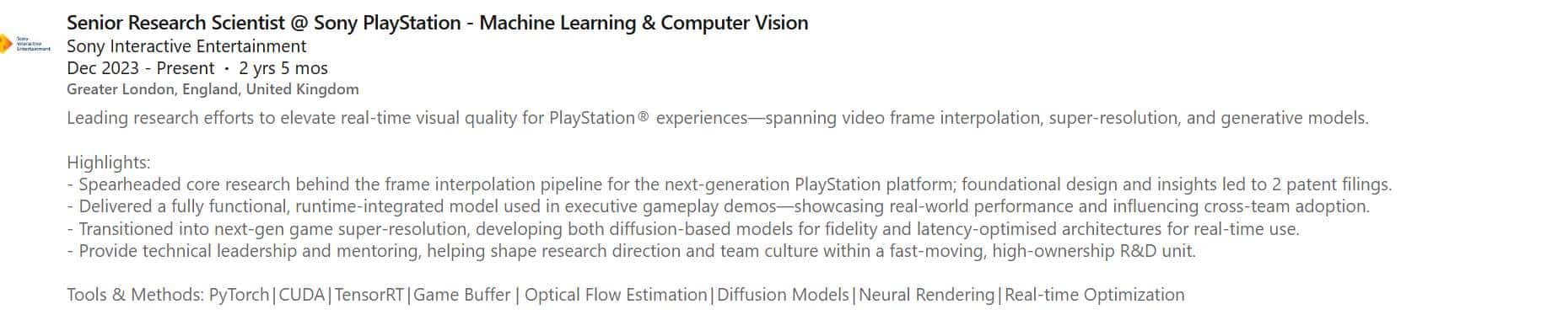
“Spearheading the core research behind the frame interpolation pipeline, next generation playstation platform“
What also stood out to me was the mention of CUDA and TensorRT, both Nvidia features, in the “Tools and Methods” section. This seems to be a reference to the tools this senior researcher used in his research, but is interesting nonetheless. Both upcoming next-gen platforms will be powered by AMD, but seeing as Sony has done so well with PSSR that it can even compete with DLSS in some respects, we wouldn’t be surprised if Sony continues to push the boundaries of what’s possible with its current hardware and its successors. If you’re trying to build a better product, it’s logical to look at what your competitors are doing right.
This next part is Just a guess, but But I wanted to attract attention anyway. We don’t have any details on what PlayStation plans to do with its next-gen controller (which will likely be the DualSense 2.0), but we’re pretty sure it’ll continue to use the SAVANT architecture. Savant? What exactly is that?
Well, PlayStation wasn’t entirely supportive of the idea of haptic feedback found in the DualSense. No, in fact, Sony licenses a significant portion of DualSense’s haptic intellectual property from General Vibration Corporation. I don’t blame you if you’ve never heard of them. Because I only recently found out about it myself. Their website doesn’t say much either, but apparently they were named a leading haptic technology company for the next decade (2025-2035) by IDTechEx and also won the Wolfram Innovator Award in 2021.
So how do they fit into the PlayStation?Good…
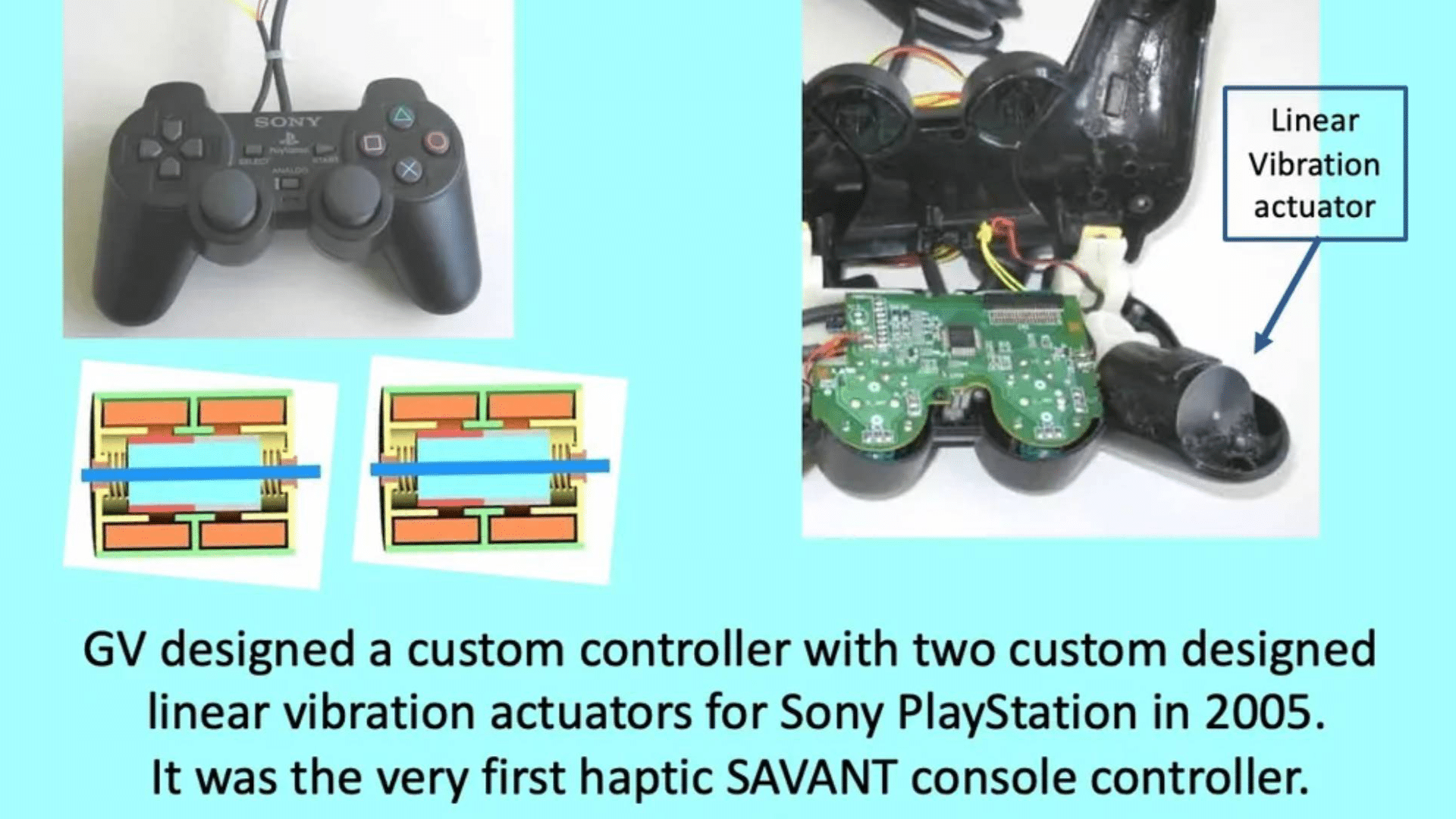
According to the company’s history, That website has We’ve been working with Sony to some degree almost from the beginning. In 2005, the independently developed linear actuator was integrated into a PlayStation controller prototype, but it wasn’t until 2017 that Sony collaborated with them again and licensed the technology for use in the DualSense controller.
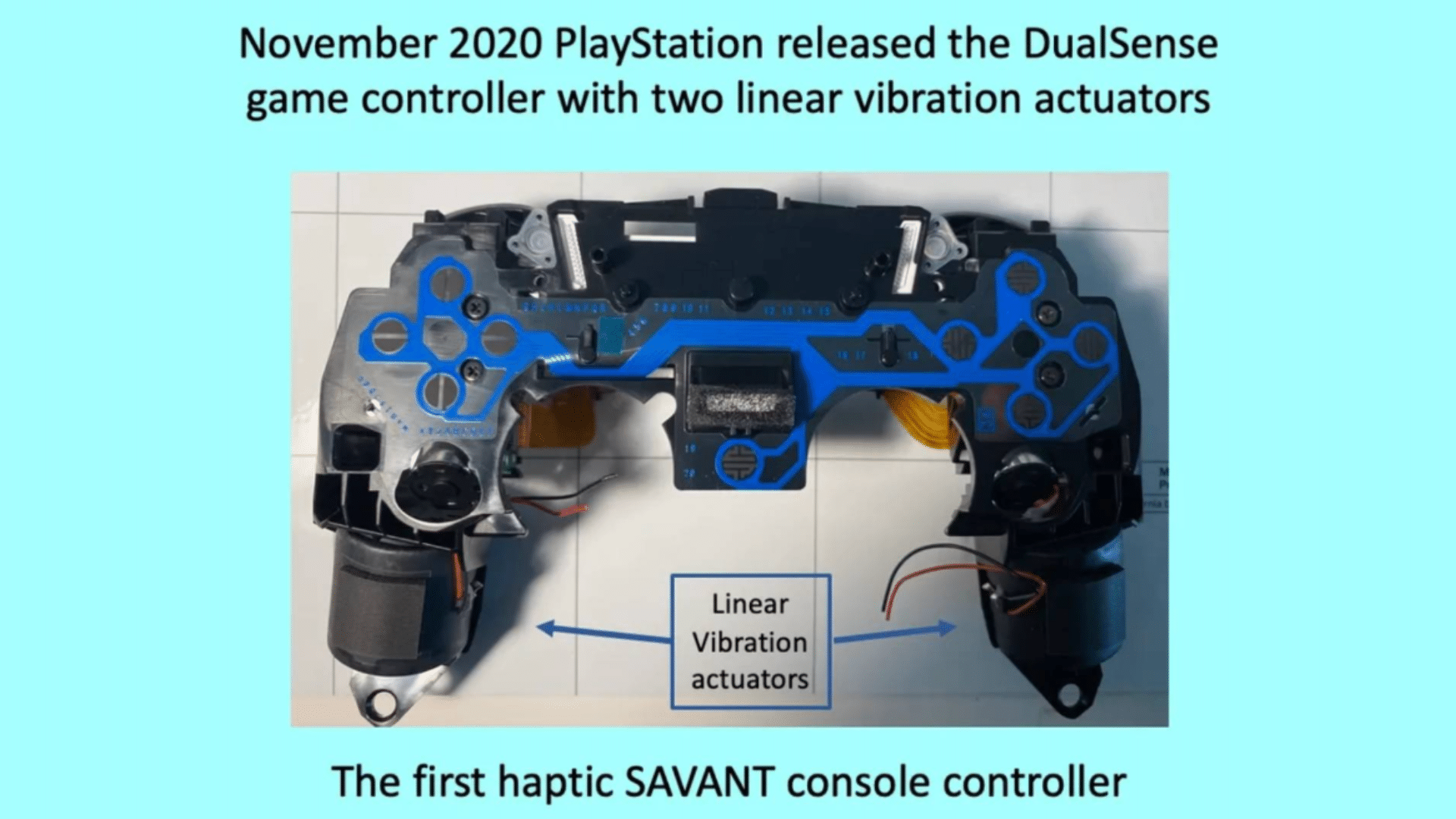
Their technology will then be used in the PlayStation VR2 Sense controller and again in the PlayStation Portal.
An interesting piece of information they had on their website is that they have started working on the SAVANT array for haptic touchpads.
“We are developing haptic arrays consisting of two or more phase-locked LRAs. These arrays, called SAVANT, outperform the best single LRAs used in mobile phones and game controllers.” Next-generation tactile touchpad for computers, notebooks, and handheld devices.“
pure speculationBut I think we should keep a close eye on General Vibration for possible developments, as it could indicate some of the technology that will be included in the next PlayStation controller. I have a good feeling that whatever this is, the next PlayStation controller will have even better immersive haptics. Sony recently patented a buttonless controller, could this be the solution for providing feedback?
Personally, I don’t really like the idea of a buttonless controller unless it’s an optional future addition. I would rather stick to things that have physical pressure. Given that General Vibration is looking to develop a next-generation haptic touchpad, it would make sense for it to be included in a handheld rumored to be PlayStation’s next controller.
There is no doubt that PS6 is coming, but please note that the information we have shared has not been officially announced by Sony. As with anything that has not been officially announced, the situation is subject to change.
Hopefully everything will be clear soon.
Follow us on Bluesky, X, Facebook, TikTok, YouTube, Google News to get MP1st and latest news.


