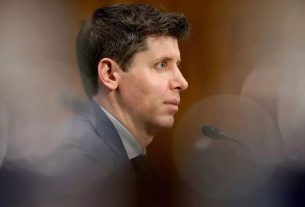
Florida Governor DeSantis addresses negative effects of AI
Gov. Ron DeSantis has expressed concerns about the risks of artificial intelligence and plans to roll out a new state-specific approach.
Fox – 35 Orlando
- The proposed rules would allow students to use AI for tasks such as research and writing, while existing academic honesty rules would still apply.
- For staff, this policy requires human involvement in important decisions such as grading and discipline.
- The district aims to be flexible in adapting to new AI tools, with formal adoption expected in February.
The Palm Beach County School District is working to become one of the first school districts in the nation to develop a set of policies regulating the use of artificial intelligence for students, teachers, and staff.
School district officials presented a set of draft policies at a recent Palm Beach County Board of Education meeting. An AI-generated presentation was used to explain new policy points to board members.
“Very good,” Superintendent Mike Burke told board members after the presentation. “Do you still want to hear opinions from humans?”
The district’s proposed rules would allow students to use AI for exploration and feedback, personalized learning, writing and content creation, research and data analysis, and text-to-speech and audio-to-text conversion.
“We are not reinventing the wheel,” the presentation said. “Any misuse of AI falls under the existing Student Code of Conduct. The same rules regarding academic integrity continue to apply.”
Violating the district’s rules regarding academic integrity may result in a zero grade for the assignment and notification to parents. Repeat violations may result in more serious sanctions, including suspension.
When and how can teachers in Palm Beach County use AI?
The proposed rules would require teachers and staff to only use AI tools that are “compatible with the district’s technology and ethical standards.”
The proposed rules also set out two items described in the presentation as “non-negotiables” for teachers and staff.
“AI cannot be the sole decision maker for critical functions such as scoring and discipline,” the presentation said. “Humans need to stay informed. Staff should only use district-approved AI resources. This ensures human judgment remains at the center of education.”
The district plans to expand the development of its AI policy in early December, with a view to formal adoption on February 18th.
“The team has been working on this for several months,” Burke told board members.
“This was an initiative that we added to our strategic plan. We felt it was really important to start understanding AI and how to use it safely and effectively in the classroom and workplace. Many school districts haven’t developed an AI policy yet, so we’re kind of on the cutting edge here.”
How other school districts are approaching the use of AI
School districts in Virginia, Washington, Colorado, Texas and Maryland have adopted AI policies, according to Google’s AI search tool, citing Education Week and two other sources. Several school districts in other states are also developing AI policies, including the Seminole County School District near Orlando.
The University of Florida established an AI Education Task Force and developed several guidelines. But states have not passed legislation detailing how AI can and cannot be used.
Gov. Ron DeSantis expressed concern about how older students will use AI.
“Are we going to rely on artificial intelligence to just have students write term papers in college and graduate school?” DeSantis said in July. “Do I even need to think about it?”
The governor vetoed a bill that would have required the state Department of Commerce to conduct an AI study, but approved other AI initiatives, including a $2 million program for the Fish and Wildlife Conservation Commission to use AI to find and remove invasive Burmese pythons in the Everglades.
Adam Miller, director of performance for the Palm Beach County School District, said district officials keep the need for flexibility in mind as AI rules are developed.
“AI is growing at a very fast pace,” he says. “We don’t know what new AI tools will emerge, but we do know that new AI tools will continue to emerge. So we intentionally designed this policy to be general and flexible so that we can innovate as these new tools emerge.”
Two board members, Matthew Jay Lane and Edwin Ferguson, said they wanted more clarity on the rules, especially for teachers.
“It’s a good idea to give teachers direction on when they can and cannot use AI,” Lane said.
Rebecca Smykula, the district’s director of instructional technology, said officials “specifically wanted this policy to give teachers the discretion to decide when students can and cannot use AI in their classrooms. But if this policy is adopted, we will have some guidelines for our training.”
Ferguson echoed Lane’s concerns, citing possible examples of teachers at one school allowing widespread use of AI in assignments while teachers at another school restricting its use. Ferguson said grades and scholarship opportunities could be affected.
“If you want to be as black and white as possible about policy, that seems to me to be the best practice,” Ferguson said.
Burke said he understands their concerns.
“Both Mr. Lane and Mr. Ferguson’s points are well taken,” he said. “We want to be as clear as possible. We want to eliminate as much subjectivity as possible. We need to train everyone on this, so we need to make sure it’s clear.”
Wayne Washington is an education journalist for the Palm Beach Post. Please contact us at wwashington@pbpost.com. Please support our activities. Subscribe now.