
listen to this article
Estimated 5 minutes
The audio version of this article is generated by AI-based technology. Mispronunciations may occur. We work with our partners to continually review and improve our results.
ChatGPT maker OpenAI has filed preliminary documents opening the door to going public, becoming the third of three powerful artificial intelligence companies vying for a Wall Street debut.
The San Francisco-based company announced Monday that it has filed confidential documents with the U.S. Securities and Exchange Commission.
“We are only making this public because we anticipate a leak,” the company said in a statement. “We haven’t decided on the timing yet. It may take a while because there are things we think are easier to do as a private company. But it’s a complex trade-off, and we also have the option of going public sooner if that’s the best outcome.”
OpenAI’s move follows rival Anthropic’s announcement on June 1 that it is also moving toward an initial public offering. Both companies are currently chasing Elon Musk’s rocket company SpaceX, which has begun an IPO roadshow touting itself as an AI-focused space company.
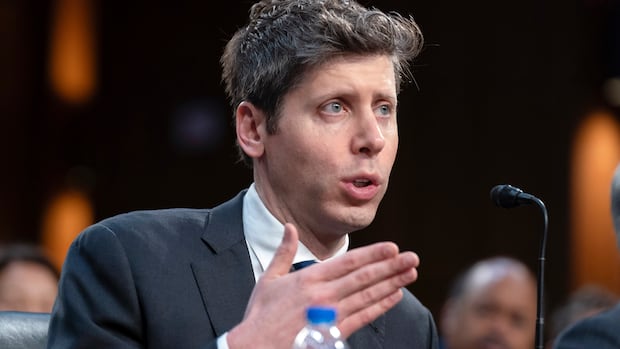
OpenAI CEO Sam Altman first publicly announced the possibility of an IPO last fall, saying it was the company’s “most likely path” given its size and the significant capital needed to advance its technology.
Founded in 2015 as a nonprofit organization dedicated to developing AI for the public good, OpenAI has grown to a company valued at $852 billion.
EMarketer analyst Nate Elliott said the filing comes at a “dangerous time” for OpenAI, which sees ChatGPT’s strong early lead with consumers and businesses being lost to Google and Anthropic.
“OpenAI doesn’t have many other places to look for the significant capital needed to support its costs,” Elliott said.
OpenAI made the decision last year to reorganize its business structure and transform into a public benefit corporation, even though it is still technically under the control of a nonprofit organization, paving the way for it to go public.
OpenAI overcame another hurdle last month by defeating Musk in a federal jury trial. Mr. Musk, a co-founder and early donor of OpenAI, had sued the company, demanding that Mr. Altman be ousted from management and that the company understand its transformation into a for-profit business. A judge dismissed the lawsuit after a jury decided that Musk filed the lawsuit too late.

OpenAI has not yet disclosed how much profit it is making or when it plans to become profitable. Like Anthropic and SpaceX, the company loses more money than it makes because it costs so much to start up its business. OpenAI faces stiff competition from Anthropic, maker of the increasingly popular chatbot Claude, and Google’s AI assistant Gemini.
In an April interview, OpenAI Chief Financial Officer Sarah Fryer did not provide a timeline for a potential IPO, but said the company was already “acting in a healthy manner as a public company,” including measuring revenue the way public companies must report revenue to the SEC.
“I want you to be ready,” she told The Associated Press. “I think it’s good to be able to tap into the public market. The public market is much bigger than the private market.”
He said that OpenAI’s current valuation would put it in the top 15 companies on the S&P 500.
He also said there is a “moment where it qualifies as a public company.”
“At that point, people are checking your balance sheet, the SEC is governing you, and so on,” she said.
CEO envisions personal AI for everyone
In a separate statement released on Monday, around the same time as the release of the confidential application, Altman outlined a broad vision for OpenAI that includes three major goals: building an automated AI pool of researchers, accelerating economic growth, and giving “every person on the planet a personal AGI” (short for artificial general intelligence), or a form of AI that surpasses humans at many tasks.
Altman said OpenAI started with AI research and moved on to developing commercial products, but is now moving into a third phase with a “broader distribution of power” as the economy is restructured around AI technology.
He said OpenAI is “committed to ensuring that the benefits are widely shared. Everyone should have the opportunity to meaningfully share in the prosperity that AI creates.”
The remarks follow Altman’s visit last week to Sen. Bernie Sanders, who is pushing for a plan to give Americans a 50% stake in AI companies such as OpenAI, and President Donald Trump’s comments welcoming the idea of giving Americans a right to the growth of AI.