OpenAI executives say the three industries will look very different in the coming years.
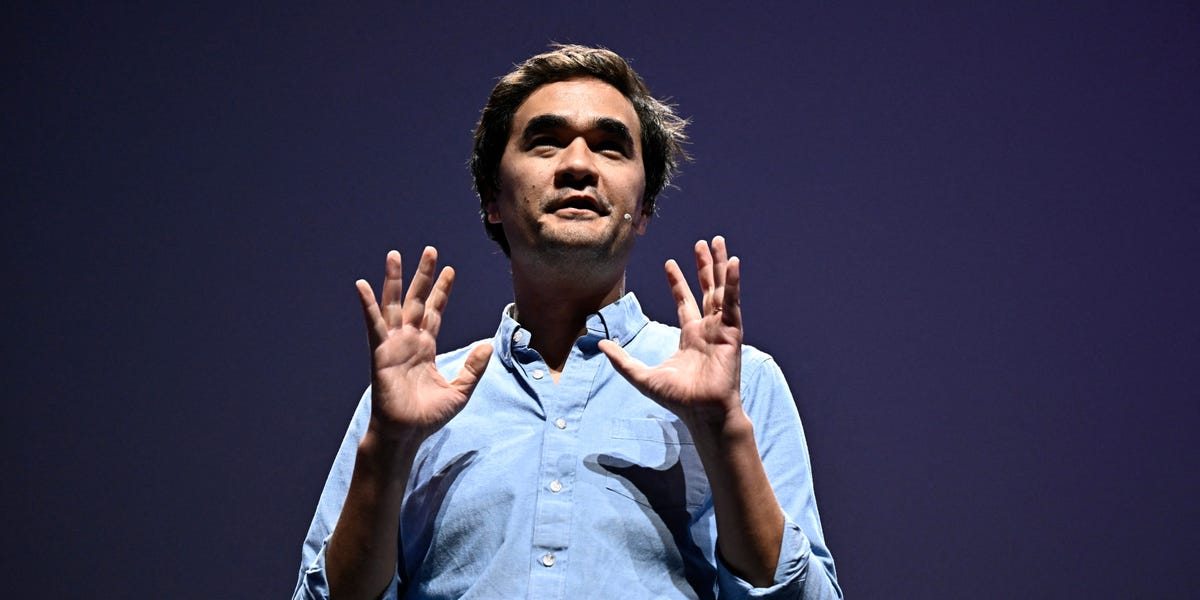
In an episode of the Unsupervised Learning podcast, Olivier Godeman, head of business products for the makers of ChatGPT, talked about why he believes three jobs are on the cutting edge of automation: life sciences, customer service, and computer engineering.
“My favorite bets are on life sciences and pharmaceutical companies,” he said of the first candidates for industries on the brink of being transformed by AI.
Godement said the goal of drug companies like Amgen, with which he works, is to design new drugs. There are two elements to this. One is the actual research and experimentation, and the other is the administration, which is a time-consuming process that can be automated.
“It takes months, even years, from locking down a recipe for a drug to getting that drug to market,” he said. “We've found that models are pretty good at that. They're very good at aggregating and integrating large amounts of structured and unstructured data and identifying different changes within documents.”
Godement joined OpenAI in 2023. Previously, he worked on Stripe products for eight years.
Godement said on the podcast that while we're not yet at the point where “every white-collar job” can be automated in just a day, we're starting to see strong use cases in areas like coding and customer service.
“Automation is probably not yet at a level where software engineers can completely automate their jobs. But I think there's essentially a prospect of getting there,” he said.
The future of software engineering has become one of the most heated technology debates of the year, as AI-assisted coding becomes part of most companies' workflows.
According to an October Indeed survey, the four technical jobs most commonly laid off due to layoffs and reorganizations were software engineers, quality assurance engineers, product managers, and project managers.
Finally, Godement said customer-oriented roles such as sales and customer experience could soon be automated.
“I've been working with the folks at T-Mobile, the U.S. carrier, to basically provide a better experience for their customers, and we're starting to achieve pretty good results in terms of quality at a meaningful scale,” he said. “My sense is that probably over the next year or two, you're going to be surprised at the amount of tasks that you can reliably automate.”
AI leaders generally caution against white-collar jobs that can be easily automated with new large-scale language models.
Geoffrey Hinton, known as the “godfather of AI,” said on a June podcast that technology will eventually “be better than humans in every way,” but for now some areas are safer than others.
“It's going to take a long time to develop this level of physical control,” Hinton said. “So you might as well become a plumber.”
“For everyday intellectual work, AI is just I'll switch places with everyone.'' Hinton said.
He said paralegals are at risk and would be “scary” if they worked in a call center.