Artificial intelligence is rapidly reshaping the way people search, decide, and interact online, with systems already recommending products, comparing options, and integrating information at incredible speed. The next step is autonomy. A future where AI agents not only assist you, but act on your behalf.
For OEN Technology Co., this question is at the heart of our business.
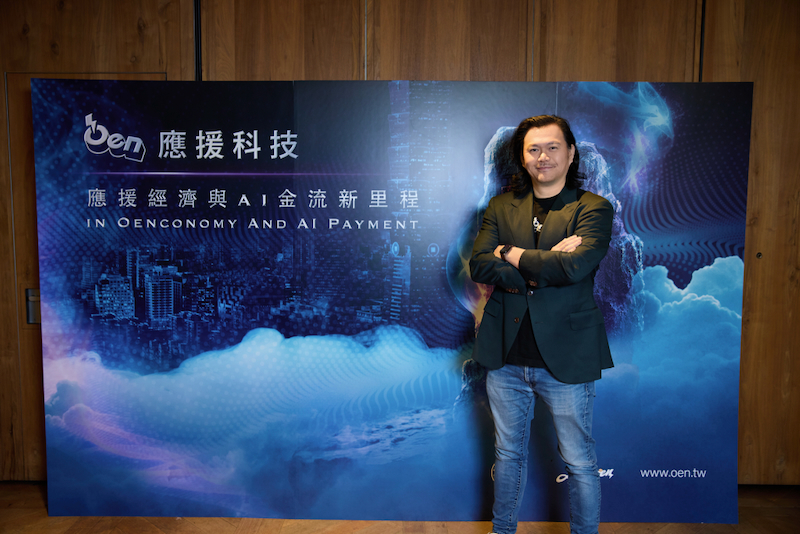
Founded in 2020 by Hsiao Hsin-cheng, OEN was born at the intersection of software engineering, citizen engagement, and fundraising. Hsiao, a former software engineer in New York’s startup ecosystem, returned to Taiwan in 2018 and later ran for city council. The experience revealed structural gaps. Campaigns, nonprofits, faith-based organizations, and cultural organizations all relied heavily on public trust, but lacked digital tools designed for their unique needs.
“Most software is built for commerce,” says Hsiao. “But when you ask people to support a cause, a candidate, a community, the deal is fundamentally different.”
OEN was founded to provide what Hsiao calls a “cheer economy.” This term is derived from the Japanese word meaning to support or cheer. In this model, transactions are non-equivalent. Donors donate because they believe in a cause, rather than receiving a product in return. This distinction requires a different design of the system.
“Trust is everything in these transactions,” he says. “If people perceive uncertainty or risk, the whole model collapses.”
Over five years, OEN has grown into a digital infrastructure provider at the core of this trust-based economy. Its platform combines payment processing, donor and supporter management, compliance tools, and outreach capabilities into a single system. Today, we serve political organizations, nonprofit organizations, temples and churches, alumni-funded universities, music festivals, independent artists, and more. Large-scale events such as Kaohsiung’s Megaport Festival have relied on OEN for several years in a row, and religious institutions and civic organizations are using the platform to bring transparency to funding that was once primarily cash-based.
As AI capabilities accelerate, this infrastructure will only become more relevant. In mid-September 2025, Google Cloud introduced Agent Payments Protocol (AP2), hinting at a future where AI agents can initiate transactions on behalf of users.
AI agents can already identify what to buy, when to buy it, and from whom to buy it, but in regulated markets like Taiwan, they cannot legally move funds. “At the final stage, we still need a licensed payment provider that operates under local regulations,” Xiao said.
AP2 standardizes the way user intent is expressed and verified, creating a traceable record that an action was explicitly authorized. Hsiao points out that this standardization is especially important in non-profit transactions such as donations, political contributions and religious contributions, where scrutiny is high and misunderstandings can have serious consequences.
“When someone makes a donation, there is no market exchange to justify the payment,” he says. “From a regulatory perspective, compliance becomes even more important.”
This belief has shaped OEN’s long-term strategy. The company has invested heavily in security and governance and is PCI DSS Level 1, ISO 27001, and ISO 27701 certified.
“In our industry, compliance builds trust,” he says. “It protects our customers, reassures regulators, and ultimately protects our donors and supporters.”
Mr. Hsiao currently chairs the Innovation and Security Committee of the Taiwan Third-Party Payments Association and is working with other payment processors to prepare the industry for AI-powered transactions. He argues that making protocols like AP2 a reality requires coordination across the private sector, regulators, and global technology companies.
Taiwan is well-positioned to become a testing ground for the next phase of digital commerce. The island combines a strong regulatory framework, a mature payments ecosystem, and real-world use cases that demand high trust and transparency.
At the same time, Hsiao spoke candidly about Taiwan’s broader challenges in the AI era. “We manufacture chips, but we consume models,” he says. “If we don’t build the applications and systems ourselves, we risk losing control over how technology shapes our society.”
OEN’s response was pragmatic. The company is actively testing new AI tools, training internal models, and hardening its cybersecurity infrastructure to prepare for a future where AI agents work alongside humans. But Hsiao emphasizes that progress must be measured.
“Speed is important, but safety is even more important,” he says. “In an economy based on trust, acting with caution is not a weakness; it is a responsibility.”
In an agent-driven environment, authorized payment providers are not intermediaries waiting to be removed, but critical infrastructure that ensures autonomy does not come at the expense of accountability.
In that future, the last mile of AI commerce may prove to be the most important of all.