

“Data is the new oil” – British mathematician Clive Hamby’s famous words have resonated for years.
Today, multi-trillion dollar companies like Google and Amazon are perfect examples of how valuable data can be. From targeted advertising to same-day delivery, it’s an integral part of some of the world’s largest business models.
Data collection itself constitutes a huge market, which is expected to grow by 25% annually until 2028. Most, if not all, companies participate in this process through feedback forms and internet cookies.

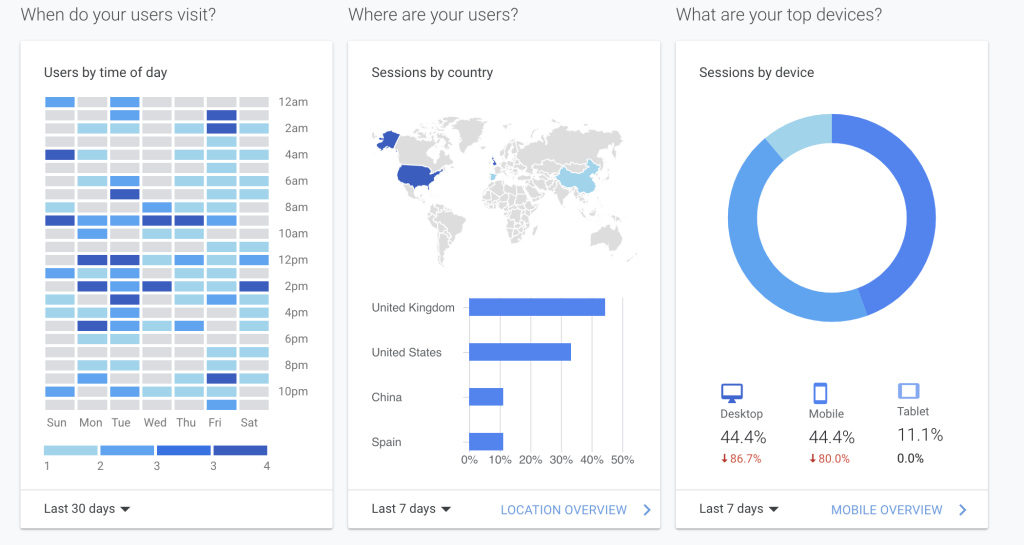
As the process has become cheaper and more efficient, it no longer offers the same competitive advantage it once did. For example, e-commerce companies can use Google Analytics for free to access customer demographics, traffic sources, and more.
To gain an edge, companies need to do more. Now that data is available to everyone, it matters who can make the most of it.
This is where artificial intelligence (AI) and machine learning (ML) come into play. Systems can be trained to sift through large amounts of data, recognize patterns, and provide solutions.
turn data into information
“When you apply for a credit card, your bank sends you a long list of offers. [irrelevant to you]said Raju Bhupatiraju, Chief Revenue Officer of Singapore-based AI and big data company Crayon Data. “It’s called the spray-and-play method.”
Banks present different offers in the hope that some offers will be sufficiently attractive to potential customers. This is an inefficient system and can often lead to wasted resources.
AI offers a solution to orchestrate this process, using data banks already have access to. For example, spending habits can help determine the types of offers a person might be interested in. “What Crayon Data is doing is using AI and ML to try to understand customer preferences,” says Bhupatiraju.


AI systems can use different data points to recognize patterns and suggest the best course of action. Those who spend a lot of money at vegan restaurants may not be interested in steakhouse coupons, but those who go for weekly massages may appreciate spa discounts.
Inferences may not be special, and they are not always correct. But where AI stands out is the speed with which it can examine data and come to such conclusions. “Pattern recognition is something humans can do, but it takes a lot of time. The system can handle 80% of it.”
Crayon Data can use AI and ML systems to deliver a variety of solutions that address revenue generation, cost reduction, and customer experience problems.
For example, travel industry players such as airlines and hotels could benefit from Crayon Data’s ability to curate highly personalized itineraries. By understanding tastes and preferences, businesses will be able to capture a greater share of a consumer’s travel budget.
With Crayon Data, hotels can offer apps that recommend the best restaurants and attractions for each guest. Your guests will save time planning their trips and enjoy the convenience of booking their entire itinerary from a single app.
As a result, hotels benefit in the form of commissions and an improved overall guest experience.
Such solutions are applicable to most industries such as travel, healthcare, banking, and education. Data analysis using AI is key to improving conversion rates and streamlining operations.
What impact will AI have on the world?
Since the launch of ChatGPT, which catapulted generative AI into the spotlight, AI technology as a whole has benefited from more interest and funding. Companies around the world are showing their willingness to take advantage of such systems.
“AI is a trajectory shifter,” Bhupatiraju said, adding that companies that opted out of using the technology could face existential threats. “It’s like riding a bike when other people have bikes. You can own the best bike, but that doesn’t make a difference.”
Bhupathiraju explains that AI can bring about non-linear changes. “He doesn’t have to double the investment to get double the benefits.”
Startups can now use generative AI tools for branding and copywriting. Chatbots can replace human customer support, and AI analytics tools can help improve the results of targeted advertising. All in all, it greatly reduces the initial investment to set up your business whether you are a travel agency or an e-commerce store.
Data solutions such as those offered by Crayon Data “typically offer a four to 10x benefit,” he adds. You can save a lot of time and money by letting a machine do the work.
But what about the employees who were once in charge of the work? As AI takes over job roles, questions about job security are pervasive across many professions. Copywriters face competition from ChatGPT, while artists are trying to catch up with Midjourney.
Bhupathiraju believes that despite the situation, jobs exist for those who want them. “People as a whole will not lose their jobs unless they want change.”
As AI takes over rote tasks, humans will spend more time doing tasks that require critical thinking and reasoning. That will require retraining and retraining, and the investment decisions will fall on companies and governments, but the need for people in the workplace will continue.
Which countries are leading the way?
As with most innovations, their impact is determined not only by companies but also by policy makers. There is an ongoing need to find balance and ensure that new technologies are ultimately having a positive effect.
Earlier this year, Italy became the first Western country to ban ChatGPT, citing the program as not compliant with Europe’s General Data Protection Regulation (GDPR). AI tools, especially popular tools like ChatGPT, can pose a significant threat if hacked or compromised, given their frequent use of user data.
As AI technology develops, such considerations for regulators to address become increasingly important. “It is important for AI to grow responsibly,” says Bhupatiraju. “Regulations will certainly evolve.”
With this in mind, businesses should be careful where they choose to operate so as not to be blinded by the new policies. After launching his operations in Singapore in 2012, Crayon Data is now also exploring growth opportunities in Dubai and the Middle East.
Bhupathiraju sees it as a matter of willingness and readiness. Meanwhile, governments and local customers should show interest in his AI-based system. “[Some countries] We just have a big problem to solve. ”
Additionally, you must have the knowledge, capital, and other factors to actually implement such a solution.
Furthermore, it is necessary to consider the social impact that AI will have on the region. “Even though Southeast Asia and the Middle East have about the same GDP, Southeast Asia (SEA) has about 50 percent more population,” Bhupatiraju said.
As such, AI solutions can be deployed in the Middle East without significant impact on the country’s workforce. On the other hand, it is very likely that there will be layoffs at SEA in the short term. The advent of AI will require significant investment in retraining workers and creating new job opportunities.
Featured image credit: Crayon Data
Also read: How this S’pore AI startup is transforming marketing departments by automating content creation


