
The concept of supply chain may have only recently entered the public lexicon. The global economic turmoil brought about by the COVID-19 pandemic and subsequent Russian invasion of Ukraine has made the term and its confusion a dinner table issue.
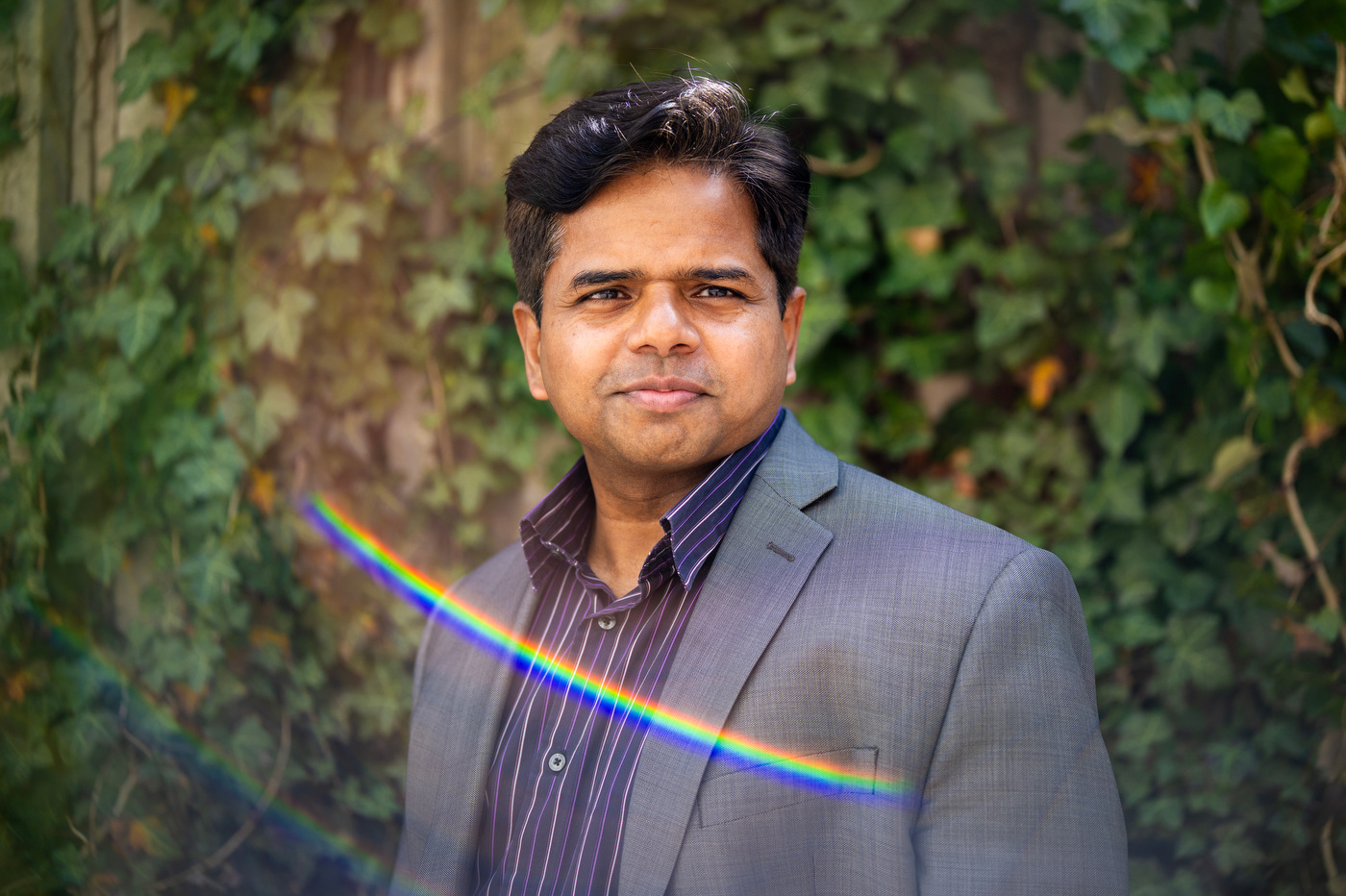
But for some, supply chain is always top of mind. Anand Nair is one of them. A fellow at the Center for Emerging Markets and an associate at the Center for Health Policy and Healthcare Research, he has been deeply involved in the data and information aspects of supply chains for decades, first in the private sector and then during a 25-year career in academia.
“Supply chain has been a very important business area for a very long time. It just took this massive disruption for it to surface,” said Nair, professor and Jeff Bornstein Faculty Fellow of Supply Chain and Information Management at Northeastern University.
But as organizations coordinate business with suppliers on the other side of the world, supply chain monitoring is also becoming more technical and data-driven. Companies also have to deal with fluctuations in demand and frequent interruptions that can throw off production and delivery schedules.
Whether they’re manufacturers, big box retailers or healthcare providers, organizations need to implement new tools to manage risk and maintain continuity, Nile says. These new technologies include machine learning and artificial intelligence, which can analyze large amounts of data in operational settings, and so-called “digital twins,” or virtual replicas of physical systems, that teams can use to simulate operations and diagnose problems.
“Technology plays an important role in process control and supplies management,” Nile said. “There has been a lot of development, but it has accelerated in the last few years with the advent of AI.”
This fall, he will bring his expertise to Queen’s University in Kingston, Ontario, as a Fulbright Scholarship recipient. Awarded annually to academics and experts for international research and collaboration, Nair will take on the Canada Research Chairship, working with researchers and clinicians on projects focused on AI-powered remote patient monitoring, a once-niche medical field that is slowly becoming mainstream.
Nair plans to work with partners at Kingston General Hospital and Queen’s Smith Business School to develop and test an AI-powered system to assess the risk of patients returning to hospital days after being discharged from their initial admission.
This is all part of a “paradigm shift” in the type of care patients receive outside the hospital and in their daily lives, specifically by using data to catch problems early, before they snowball.
The shift to artificial intelligence in healthcare has accelerated rapidly in recent years, particularly in remote patient monitoring, Nile said, allowing clinicians to use connected devices and digital platforms to track patient health outside of traditional settings.
The COVID-19 pandemic has accelerated the adoption of these tools, and AI now plays a critical role in many healthcare settings, allowing healthcare providers to analyze large amounts of data, identify patterns, and predict potential complications and serious problems.
“Precision medicine is at the forefront in the healthcare industry right now, so we’re talking about building processes that are tailored to the specific needs of individual patients,” Nile told Northeastern Global News. “What we are thinking is [in] In the context of remote patient monitoring, this AI-enabled system should continue to proliferate and support medical decision-making even after patients are discharged from the hospital,” he said.
Nair said he and his colleagues plan to produce “several academic papers” conveying these ideas.
“And if we do well, we can build a system that can actually be tested in hospitals, and maybe from there we can roll it out to other hospitals,” he said.
Mr. Nair joined Northeastern University in 2023 after 12 years on the faculty at Michigan State University and previously held positions at the University of South Carolina and Auburn University. His research focuses more broadly on “supply chain, operations, and technology management,” or how “companies, teams, and projects” adapt and learn when dealing with different processes, technologies, and supplies, he said.
This is his second Fulbright appointment, following his previous term as University Professor Emeritus at Aalto University in Finland in 2017. He noted the “urgent need” for more personalized medical solutions and said he was grateful to be appointed to his second Fulbright.
Nile plans to return to the Boston campus in the spring of 2027 to pursue his teaching responsibilities.


