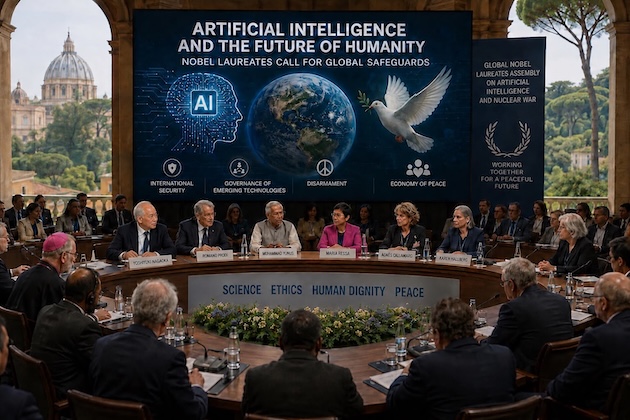
Borgo Laudato Si, Italy, July 21 (IPS) – “Sorry, Dave. Unfortunately I can’t do that.” By bringing supercomputer HAL 9000 to life in the 1968 film 2001: A Space OdysseyAmerican director Stanley Kubrick has created one of the most powerful symbols of the fear of artificial intelligence (AI) escaping human control.
Fifty-eight years later, that question is more real than ever. It was precisely on this issue that more than 200 international officials gathered for three days of discussions in the exceptional setting of Borgo Laudato Si’, located in the Papal Summer Palace in Castel Gandolfo, where Pope Leo XIV currently resides.
Organized by the World Nobel Prize Laureate Conference on Artificial Intelligence and Nuclear Warfare, the conference aimed to consider “the future of international security, the governance of emerging technologies, and the building of disarmament and peace economies.”
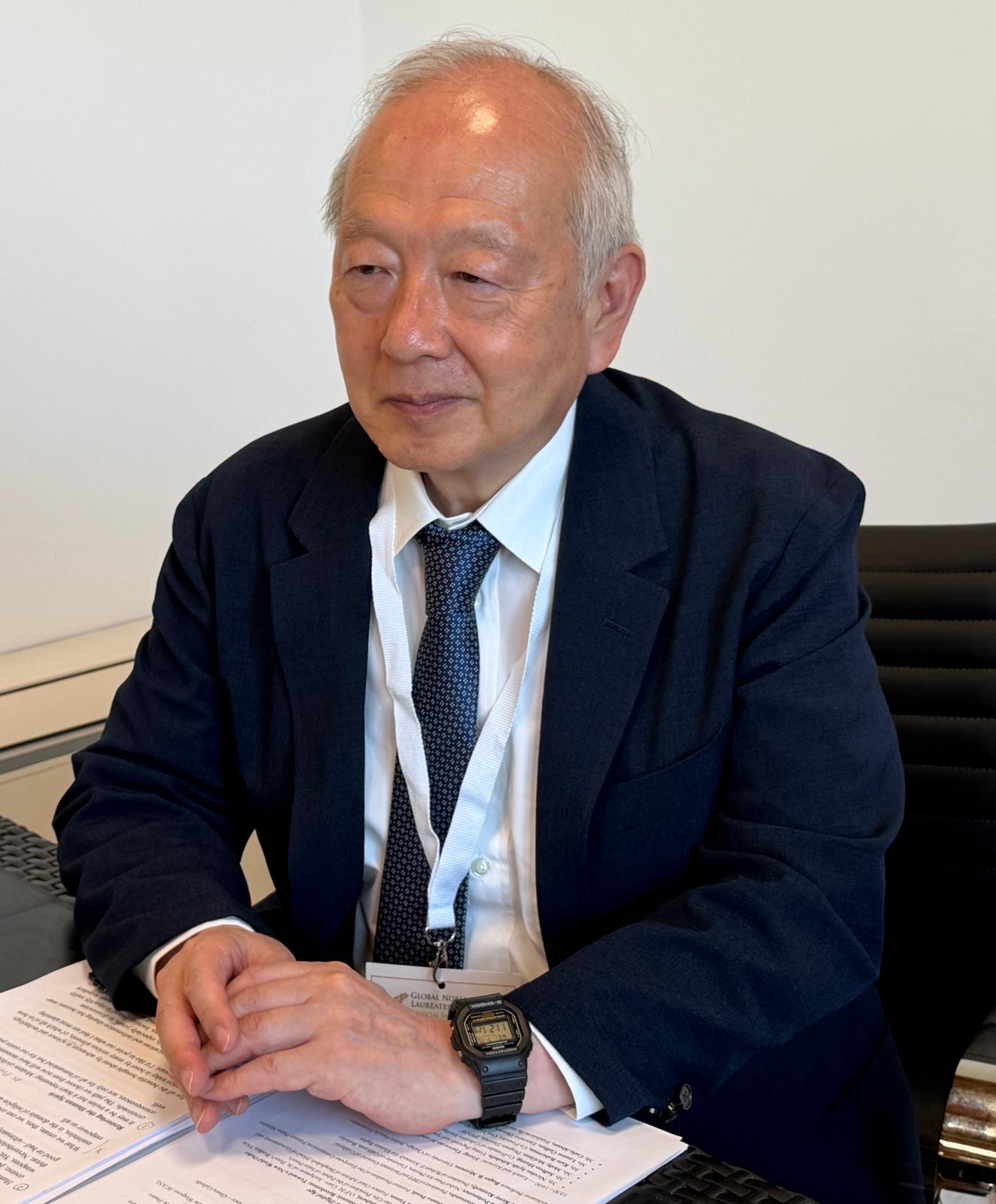
The program attracted many international celebrities, including former Italian Prime Minister and former European Commission President Romano Prodi. Muhammad Yunus, Nobel Peace Prize laureate and Chief of Staff of Bangladesh. Mr. Yoshiyuki Nagaoka (Director of the Ikeda Peace Learning and Dialogue Center, Executive Director of the Soka Gakkai External Affairs Office) Maria Ressa, Filipino journalist and Nobel Peace Prize winner. Agnès Callamard, Secretary General of Amnesty International; and several scientists and nuclear experts.
The gathering was officially opened by Monsignor Fabio Baggio, Under-Secretary of Diplomatic Affairs for the Promotion of Integrated Human Development.
In his welcome address, he immediately established the central thread of the discussion, emphasizing that “peace is not just the absence of war, but an order based on justice, mutual trust, the rule of law and the inalienable dignity of all human beings.”
The central idea was clear. Regulation of artificial intelligence will be essential to maintaining peace and, ultimately, the very survival of humanity. AI is now being integrated into military systems, dramatically increasing the risks of proliferation, cyberwarfare, and escalating conflict, and potentially undermining global stability and respect for ethical principles.
Although the speakers sometimes differed in their analysis, reflecting their diverse backgrounds, all converged on one essential conclusion. Artificial intelligence shouldn’t be feared, but that doesn’t mean we should let it run wild until it becomes another HAL 9000. On the contrary, most participants emphasized the urgent need to establish safeguards before potential abuses get out of control.
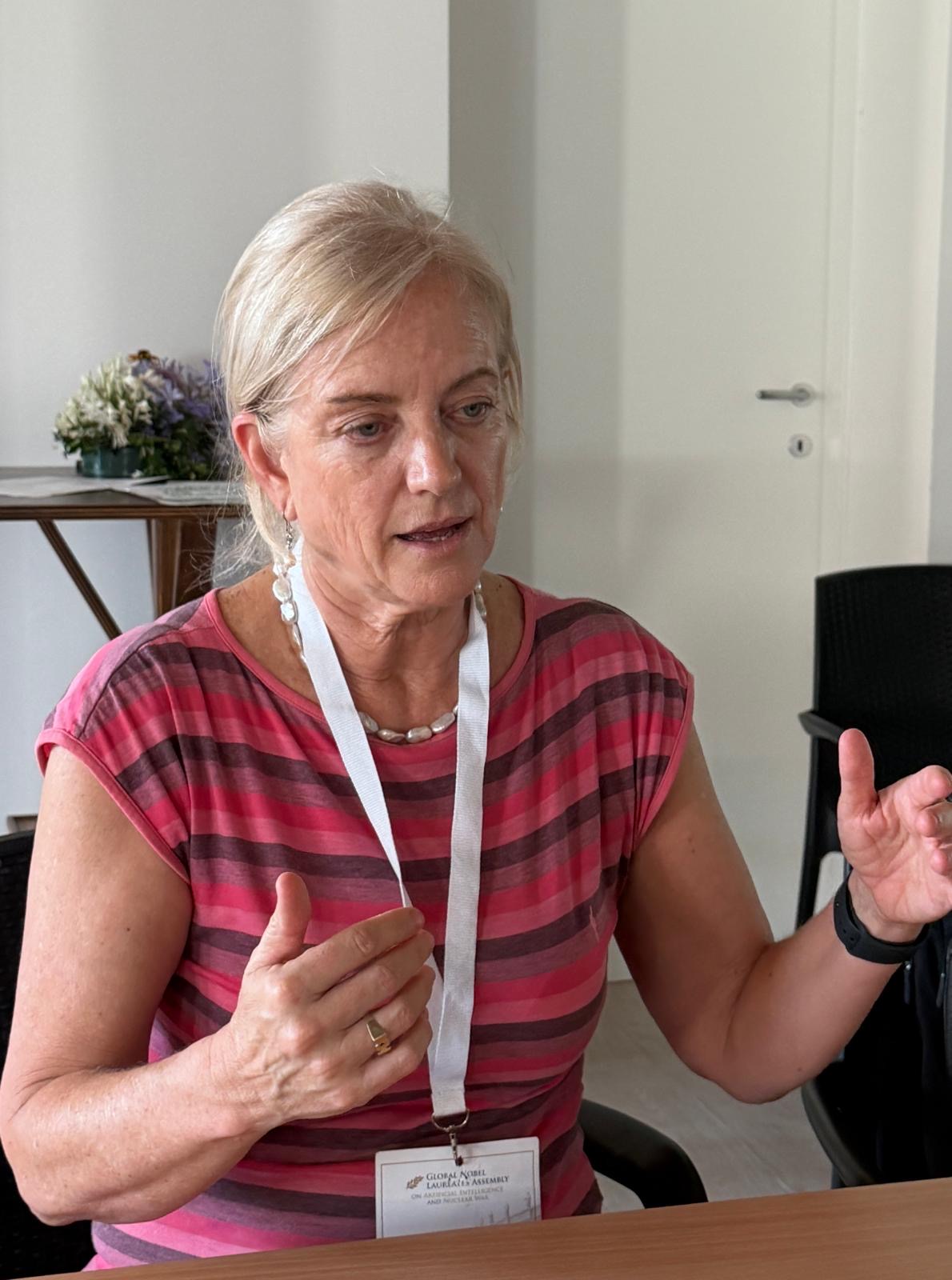
This concern was particularly expressed by Karen Hallberg, an Argentine physicist specializing in condensed matter and president of the Pugwash Conference on Science and World Affairs. She argued that AI, like nuclear power itself, is a “dual-use” technology. Nuclear fission led to incredible advances in energy production and medicine, but it also made nuclear weapons possible.
“Artificial intelligence has similar ambiguities. It is true that it can contribute to scientific research, medicine, and even monitoring of international commitments. But if it is integrated into nuclear weapons systems, it could usher in an era of dangerous uncertainty,” she warned.
Hallberg also emphasized that one of the biggest risks is allowing algorithms to intervene in processes related to the command and control of nuclear weapons, such as analyzing satellite images, interpreting military situations, and contributing to decisions that could have irreversible consequences for the future of humanity.
“I am not afraid. I am concerned, and it is this very concern that should give us the resolve to act before it is too late,” she said, calling on governments to apply the precautionary principle before technology outpaces political regulation and the tide becomes irreversible.
Although from a different perspective, Nagaoka is also concerned that artificial intelligence is not inherently dangerous. Everything, he argued, depends on how humanity chooses to use it.
“The problem ultimately comes back to humanity itself. Humanity has to choose between becoming more selfish or more compassionate.”
Mr. Nagaoka particularly emphasized the responsibility of young people, who are growing up in an environment where digital tools are more important than ever and the risk of isolation continues to increase. Therefore, humanity’s greatest challenge is not to reject AI, but to learn how to use it without giving up our uniquely human capacity for judgment.
“We must maintain conscience and wisdom in our decisions,” he said, reminding participants that education and critical thinking remain the best defense against technology that can influence both individual and collective choices.
“I recently heard on TV the story of an 86-year-old Japanese woman who was faced with the difficult decision to take off her seriously ill husband’s life support. She chose to seek advice from ChatGPT rather than her family.”
For Nagaoka, the problem is not to condemn such choices, but rather to reflect on these new forms of dialogue that emerge in a society where machines may become increasingly reliable interlocutors at the most critical moments of human existence.
This reflection on human responsibility resonated with concerns raised by Maria Ressa, winner of the 2021 Nobel Peace Prize for defending freedom of expression and fighting disinformation.
Throughout the discussion, she reiterated the risks that AI poses to the future of democracy, including the accelerated spread of disinformation, large-scale manipulation of public opinion, and the concentration of power in a limited number of technology companies.
“AI is not just a matter of innovation; it is about the very functioning of democratic societies,” Ressa argued.
But it was Mr. Yunus who was arguably the most far-reaching critic of the conference by shifting the discussion to economic grounds. The Bangladeshi economist and founder of Grameen Bank and winner of the 2006 Nobel Peace Prize has offered a deeply humanistic critique that questions the very roots of the use of AI in modern capitalism.
“The main problem is not just the potential loss of certain jobs, but the increasing concentration of wealth,” Yunus said.
He warned that artificial intelligence risks reinforcing a model in which a small number of companies control technology, data and income, while increasingly large parts of the population are excluded from economic participation.
“It can deprive people of their livelihood, dignity and ability to maintain their independence,” he argued.
The future cannot be an economy where artificial intelligence replaces humans, he said. Instead, it must be based on participation, entrepreneurship and shared opportunity.
His message to political leaders around the world was clear. AI should not become a tool to centralize power, but rather a tool that serves everyone.
So what now? At the end of these discussions, one certainty emerges: there is no turning back. Artificial intelligence is now part of our world. Humanity should not be afraid of it and should not consider it the greatest enemy of tomorrow. However, some fundamental questions remain unanswered. Who will manage this technology, according to what rules, and for what kind of society?
More than half a century after HAL 9000, the real threat may not be machines becoming human. Perhaps humans are gradually relinquishing what most defines us: our ability to decide, judge, and take responsibility for our own choices.
IPS UN Secretariat Report
Note: This article is brought to you by IPS Noram in collaboration with INPS Japan and Soka Gakkai International in consultation with ECOSOC.
© Interpress Services (20260721115729) — All rights reserved. Source: Interpress Service