
1X has rolled out a major AI update for its humanoid robot NEO, introducing something called the 1X World Model.
The company says the system allows NEOs to turn simple voice or text prompts into new physical skills, even in situations they've never encountered before.
At the core of this update is a video-based AI model based on real-world physics.
Rather than relying solely on pre-programmed movements and large amounts of data from human-controlled robots, NEO can now learn from internet-scale videos and apply that knowledge directly to the physical world, the company said in a release.
This approach aims to fill a long-standing gap in humanoid robotics: transferring digital intelligence into reliable physical motion.
By learning from videos of how humans interact with objects, NEO can generalize its behavior across unfamiliar environments and tasks.
According to 1X, this is the first major step toward robots that can continuously learn by themselves, rather than waiting for engineers or operators to define each new function.
From prompt to action
The 1X World Model allows users to give short instructions to NEO by voice or text.
The robot uses a camera to understand the scene, generate visual predictions of future actions, and uses an inverse dynamics model to translate those predictions into precise movements.
“After years of developing world models and making NEO's design as human-like as possible, NEO can now learn from internet-scale video and apply that knowledge directly to the physical world,” said Bernt Børnich, CEO and founder of 1X.
“With the ability to transform any prompt into a new action, even without precedent, this is the starting point for NEO's ability to learn to master almost anything you can think of asking.”
A recently released demo video shows NEO performing daily tasks such as packing lunch boxes. Robots can plan and execute tasks smoothly, even if the objects are different from anything they have seen before.
More importantly, NEO also processes entirely new actions without any prior training examples.
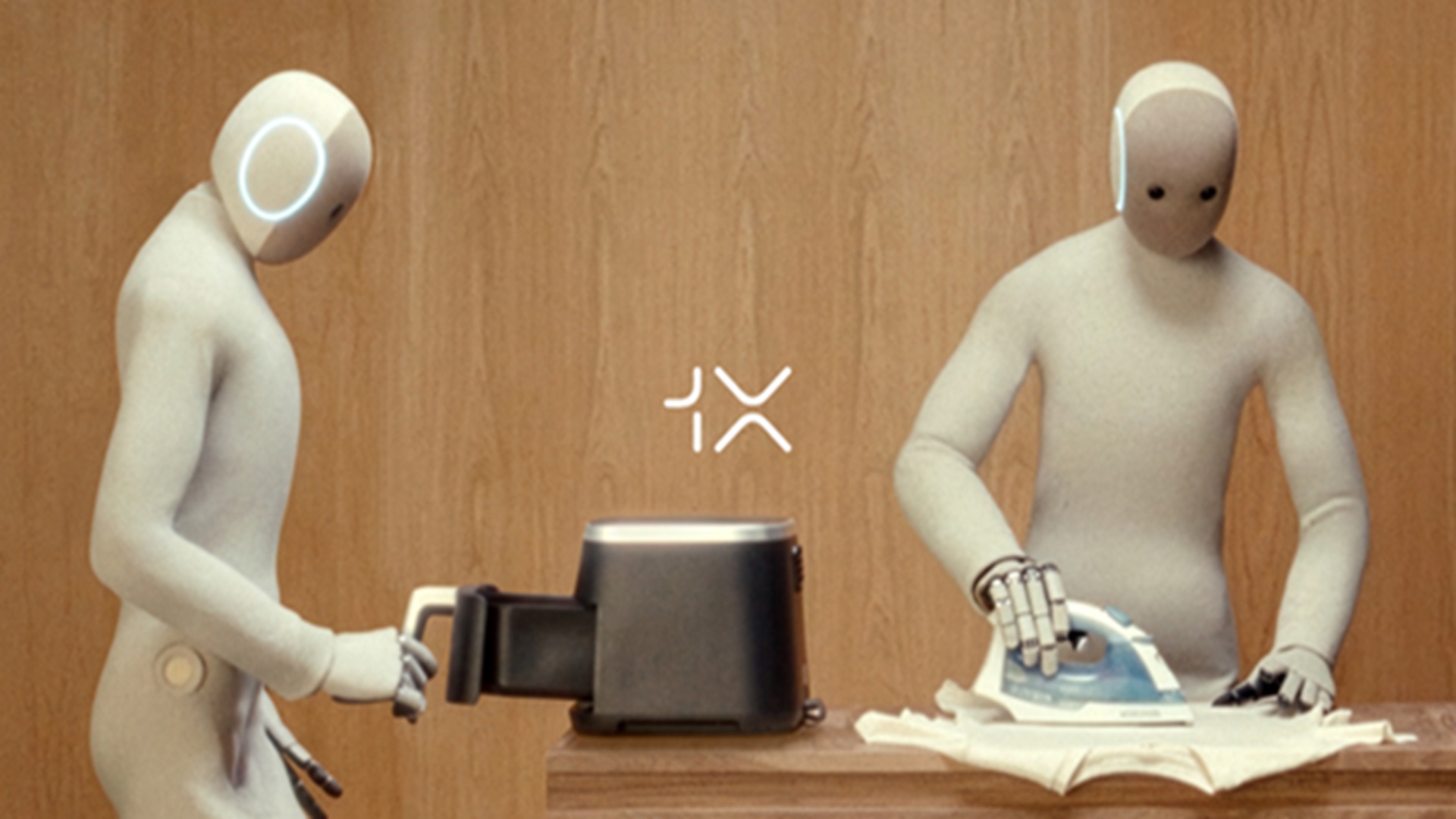
This includes opening sliding doors, operating toilet seats, ironing clothes, and combing hair.
The company says this reflects the extensive human knowledge captured in the video transferred to the robot's movements.
“The 1X World Model allows NEO to turn any prompt into a fully autonomous robot action, even a task or object it has never seen before,” said Daniel Ho, AI researcher at 1X.
A robot that learns by itself
Beyond individual tasks, this update changes how NEO improves over time. Traditional humanoid robots rely heavily on data collected by human operators, which is time-consuming and costly.
The 1X world model allows NEOs to collect their own data while interacting with the world, creating a self-reinforcing learning loop.
This also means an advantage for NEO, as the video model is improved more extensively. Because world models are built around video understanding, advances in video AI directly translate into improved robot capabilities.
Another focus is robustness. Homes are unpredictable, with changing lighting, clutter, and constant movement.
1X says the world model helps NEO remain stable and adaptive in these situations, allowing it to generate reliable actions even when the environment changes rapidly.
NEO is available now from 1X's online store. Early access is priced at $20,000, with priority delivery scheduled for 2026, and a $499 monthly subscription option.
Although still in its early stages, this update points to a future where humanoid robots learn like humans, rather than like machines.


