OMAHA, Neb. (WOWT) – Finding ways to harness the power of artificial intelligence is a challenge across every industry. What works, what doesn’t work, and what’s ethical.
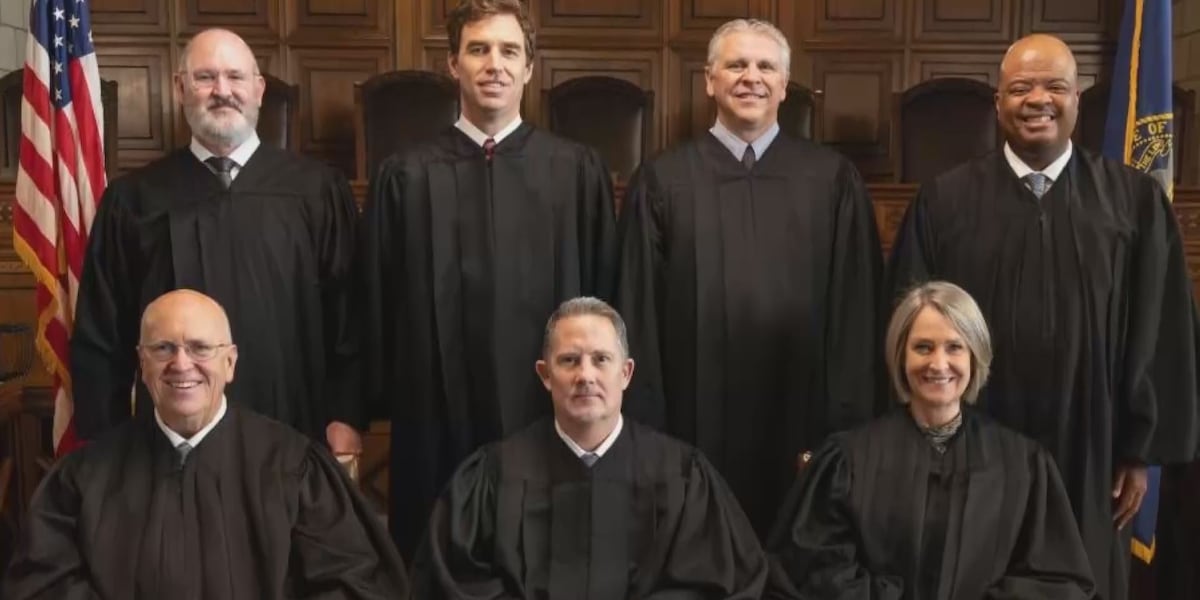
The Nebraska Supreme Court heard arguments in a divorce and custody case this month, but what the justices really wanted to know was: Did a lawyer really write this?
This is a big deal for lawyers arguing cases before the Nebraska Supreme Court. The first was an appeal of a divorce case from Omaha. But 37 seconds into arguments, the justices cut off Omaha attorney Greg Lake.
“Before we get to the point, I would like to ask you about the brief,” the judge said.
“Of course,” Lake said.
“And there were a number of errors in the brief that was submitted. Could you please explain how that happened?” the judge asked.
“That’s exactly right, sir. It was my 10th wedding anniversary, and while I was on the plane, my computer crashed, and I uploaded the wrong version of the brief,” Lake said.
Extensive errors discovered
Opposing attorneys told the court that of the 63 references Lake made in his brief, 57 contained some sort of flaw.
“The brief that was submitted contained incorrect citations from cases, hypothetical cases, and erroneous citations from statutes. Perhaps in the version you submitted to us, how did all this come about?” the judge asked.
“For sure. It was a draft. And I…my writing process is when I’m drafting, I stick with things that I know won’t pass muster,” Lake said.
“What’s important in this room is whether you used artificial intelligence. Did you?” the judge asked.
“No, I didn’t,” Lake said.
“With all due respect, if you weren’t using artificial intelligence, how would you be quoting a case that doesn’t exist? So, frankly, it’s a little hard to believe that it was just a misquote,” the judge said.
“Indeed, sir. And again, I…my computer was broken,” Lake said.
client concerns
Jason Regan is a client whose divorce and custody discussion was essentially hijacked by AI questioning for four minutes, leaving him wondering if the merits of his case would even be considered.
“This was a place where I felt heard,” Regan said.
“That’s why you go to experts and pay a lot of money for their expertise. I thought I was safe,” Regan said.
Lake rates are $375 per hour.
Expert perspective
Professor George McHendry teaches AI ethics at Creighton University.
“In the legal field, we are seeing the immediate impact when technology fabricates incidents,” McHendry said.
“We’re going to see the courts become more and more exhausted, and I wouldn’t be surprised if someone’s license to practice law is at risk at some point,” McHendry said.
“Why shouldn’t this appeal be treated as frivolous when there were so many errors and fundamentally misleading comments in the brief?” the judge asked.
“Sir, I don’t have a good answer to that,” Lake said.
Consequences and wider impact of the incident
The Nebraska Supreme Court heard the case under advisement. Opposing lawyers suggested the entire case should be thrown out. The court asked for an opinion on whether there should be sanctions for Greg Lake’s actions.
“I’m not running away from this…I made a mistake,” Lake said.
The Nebraska State Disciplinary Board could not say whether charges have been filed in this case. However, in recent months, several Douglas County attorneys have been sanctioned and paid fines for using AI.
An online database tracking AI hallucination lawsuits has compiled 958 cases around the world, including sanctions. Most of the people who misused AI were lawyers. Others are defendants who represent themselves.
The Attorney General filed a friend-of-the-court brief to remind the justices that AI plays a central role in making lawyers’ work more efficient, and that Nebraska rules already require attorneys to verify the accuracy of court briefs when using AI.
Copyright 2026 WOWT.Unauthorized reproduction is prohibited.