
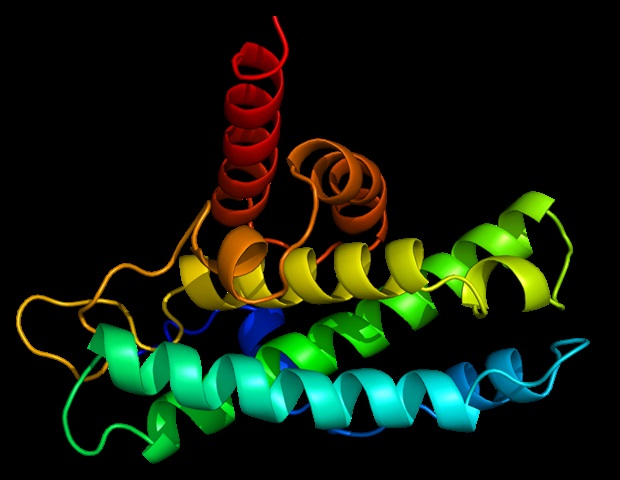
The search space for protein engineering is growing exponentially in complexity. A protein of just 100 amino acids has 20^100 possible variants, which is more combinations than there are atoms in the observable universe. Traditional engineering methods can test hundreds of variants, but limit exploration to a small region of sequence space. Recent machine learning approaches enable broader searches through computational screening. However, these approaches still require tens of thousands of measurements or 5–10 iterative rounds.
With the advent of these fundamental protein models, the bottleneck of protein engineering has returned to the laboratory. A single protein engineering campaign can only efficiently construct and test hundreds of variants. What is the best way to select hundreds of evolved proteins with significantly improved functionality to most effectively discover them? To address this problem, we developed MULTI-evolve, a framework for efficient protein evolution. It applies a machine learning model trained on a dataset of around 200 variants, focusing specifically on pairs of function-enhancing mutations.
Published today is sciencethis work represents Arc Institute’s first lab-in-the-loop framework for biological design, with computational prediction and experimental design tightly integrated from the start, and reflects extensive investment in AI-guided research.
Learning from pairwise interactions
Protein evolution involves two fundamental steps: finding beneficial mutations and combining them synergistically. Early in the development of this approach, we realized that a neural network trained only on single-mutant data could not reliably predict which combinations of multiple mutations would work. These models lack information about how mutations interact, and most large datasets of random mutants are useless because the majority of mutations do not enhance function, so testing thousands of random mutants can pretty much teach the model what doesn’t work.
Our insight was to focus on quality over quantity. First, we identify approximately 15-20 function-enhancing mutations (using protein language models or experimental screens) and then systematically test all pairwise combinations of those beneficial mutations. This generates approximately 100-200 measurements, all of which are useful for learning useful epistatic interactions.
We computationally validated this using 12 existing protein datasets from published studies. By training the neural network on only single and double mutants, we found that the model was able to accurately predict complex multiple variants (variants with 3 to 12 mutations) across all 12 diverse protein families. This result held true even when we reduced the training data to just 10% of the available data.
Training on double mutants works because it reveals epistasis. A double mutant may perform better than the sum of its parts (synergism), worse than expected (antagonism), or perform exactly as expected (additivity). These pairwise interaction patterns teach the model the rules for how mutations combine, allowing it to estimate which combinations of 5, 6, or 7 mutations will work synergistically.
Next, we applied MULTI-evolve to the three new proteins. APEX (up to 256-fold improvement compared to wild type, 4.8-fold over already optimized APEX2), dCasRx for trans-splicing (up to 9.8-fold improvement), and anti-CD122 antibody (2.7-fold improvement in binding to 1.0 nM, 6.5-fold increased expression). For dCasRx, we started with a detailed mutational scan of over 11,000 mutations, extracted only function-enhancing mutations, and tested their pairwise combinations. This demonstrated the value of strategic data curation for efficient engineering.
Each requires experimentally testing only about 100-200 variants in a single round to train a model that accurately predicts complex multiple variants, compressing what would traditionally take months and 5-10 iteration cycles into weeks.
MULTI-evolve loop
MULTI-evolve integrates three innovations into an end-to-end framework.
1. Efficient mutation discovery is possible by combining protein language models
Although a single mutation can improve a protein’s function, several mutations must be combined to significantly improve function. Previous studies have demonstrated the ability of protein language model zero-shot methods to predict which mutations are likely to improve function, but individual methods rarely identify mutations to generate higher-order combinatorial variants.
To identify many function-enhancing mutations, our solution was to combine predictions from several different models with two scoring methods, including protein sequence analysis and 3D structure analysis. We tested this across 73 diverse protein datasets and found that our approach identified an average of about 20 beneficial mutations, compared to about 11 for a single model.
When applied to APEX, the A134P mutation was identified that increased activity by 53-fold. Standard protein language model-based methods have systematically missed this problem because they penalize proline substitutions. One of our ensemble scoring strategies allows A134P to emerge as a candidate in cases where it has been overlooked, by normalizing for amino acid-specific biases such as bias against proline substitutions.
2. Neural networks predict which combinations are most effective
Our next step was to determine the most effective way to take a set of informative single mutants and pairwise double mutants and combine them into multimutant variants with up to seven mutations.
Through computational benchmarks, we demonstrate that a fully connected neural network can reliably predict the activity of multiple mutants by training primarily on single and double mutants. Across 12 diverse protein datasets, our model correctly identified the top performers more than half the time.
Indeed, we demonstrate that MULTI-evolve can identify hyperactive variants with up to seven mutations across three different proteins. We design multiple mutational variants in one round of machine learning. The model is trained on a compact training set of approximately 200 strategic variants, and the proposed candidates are experimentally tested on only 9.
3. MULTI assembly method enables rapid synthesis
Another bottleneck is building and testing predicted variants. Commercial DNA synthesis is expensive and time-consuming, especially for complex multiple mutants. Existing laboratory methods for multi-site mutagenesis have low efficiency and the subjective nature of oligo design can lead to unreliable results.
To address this, we developed MULTI assembly, a multisite mutagenesis method to efficiently construct complex variants. By systematically optimizing reaction conditions, oligonucleotide design, and assembly parameters, we achieved assembly efficiencies of 40–70% for variants with up to nine mutations spanning several kilobases. We also developed a computational oligo designer that takes target mutations as input and outputs optimized primers for efficient assembly. All of this can be completed in days instead of weeks.
Would you like to evolve MULTI too?
The MULTI-evolve framework is modular and will improve as the field advances. Better protein language models will enhance mutation discovery, and this approach can be naturally integrated with other design tools to improve computationally designed proteins and optimize therapeutic candidates.
We have made MULTI-evolve available as an open-source tool to handle protein language model prediction, neural network training, and MULTI assembly oligo design. Whether you’re working on enzymes, genome editors, or therapeutic proteins, this framework provides a systematic path from initial mutation to optimized multiple mutants.
We look forward to seeing how the community applies MULTI-evolve to protein engineering challenges. If you have any questions about applying this to your work, please contact us.
sauce:
Reference magazines:
DOI: 10.1126/science.aea1820


