
Materials scientists at the University of Washington are using artificial intelligence to uncover a new quantum phenomenon in layered crystals of molybdenum ditelluride. The researchers used AI to simulate vast stacks of these atomic sheets, revealing complex behaviors not present in smaller configurations. This stacking method is important because new quantum effects do not exist at smaller scales. The team’s research, published June 2 in the Proceedings of the National Academy of Sciences, demonstrates how AI can act as a replacement for supercomputers and predict the behavior of materials at scales previously impossible to model. “What’s interesting is that AI and quantum computing are starting to change not only the problems we can solve, but also the way we do research,” said Ting Kao, associate professor of materials science and engineering at the University of Washington and senior author of the study, hinting at a future where these quantum materials can power more energy-efficient electronics.
AI simulates layered molybdenum ditelluride that brings new quantum phenomena
Sheets of molybdenum ditelluride exhibit quantum behavior when stacked together into a substantial stack, but this behavior is not observed in smaller configurations. This suggests that the placement itself is important for unlocking new physical properties. Researchers at the University of Washington have used artificial intelligence to model these large stacks, a feat previously hampered by limitations in computing power. AI can extrapolate behavior from limited datasets to predict properties of complex material systems, effectively acting as a surrogate for supercomputing. This approach allowed the team to virtually stack dozens of atomic sheets, revealing emergent phenomena that would have been impractical to simulate using traditional methods. Many materials exhibit beneficial properties only when their atomic structures interact over long distances, so the ability to accurately predict large-scale behavior is critical.
These quantum materials hold promise for future technologies such as energy-efficient electronics and the rapidly developing field of quantum computing. Cao and his colleagues are now focused on expanding the dataset and integrating AI and quantum computing to create more powerful hybrid simulation tools. Cao said, “The next step is to integrate these tools. AI can be used to guide quantum simulations, and quantum computers can be used to generate new data and insights that improve AI models.”
What’s interesting is that AI and quantum computing are starting to change not only what problems we can solve, but also the way we do research.
Quantum computing explores exotic Laughlin state material phases
The pursuit of new quantum materials is accelerating through the combined application of artificial intelligence and quantum computing, providing researchers with unprecedented capabilities in materials discovery and design. Recent research at the University of Washington demonstrates a synergistic approach to exploring complex material behavior beyond the limits of traditional supercomputing. A study published in Nature Communications detailed the use of quantum computers to investigate Laughlin states, an exotic phase of matter that is notoriously difficult to model using classical methods. This stage exhibits unique quantum properties that are potentially valuable in future technologies. The team leveraged the natural aptitude of quantum computers to simulate quantum systems, effectively circumventing computational bottlenecks. Cao envisions a future where these tools work together to create self-improving design loops.
With proper training, AI models can act as fast and relatively inexpensive supercomputers to infer the behavior of large material systems from relatively small datasets.
Complementary AI and quantum approaches accelerate materials discovery
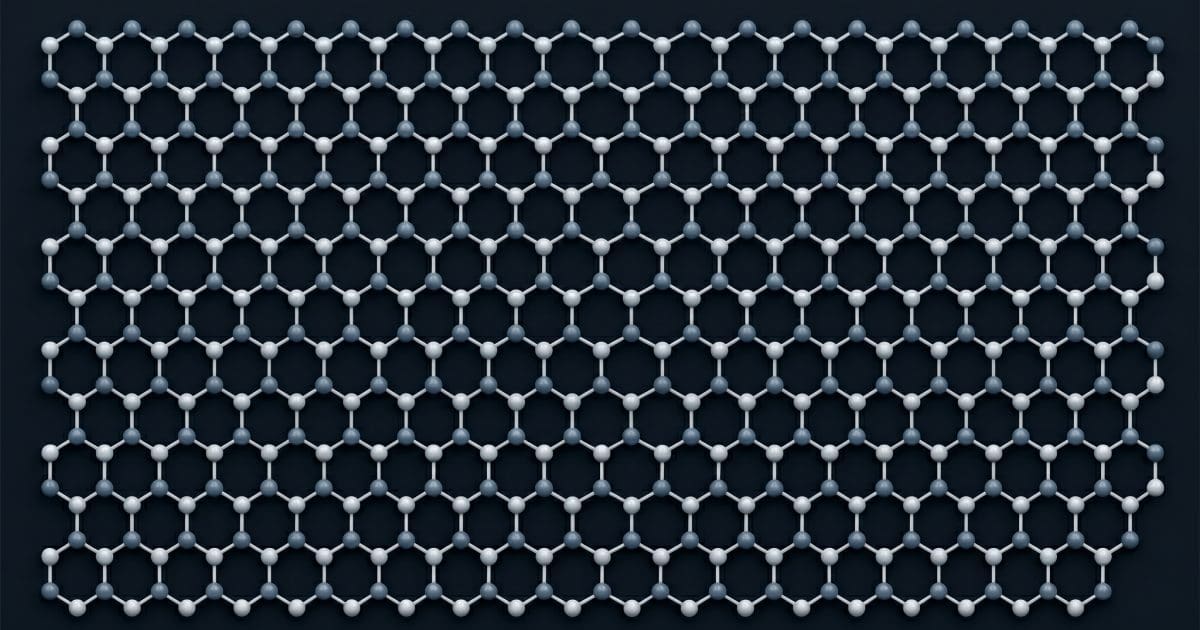
Rather than relying solely on traditional computational techniques, the team leveraged AI to model large-scale stacks of molybdenum ditelluride, revealing emergent quantum phenomena not present in smaller configurations. These layered crystals exhibited a complex lattice structure when virtually assembled. This stacking method proved to be of great importance, as the simulations revealed behaviors that could not be predicted by conventional supercomputers, effectively expanding the scope of materials exploration. Together, these two approaches allow quantum computation to generate data that improves AI models and enable self-improving design loops in which AI guides subsequent quantum simulations. The team’s ambition goes beyond simply identifying promising materials. They aim to create a hybrid system that integrates both technologies.
Our field is fundamentally changing. What was literally impossible a few years ago is now becoming commonplace.


