Makenzie Hoover/South Dakota Searchlight
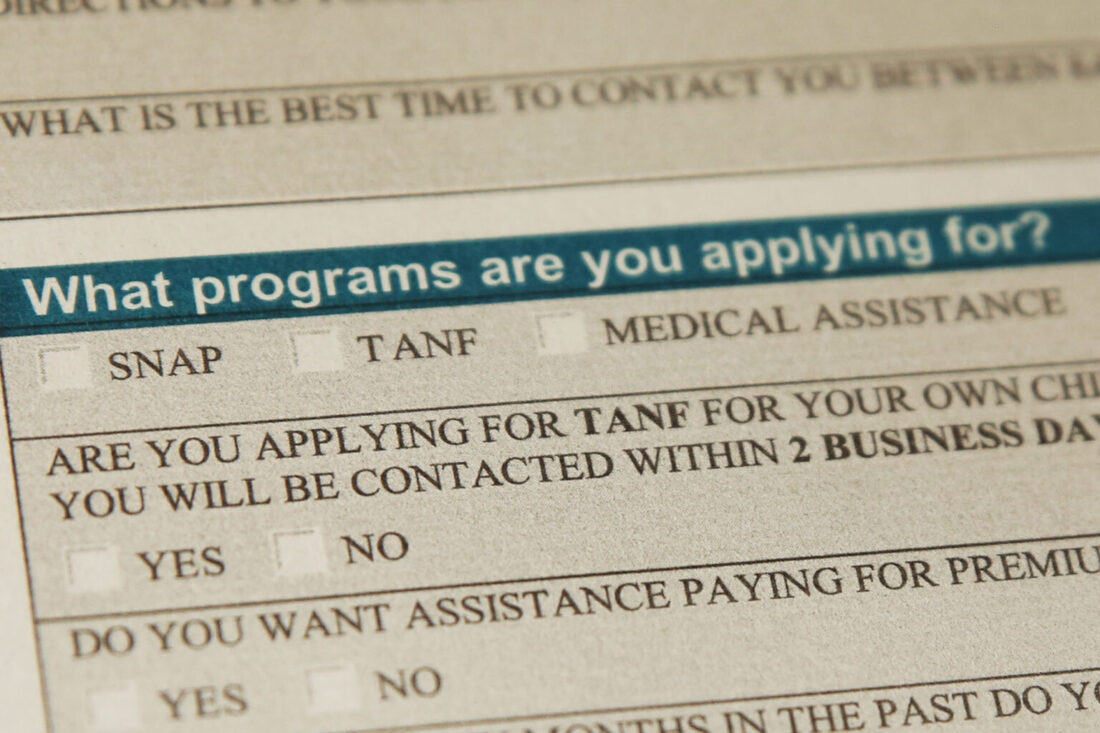
The Michigan Department of Health and Human Services has begun using artificial intelligence to increase the number of Supplemental Nutrition Assistance Program cases it can consider, department officials told members of the Senate DHHS Appropriations subcommittee last week.
Discussing efforts to comply with new federal requirements, the department’s chief operating officer, David Knezek, said the department has introduced an AI case reading tool to help employees go line-by-line through cases to ensure the department is making accurate decisions about payments before any money is disbursed.
Under HR 1, also known as the “One Big Beautiful Bill Act,” states would be required to pay a portion of their SNAP benefits based on their payment error rate, or how accurately the state determines eligibility and benefits for households participating in the program. In analyzing the change, the nonpartisan Brookings Institution noted that the measure does not consider unfairly denying applicants an error and that the rate is not a measure of fraud.
Knezek told committee members that the department can only manually review a relatively small number of cases.
“With this AI case reading tool, we will not only be able to scan all cases in a perfect environment before any money is out, but we will also be able to target the cases that are most likely to experience payment error rates,” said Knezek.
He pointed out that single-person and two-person households had the largest margin of error, and households with a larger number of people had the largest dollar margin of error.
“AI case reading tools allow us to target cases with the highest likelihood of fraud,” Knezek says.
Knezek said the ministry is also deploying an optical character recognition tool to scan documents and enter information such as pay stubs submitted to the ministry to avoid human error on the front line and allow for human verification on the back end.
On Monday, Michigan Advance asked the department when the AI case reading and character recognition tools were introduced, what programs are being used, whether it disclosed to applicants that AI was being used to review cases, and what safeguards are in place.
Two days later, department spokeswoman Erin Stover said the department has been using optical character recognition tools for several years and recently began using AI-assisted case reading to aid in case reviews.
Stover said in an emailed statement that while tools are being used to flag discrepancies, eligibility staff remains responsible for determining all cases.
“AI-assisted case reading capabilities are part of a broader effort to enhance accuracy and prepare for federal policy changes under HR 1 that increase the importance of accurate eligibility determinations,” Stover said.
Stover said the department uses tools approved by the Department of Technology, Management and Budget within a secure system and does not use public-generated AI to process cases.
“Safeguards are in place to protect applicant data, it is only accessible to authorized personnel and treated in accordance with state and federal privacy requirements,” Stover said.
Applicants are also advised that their information may be verified through a data matching and vetting process as part of the eligibility determination, and all applications are subject to review to determine eligibility in line with federal requirements, Stover said.
Stover later told the Michigan Advance that the state’s case leaders are using Google Vertex AI. The company describes it as “a unified, open platform for building, deploying, and extending generative AI, machine learning models, and AI applications.”
New AI tools aim to reduce errors, but also raise common concerns
The agency’s decision to incorporate artificial intelligence into case decisions is reminiscent of the state’s 2013 effort to automate the review of unemployment cases through the Michigan Integrated Data Automation System (MiDAS), which led to multiple lawsuits and settlements that awarded repayments and damages to many individuals wrongly accused of fraud.
Undark Magazine reports that more than 40,000 people were prosecuted for misrepresentation in the first two years of the scheme’s introduction, and the agency demanded payments of around five times the benefits.
The Michigan State Auditor’s Office subsequently investigated 22,000 cases marked as fraudulent and determined that 93% did not actually involve fraud.
There are many reasons to be wary and concerned about the Department of Health and Human Services’ use of AI to make SNAP decisions, given the state’s track record of using algorithmic fraud detection systems, Michele Gilman, a law professor at the University of Baltimore School of Law, told the Michigan Advance.
One of the key questions that comes to Gilman’s mind is how well tested and vetted are case reader tools?
“Time and again, we see these AI systems being deployed without proper testing, leaving the recipient as a guinea pig in an AI experiment, and that is unacceptable,” Gilman said.
One of the challenges with using fraud detection systems, Gilman points out, is that the rate of actual fraud is low, whether it’s for public benefits, banks, or credit cards. As a result, he said, programmers have a hard time programming tools to detect fraud because they don’t have robust data, leading to high rates of false positives and negatives.
According to the Benefits Technology Advocacy Hub, the MiDAS system flags any data discrepancies, no matter how minor, as fraud and requires applicants to follow up within 10 days. The system also averaged the applicant’s entire income rather than looking at individual salaries, leading to discrepancies in system-determined income and increasing fraud determinations.
Given that these systems generate false positives and negatives, having a layer of human review becomes increasingly important, Gilman said. However, these reviewers must have knowledge of the limitations of the AI system to avoid unduly postponing system decisions.
Gilman said technology can play a role in working with officials, but the ultimate responsibility lies with the agency.
“It shouldn’t be a case of ‘the vendor failed’ or ‘the AI went crazy’ so that the real accountability ultimately lies with government officials,” Gilman said.
She pointed to the AI Risk Management Framework released by the National Institute of Standards and Technology. This framework emphasizes extensive human integration at all stages of the AI lifecycle.
Jennifer Lord represented people accused of fraud in a class action lawsuit against the Michigan Employment Insurance Agency. While working on the Bauserman v. Unemployment Insurance Agency case, Lord also advocated for guardrails around the use of AI in government services, but said those efforts have yet to bear fruit.
Gilman says that under former President Joe Biden’s administration, there was a lot of attention on how AI could go wrong. In 2023, Biden issued an executive order putting guardrails on AI development and directing the U.S. Department of Agriculture and Health and Human Services to issue guidelines for the use of AI in programs such as SNAP and Medicaid. The guidelines discussed AI issues that impact civil rights and safety and acknowledged data privacy concerns.