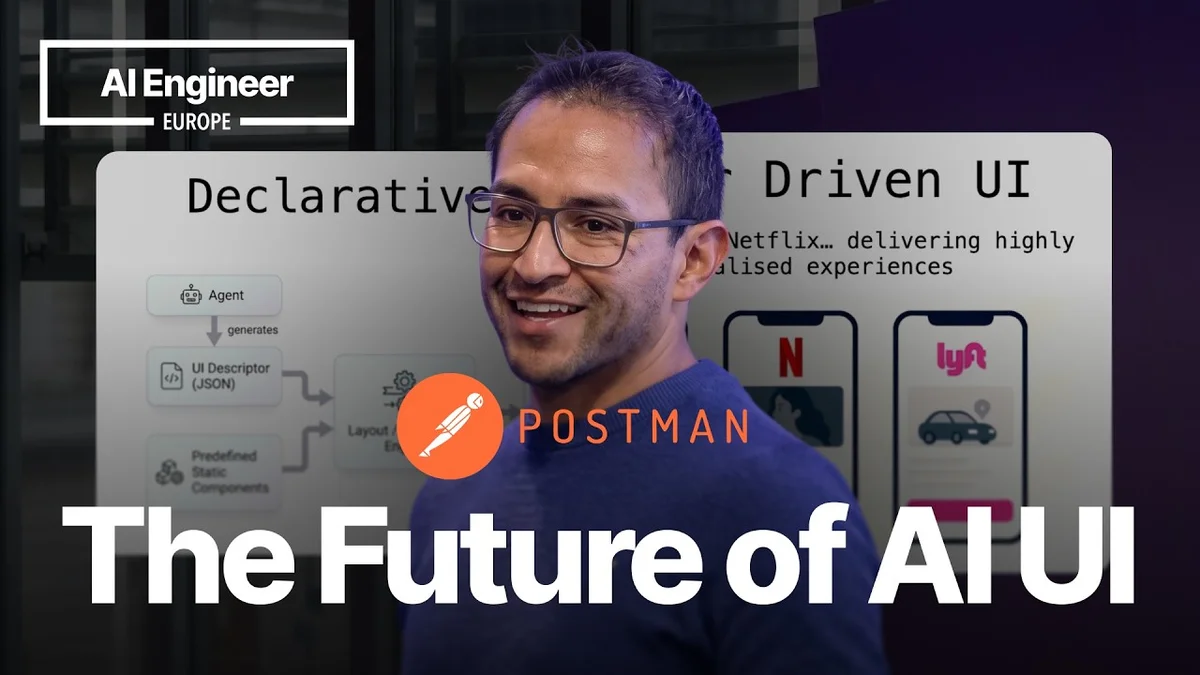
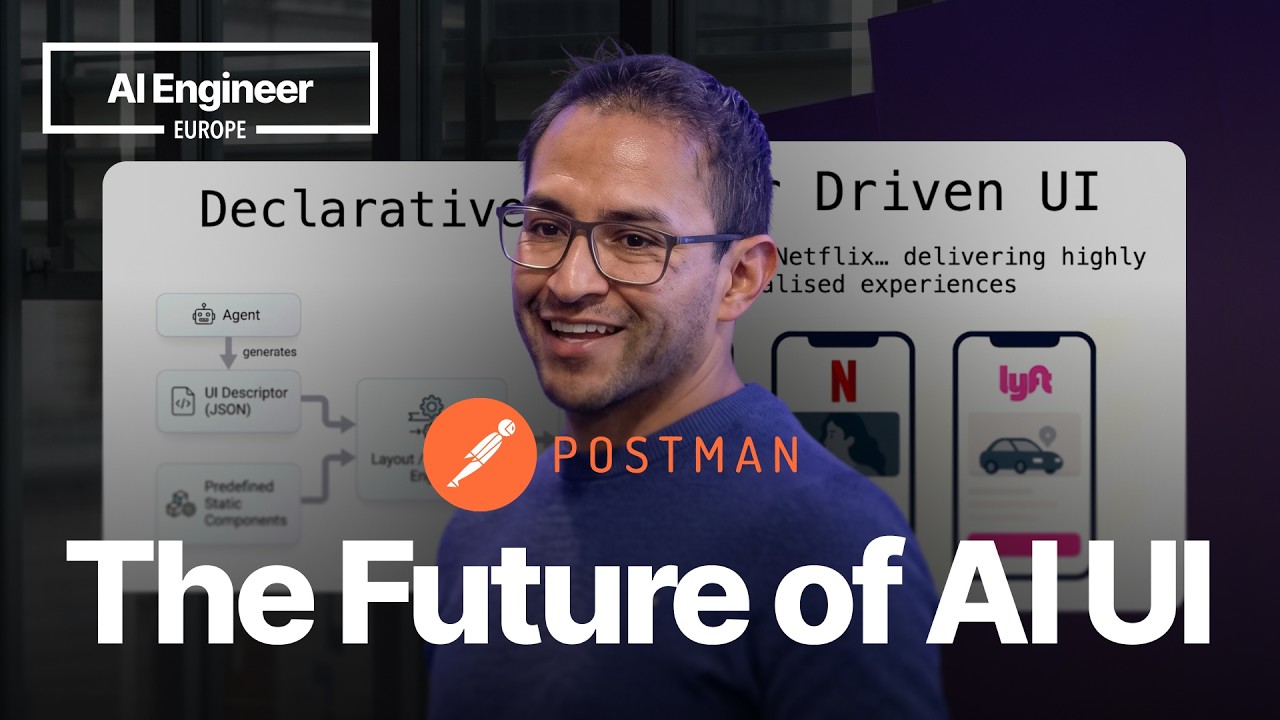
Postman’s Ruben Casas discusses the evolving field of user interface design, focusing on design principles for generative UI for MCP (Modern Cloud Platform) applications. This presentation, titled “Beyond Components: Designing Generated UI for MCP Apps,” explores how to go beyond static design elements to create more dynamic and intelligent user experiences.
MCP app generation UI design — from an AI engineer
Visual TL;DR. The limitations of static UI lead to generative UI concepts. Generative UI concepts related to MCP applications. MCP applications require designing for MCP. Designing for MCP enables dynamic experiences. Generative UI concepts are shaping the future of UI.
Static UI limitations: traditional component-based design that assembles predefined UI elements
Generative UI concept: Interfaces adapt and evolve based on context, user behavior, and data.
MCP applications: Modern cloud platform applications with complex data and dynamic workflows
MCP Design: Specific Considerations for Generated UI within an MCP Application Context
Dynamic experiences: Go beyond static design elements to create intelligent user experiences.
The Future of UI: Exploring the Evolving Field of User Interface Design Principles
Visual TL;DR
Understand the generation UI
Casas explains that generative UI represents a shift from traditional component-based design, where developers assemble predefined UI elements. Instead, Generative UI aims to create user interfaces that can adapt and evolve based on context, user behavior, and data. This approach is particularly relevant for MCP applications that often deal with complex data and dynamic workflows.
Designed for MCP applications
The core of Casas’ presentation revolves around specific considerations for designing generative UI within the context of MCP applications. These platforms are characterized by scalability, decentralization, and a constant flow of information. Designing such an environment requires a deep understanding of how users interact with complex systems and how the UI can actively assist them.
Casas emphasizes that simply applying generative AI to existing UI patterns is not enough. We need a more thoughtful approach that rethinks the basic structure of user interfaces. This includes identifying opportunities where AI can generate, suggest, or adapt UI elements to better meet users’ immediate needs and goals. The focus is on creating UIs that are not only visually appealing, but also functionally intelligent and context-aware.