
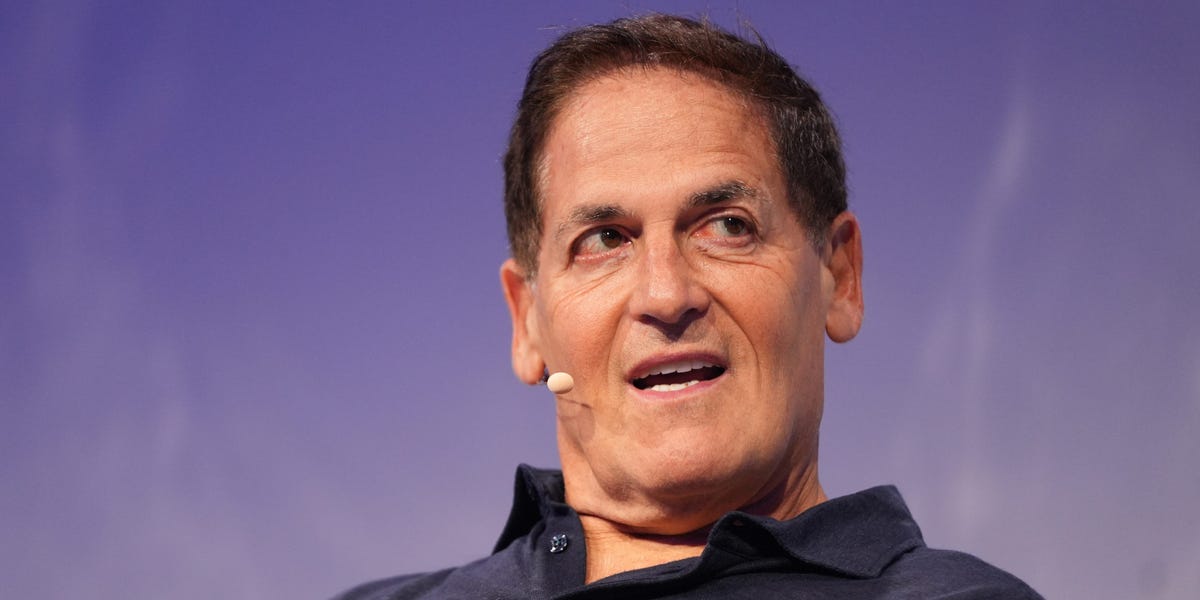
If you think AI will solve the U.S. health care system, Mark Cuban says think again.
He said that while AI agents could assist doctors, the same technology could be used by insurance companies and other healthcare intermediaries to make treatment more difficult and expensive for doctors and patients.
“To address this friction and improve the quality of care for all future agents, conglomerates will deploy multiple hostile agents, doing everything in their power to delay or deny them,” Cuban wrote in an X post on Sunday.
Cuban was responding to venture capitalist Marc Andreessen, who said on X the same day that “AI is already a better doctor than 99.99% of human doctors.”
Cuban said the biggest obstacles to improving healthcare are insurance companies, pharmacy benefit managers and other healthcare intermediaries, who already consume a significant portion of doctors’ time and have every incentive to leverage AI to protect their profits.
“More than 25 percent of a doctor’s time is spent dealing with conglomerates that do everything they can to make their care harder and more expensive for both doctors and patients,” he wrote.
AI is already fighting AI in the medical field
Mr. Cuban said the conflict was already underway.
“We’re already seeing this as conglomerates use AI to find all sorts of ways to manipulate and mislead contracts, while hospitals hire companies to manage their revenue cycles and charge agents as much as 10 percent of revenue to do the opposite,” he wrote.
Cuban has long argued that medical intermediaries drive up costs. In 2022, he co-founded Cost Plus Drug Company. The company aims to lower prescription drug prices by bypassing traditional middlemen and selling generic drugs directly to consumers with transparent mark-ups.
Cuban likened competing AI agents to “the agent version of Mad Magazine’s Spy vs. Spy.” This manga is a long-running manga about two rival spies constantly trying to outwit and sabotage each other.
He also said employers have little visibility into how much healthcare actually costs, making it difficult to optimize spending with AI.
“No company, including yours truly, knows the true cost of the care it buys for its employees and families. Not a single company,” he wrote to X.
Rather than overlaying AI on top of the health care system, Cuban said, companies should use AI agents to negotiate and contract directly with health care providers, bypassing insurance companies and other intermediaries.
Until these traders and intermediaries are removed, AI alone will not solve the industry’s biggest problems, he said.