Special Committee Warning
Lawyers who fail to utilize artificial intelligence (AI) could find themselves in the wrong position with negligence claims, according to a new legal statement from the UK Jurisdictional Taskforce (UKJT).
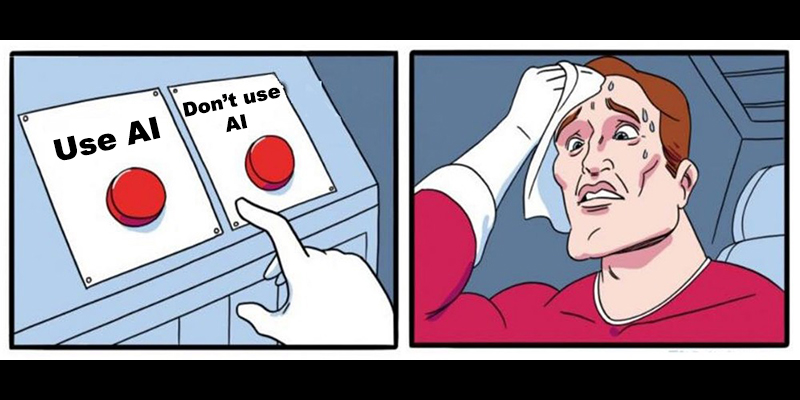
The task force announced this week Legal statement on liability for AI harm He points out that while there is no AI-specific liability regime in England and Wales, current UK law can determine whether and when individuals are liable for harm caused by the use of AI. Among its conclusions: Lawyers can be held liable not only for using AI incorrectly, but also for not using AI at all.
The statement said whether a lawyer or barrister breached their duties by failing to use AI will depend on whether a “reasonable professional of comparable rank/specialty” would have used AI in the same circumstances. As AI adoption becomes more established across the profession, this testing will be guided by regulatory guidance.
An example is cited of a business and property court lawyer who failed to advise a client that AI-assisted tools could be used to review large volumes of documents.
Other professions will also be covered. The statement cites radiologists who fail to use cost-effective and accurate AI tools to identify tumors and auditors who fail to implement AI to detect anomalies across transaction volumes too large for manual review as further examples of potential liability for not using AI.
Similar leeway is given to liability for misuse of AI, with the task force listing several scenarios: failure to perform due diligence on untested tools, failure to explain to customers how AI works, failure to enter sensitive material into unsecured systems, and failure to identify errors or bias in output.
The statement also mentions AI chatbots that communicate on behalf of businesses, concluding that businesses are likely to be held liable if they have chatbots speaking on their behalf. Although there is no UK case law on this point yet, the statement said Canadian courts have held airlines liable for false statements made by chatbots.
UKJT, which operates under LawtechUK and is chaired by Sir Geoffrey Vos, Master of the Rolls, is a government-backed body tasked with clarifying how UK law applies to new technologies. Previous statements regarding crypto assets and smart contracts have been directly adopted by judges.
Commenting on the statement, UKJT Drafting Committee Chair Matthew Ravi KC said: “English law has long had the capacity to meet the challenges of new technologies, and we believe it can do the same with AI.”
The statement comes as several companies continue to invest in their AI tools. Shoosmiths rolled out Project Apollo, a contract review tool developed with Microsoft, Freshfields partnered with Anthropic on a legal AI tool, and Kirkland & Ellis secured $500 million to build its own platform.