Chinese AI company Kuaishou has released two new features for its Kling 2.6 video generator. It has voice control for spoken content and improved motion control for more precise movement processing.
The new voice controls are built on the recently introduced synchronous video audio generation Kling 2.6. Similar to Google's Veo 3 and Sora 2, this model can generate sound effects to match video content, such as voice and music.
Kling AI says the feature supports many types of human voices, including spoken words, conversations, narration, singing, and rapping. It also handles ambient noise and composite scene sounds. This model accepts both pure text descriptions and combinations of text and images as input.
Kling AI highlights numerous use cases, including product demos, lifestyle vlogs, news broadcasts, sports commentary, documentaries, interview formats, dramatic short films, and musical performances such as songs and polyphonic choruses.
Custom voice training allows for more consistent characters
A new voice control feature allows users to upload their own audio to train models. You can also upload audio files directly. The trained or uploaded audio can be applied to your text-to-video conversion work.
This improves character consistency and allows characters in the generated video to speak with a defined and recognizable voice. This makes it possible to create consistent characters across multiple video clips.
Kling AI did not share technical details about how Kling 2.6 was trained and built. The user guide is available here.
Motion controls can now handle complex actions better
The second big feature is the motion control upgrade. According to Kling AI, the system is now able to capture whole-body movements in greater detail. Even fast and complex actions such as martial arts or dancing need to be handled more precisely.
The company specifically highlights improvements in two areas where AI video typically has difficulty. The goal is to ensure that hand movements appear precise and unshakeable, while facial expressions and lip sync remain natural.
Users can upload motion references between 3 and 30 seconds long to create uninterrupted sequences. Scene details can also be adjusted using text prompts.
Striking examples are already circulating on social media, suggesting that AI-generated video content will continue to grow as platform algorithms reward quick clicks and AI creators take advantage of this low-hanging fruit. At the same time, some truly creative ideas are emerging.
competitive pricing
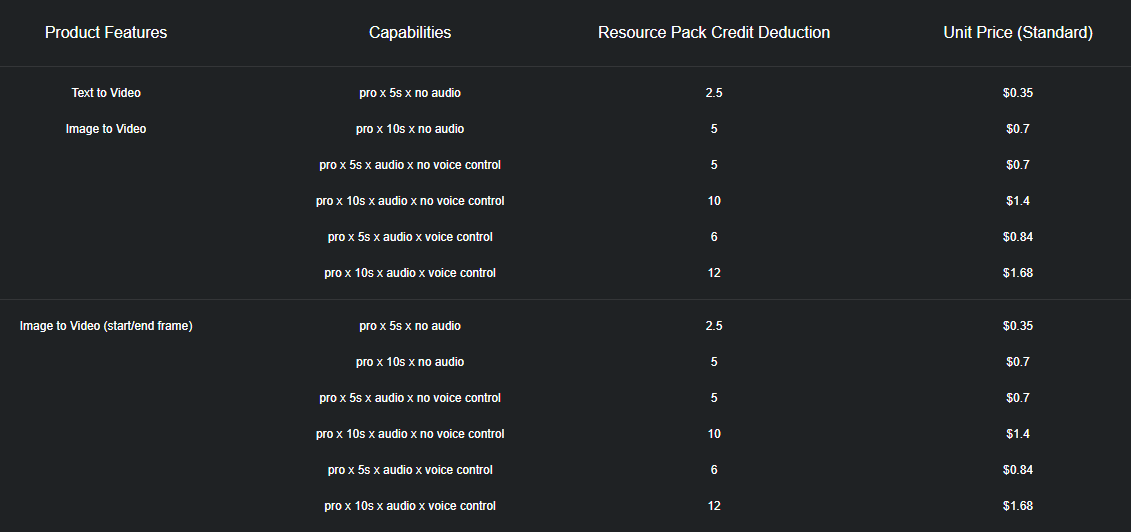
In addition to its own platform, Kling is available through third-party providers such as Fal.ai, Artlist, and Media.io. APIs from these providers cost approximately $0.07 to $0.14 per second of video produced, which is very competitive. Prices vary depending on production speed, length, and resolution. KlingAI itself uses a credit system.
In early December, Kuaishou announced Video O1, which the company calls “the world's first integrated multimodal video model” that combines generation and editing into one system. Video O1 allows you to edit existing videos using text commands, changing the main character, weather, or video style.
With these new Kling 2.6 features, Kuaishou competes in a crowded market with Western companies such as Google, OpenAI, and Runway, as well as Chinese competitors such as Hailuo, Seedance, and Vidu.
Kuaishou operates Kwai, one of the world's largest short video platforms comparable to TikTok. This gives the company access to large amounts of video and audio pairs and motion data that can be used directly to train video models with synchronized sound and realistic motion sequences.
AI News Without the Hype – Curated by Humans
as The Decoder Subscriberyou can read without ads. Weekly AI Newsletterexclusive “AI Radar” Frontier Report 6 times a yearaccess to comments, and Complete archive.
Subscribe now