
Editor's note: This article was produced by journalism students at the University of Massachusetts Amherst in collaboration with MassLive as part of a project in Professor Steve Fox's Introduction to Multimedia class.
Hospitals are increasingly turning to artificial intelligence to improve efficiency, from documentation tools to blood-drawing robots, but nurses and researchers warn that many parts of medical care still require human intervention.
A common medical procedure where artificial intelligence is starting to make its presence felt is blood drawing.
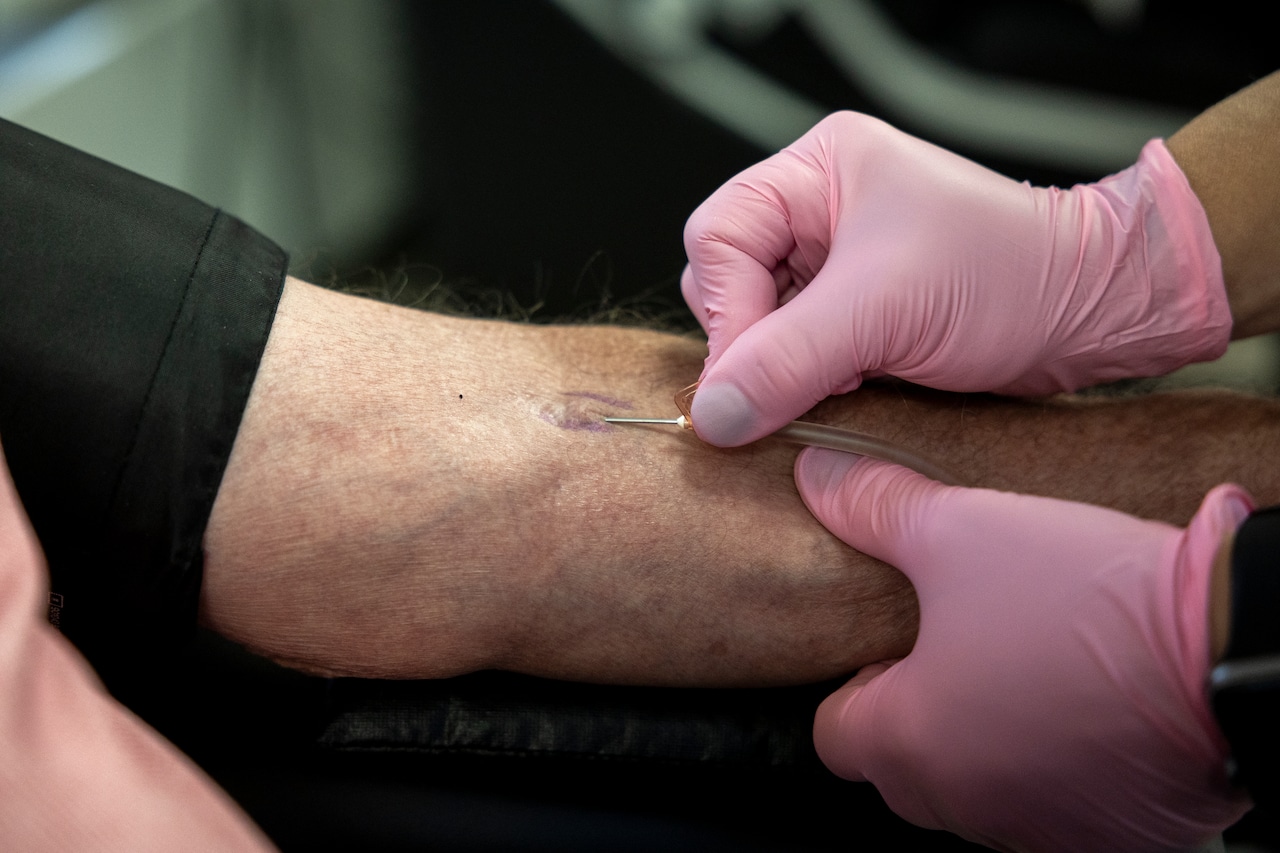
In China, and even in institutions such as Northwestern Medicine and Health Systems in the United States. They have begun research into a robotic phlebotomist designed to locate veins and insert needles without human help.
The patient sits next to the device and rests his arms on the sloping armrests. When you press start, a tourniquet is tightened while infrared light, alcohol spray, and an AI-powered probe locate the vein, according to an article from Rutgers University. The device then inserts a needle to draw blood. In clinical trials in 2024, at least one device manufacturer had a success rate of about 95%.
Meghan Connolly, 20, an associate nursing major at the University of Massachusetts Amherst, said blood-drawing robots miss an important part of patient care.
“A robot might be able to find a vein, but it won't be able to calm a nervous patient or explain what's going on, and it might even confuse them,” Connolly said.
“I'm scared of needles, and I know a lot of people who are. I think part of the job is to make people feel safe. A robot can't do that. You need a human.”
Connolly's concerns highlight a central problem in health care. While AI may be able to perform technical tasks, it cannot replicate the judgment and empathy that human workers bring to patient care.
Dr. Sandeep Reddy, a professor of healthcare management at Australia's Queensland University of Technology, acknowledges the challenges associated with replicating human interactions, but points out that AI has been successful in other areas.
“In Japan and other parts of the world, robots are already being used as social companions for the elderly,” he says. “AI avatars and chatbots can provide emotional connections in other areas as well, so we can imagine situations in which robots with human-like capabilities provide social and emotional support in clinical settings. But in the end, it remains difficult to achieve the full human touch that patients trust.”
Reddy said the technology is still far from being fully automated: “Most blood collection robots are currently limited to research trials and a few hospitals, and operate under human supervision.”
Reddy said that because these systems rely on AI to interpret data, they can produce false outputs, commonly known as AI hallucinations.
“The realization of fully automated robots is still in its infancy,” he says. “There is a risk of hallucinations, and such mistakes can have serious consequences in medical practice. A rigorous scientific evaluation process is required before implementing fully automated, AI-enabled systems.”

However, Sandeep adds that while AI comes with inherent risks, the benefits may outweigh them in certain situations. Sandeep said large-scale language models – AI systems designed to understand and generate human language – should not be used for direct patient care where errors can cause significant harm, but could be useful for low-risk tasks such as documentation.
Annika Marie Schone, a research scientist and assistant professor at Northeastern University who studies AI in healthcare, emphasizes that even when AI works as intended, errors can occur, notes can be incomplete, or the system can misinterpret information, and human oversight is needed.
Schone points out that AI documentation tools rely on accurate input, and even minor errors can impact patient safety. She added that these systems can misinterpret or ignore information and require extra time for doctors to review and correct records.
These challenges lead to a larger conversation around efficiency. While AI is often touted as a way to speed up treatment, Schöne says the reality is more complex.
She said she hasn't seen any efficiency gains from AI over the past six to nine months. Physicians often have to revise notes or fill in missing information, which can actually increase their workload. Routine procedures such as drawing blood also require clinicians to reassure anxious patients and respond to emotional cues in real time, Schöne said, skills that remain difficult to replicate through automation.
“I always think about when you call customer service and find out it's blatantly an AI agent, and the AI agent gets irritated and yells at you because it doesn't understand you. Imagine that in a medical setting, where safety is actually important,” Schone says.
For students and young nurses, this human element is the foundation of nursing. Reflecting on her training, Connolly says, “Learning how to calm patients, read their reactions, and respond empathetically is a big part of my job as a nurse.”


