

Automation fears have long haunted the job market and threatened the future of work. Since OpenAI’s ChatGPT came out in 2022, there’s been no shortage of anxiety around AI’s potential effect on the labor market. Look no further than Citrini Research’s thought experiment, “The 2028 Global Intelligence Crisis,” which imagines skyrocketing unemployment as the result of an AI-fueled doom loop.
While Citrini’s paper is fiction, multiple real companies have laid off workers while aggressively pursuing AI in the four years since ChatGPT came out. Still, recent data from outplacement and executive coaching firm Challenger, Gray and Christmas revealed that AI has been cited in just 3% of all layoff plans announced since 2023, when the firm started tracking that reason for job cuts.
AI’s effect on the labor market
Anthropic’s “Labor market impacts of AI: A new measure and early evidence” report, published March 2026, also shows a gap between perception and reality of AI. It compares theoretical LLM capabilities to the actual use of Anthropic’s Claude across different occupations, using a new measure called observed exposure. The authors identified tasks that could theoretically be automated, then examined how often those tasks appear in Claude API traffic for work-related purposes and sorted them by occupation.
The report found “limited evidence that AI has affected employment to date” and that “AI is far from reaching its theoretical capabilities.” However, the report did find “suggestive evidence that hiring younger workers has slowed in exposed occupations.”
Anthropic’s report identified the following 10 occupations as most exposed.
In other research, Harvard Business School (HBS) analyzed job postings from 2019 to 2025, assigning an augmentation score to occupations in which GenAI had potential to complement the role because it involved analytical, technical and creative work. The study assigned automation scores to jobs likely to be replaced by GenAI because they involved structured or repetitive work. Job postings for roles with high automation scores decreased 13% in the years following ChatGPT’s release, while roles with high augmentation scores increased 20%.
While AI is having a limited effect on hiring, it is slowing job growth in some areas more than others and changing hiring priorities. It’s also tied to recent layoffs at several companies.
Examples of layoffs alongside AI investment
Many companies have laid off workers while aggressively pursuing AI strategy. Examples include the following:
- Amazon laid off nearly 10% of its workforce – 30,000 people – in two rounds of layoffs in October 2025 and January 2026. It plans to invest about $200 billion dollars in AI and data centers, and another $50 billion in OpenAI.
- Block laid off more than 40% of its workforce of 10,000 in February 2026. The financial technology company was using intelligence tools to do more with smaller teams, CEO Jack Dorsey said in a statement.
- Oracle let thousands of global employees go in March 2026 across many departments. It has a $500 billion dollar deal to support OpenAI’s AI infrastructure.
- Atlassian. Atlassian laid off about 1,600 workers — approximately 10% of its workforce — in mid-March 2026. Co-founder and co-CEO Mike Cannon-Brookes wrote on the company’s site that “We are doing this to self-fund further investment in AI and enterprise sales, while strengthening our financial profile.”
- Meta laid off about 8,000 people in May 2026 as it moved resources, including another 10% of the workforce, to AI initiatives. This followed 700 laid off from its Reality Labs unit in March when CEO Mark Zuckerberg said the company is seeing projects that used to require big teams accomplished by one talented person.
New and augmented AI roles
Job replacement isn’t the only effect AI is having on work. AI is also automating rote, repetitive tasks and creating new jobs that require AI skills. New job types that AI has created or increased interest in since ChatGPT’s release include the following:
- AI model auditors test AI models and related tools during audit engagements, ensuring models adhere to a company’s standards.
- Prompt engineers are hired to optimize the text-based LLM inputs to improve the system outputs. They build prompt libraries, establish standards and fix inconsistencies in responses to refine models.
- AI ethicists act as a business’s moral compass. They guide the responsible development, deployment and oversight of AI systems, ensuring they’re safe, fair and transparent.
- AI architects design the technical framework necessary to implement AI, including the infrastructure and data pipelines. They translate business goals into a functional implementation.
- AI interaction designers shape the decision pathways between human users and AI systems.
- Data labelers annotate information to train AI models. Typical tasks involve identifying objects in photos, tagging videos and sorting text.
However, there are two sides to AI augmentation. AI has empowered some users to complete tasks they previously couldn’t and even change the scope of their jobs. For example, DevOps engineer Suresh Gangula used TypeScript, Amazon Bedrock and Claude 4.5 to create a tool that helps his team quickly delete, shut down and resize services at his company.
In other cases, AI tools have complicated work. For example, the Guardian reported that Amazon workers use a tool that generates code quickly. Developers end up reviewing often flawed AI-generated code instead of writing code.
Jobs most affected by AI
The following are 17 job types that are being automated or otherwise affected by AI:
1. Administrative and office support roles
GenAI tools can help office administrators and assistants with tasks such as basic email correspondence, identifying data trends, finding mutually available meeting times across time zones and other summary and synthesis tasks. Data entry, typist and clerk roles are highly likely to be automated.
2. Authors and writers
GenAI tools, such as ChatGPT and Google Gemini, can generate text that reads like a person wrote it. This has implications for authors and writers, especially in fields or contexts that require less nuance, originality or factual accuracy.
The self-published novel Shy Girl received positive reviews on the Goodreads website. Hachette Book Group planned to publish it but pulled it because of allegations that the author wrote it using AI. Some critics argued that fiction can work on many levels. Even if the words themselves follow ChatGPT’s rhythm, the premise and overall idea can make the book a hit.
Original or specialized writing might become increasingly valuable as generic, AI-generated writing proliferates, obscuring genuine human perspectives. AI tools can also aid writers in developing ideas, fixing grammar or syntax and doing high-level research. Reader sensibilities might shift toward the tell-tale signs of ChatGPT’s writing in time.
3. Coding
The Anthropic study rates computer programmers as the occupation with the highest level of observed exposure. Hiring for junior developers has dropped, and employed developers have added AI code review to their responsibilities. A Harvard study found that when firms adopt GenAI, hiring of junior developers declines sharply.
Programs such as Claude, ChatGPT and Cursor can write fluent, syntactically correct code faster than most humans. Coders who are primarily produce high volumes of low-quality code are most at risk of being replaced. However, those who produce high-quality products have less to fear and can use AI to improve their workflows.
4. Customer service
The customer service sector offers many opportunities for automation. AI-powered chatbots provide speedy, personalized responses to customer questions, theoretically reducing the need for human workers. Other ways AI is being used include robotic process automation, customer self-service and sentiment analysis.
Several companies slashed their customer service staffs in 2025, including Atlassian, Salesforce and Sky UK. Klarna laid off several hundred workers in favor of AI, only to face quality issues and rehire them a year later.
5. Drivers and driver assistance
The trucking and automotive industries use AI for driver assistance, accident prevention, route planning, predictive maintenance and driver training systems. AI has the potential to create new efficiencies in this area.
Car and truck drivers fell below the mean automation score in the HBS study. It ranks industrial truck drivers and taxi drivers as jobs least exposed to automation. Still, it’s possible to hail a self-driving Uber in several U.S. cities. And self-driving trucks are hauling freight on U.S. roads. But even if trucking jobs can be automated at scale, the automation would likely need to be phased in gradually.
6. Legal
There is significant evidence indicating AI will affect legal jobs. Most legal jobs, including lawyers and paralegals, fall above the mean on the HBS automation index.
A 2023 study from Goldman Sachs found AI could perform 44% of the tasks that U.S. and European legal assistants typically handle. OpenAI’s. GPT-4 large multimodal language model passed the Uniform Bar Examination in the 90th percentile. Anthropic also released AI plugins in early 2026 that caused a stir in the legal industry.
Some experts predict the legal industry will face a dynamic similar to that affecting programming jobs. Younger legal workers might have trouble finding work, while more experienced workers use AI to automate rote tasks, such as document review, contract analysis, legal research and case law search.
There have been several cases in which AI has generated fake legal citations. A database maintained by researcher and law lecturer Damien Charlotin identified more than 1,400 legal decisions where courts found generative AI produced hallucinated content.
7. Marketing
The Anthropic research found marketing professionals to be one of the most exposed occupations to AI replacement. AI can automate marketing-related tasks, such as personalized content creation, customer segmentation, social media management and data analysis.
Marketers use GenAI tools to create content, personalize emails and score leads at a faster rate than humans can. AI also helps search engine optimization marketing tasks, generating optimized meta descriptions and title tags, and ensuring a consistent brand voice across marketing materials.
One example of generative AI-powered marketing was the #NotJustACadburyAd campaign that used the digital likeness of Bollywood star Shah Rukh Khan to create thousands of hyperpersonalized ads for small local businesses. The campaign had a microsite that let small-business owners create their own version of the ad featuring the Bollywood star.
Studies indicate that AI is also changing the marketing industry as a whole, with less focus on a unified monoculture.
8. Manufacturing
AI on the factory floor is driving meaningful gains in productivity, quality and resilience. Still, Cisco’s State of Industrial AI report shows manufacturers face numerous barriers to adoption, including cybersecurity concerns, lack of collaboration between IT and operational teams, and unreliable networks.
Manufacturers adopting AI concentrate on efficiency- and throughput-focused applications that align with near-term cost and productivity objectives. These can include process automation, supply chain and logistics automation, and automated quality inspection.
9. Teachers
AI is being used in classrooms to assist teachers with resource creation, lesson planning, administration and grading. It’s also being used to teach; Alpha School is a network of K-12 private schools in several U.S. cities, students use AI-powered, self-paced learning platforms for core academic instruction.
However, AI is also creating new challenges. One immediate concern is that teachers will have a harder time detecting plagiarism or students cheating on assignments in other ways. There’s also concern that AI will erode students’ independent and critical thinking capabilities.
According to a recent survey of more than 9,000 teachers in the U.K., three-quarters are using AI in their daily work. However, 66% of secondary teachers said that pupils’ critical thinking has declined with AI use.
10. Travel and tourism
AI can help travelers discover new destinations and travel opportunities. AI assistants and chatbots assist users with booking flights, renting vehicles and finding accommodations online, offering a personalized booking experience. AI can also perform flight forecasting, analyzing historical price patterns and letting travelers know the best time to book a flight.
Travel companies use AI to analyze the deluge of data their customers generate, such as customer feedback, reviews and polls. Reports predict a looming labor shortage, which AI could theoretically help to ease.
11. Translators
AI has disrupted wages and job availability for interpreters, translators and product localizers, according to Brian Merchant, who writes a newsletter tracking the effects of AI on jobs. In some cases, companies are hiring translators to edit machine-generated output, he added, noting that AI’s translation capabilities can be limited. Translation requires a nuanced understanding of body language and emotions that AI doesn’t always provide.
12. Finance
AI is affecting finance and banking. Financial risk specialists, financial services sales agents, credit counselors, accountants and financial and investment analysts are among the jobs at high risk of automation. Datarails research shows that pay across financial job listings was down for most roles, except for CFOs. It also found that 31% of listings mentioned AI or machine learning skills.
GenAI in finance could be used for financial reporting and summarization, budgeting, expense management, tax preparation and compliance, strategic planning, fraud detection, mergers and acquisitions analysis, and employee training.
AI hallucinations are a significant issue. Accounting and consulting firm Deloitte’s Australian arm was questioned in October 2025 when reports surfaced that a document it produced for the Australian government had AI-generated errors.
13. Engineering
The HBS study found that of all engineering jobs, environmental engineers had the highest potential for automation. Robotics technicians, architects and cartographers are jobs that are more likely to be augmented by AI, the study found. Many engineering jobs involve strict compliance and functional requirements that can be risky to delegate to nondeterministic AI systems.
Generative design is one area where AI is augmenting engineering jobs, expediting the computer-aided design process. It helps with ideation, generating all possible solutions to a problem within a given set of parameters, even when the design is completely novel and a radical change from anything that has come before.
14. Human resources
The hype around AI and the fear of job losses has created a difficult dynamic for HR departments to manage. While dealing with the fear, GenAI is also expected to infiltrate every aspect of HR.
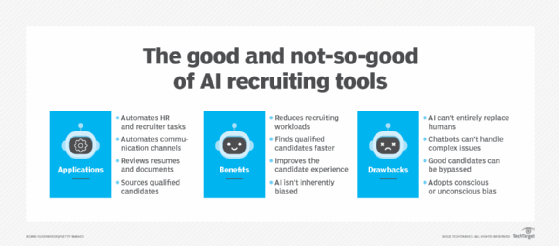
HR professionals are using a wealth of AI-powered recruiting tools, as well as performance assessment, analytics and monitoring tools. Recent Gartner research found that half of HR activities will be AI-automated by 2030. In that same report, 92% of HR leaders said they’ve already taken action to implement AI in HR over the last six months.
Chief HR officers should prioritize upskilling and teaching new skills, such as AI literacy and intelligent workflow design. In addition, they should focus on elevating existing skills, such as data engineering and change leadership, and preserving core human skills, such as emotional intelligence, critical thinking and data judgment.
15. Retail
Many retail jobs fall around or below the mean automation score in the HBS study. Still, big retailers are using AI wherever they can.
For example, Amazon is planning to build hybrid supercenter warehouses that are powered by robotics and AI. The concept is to have in-store shopping, pick-up and delivery handled all in one building. The initiative, called project Kobe, is in early development. An AI layer will help determine what each store will sell, reducing manual planning decisions for store managers. The goal is to eventually automate the selection process. Even with AI-driven selection and in-warehouse robotic automation, Amazon anticipates a continued need for human workers in the stores.
AI is also affecting the way customers shop. Many big retailers, such as Etsy, Target and Walmart, have made their products available for purchase on ChatGPT. Adobe’s 2025 Holiday Shopping report found that GenAI traffic to U.S. retail sites grew nearly 700% year over year. Experts have said that shopping driven by agentic tools like ChatGPT and Gemini would make it harder for retailers to collect data on and serve their customers, because the AI companies would own that data.
16. Software quality assurance analysts and testers
This job category is in Anthropic’s list of top 10 most exposed jobs. It also had one of the lowest augmentation scores in the HBS study.
Test Guild, a company that provides automated software testing learning resources, estimated that more than 80% of development teams use AI in their testing workflows. AI tools can automate the rote testing work, letting people focus on issues that require human perspective and judgment. The tools can write tests, visualize apps and run agentic workflows.
Developers using AI — or anyone with access to AI — can now generate code faster than testers can validate it. This situation is changing the software development dynamic. In some cases, development and testing roles are being combined into one job.
17. Medical transcriptionists
Medical transcriptionists rank high on both HBS and Anthropic’s lists of jobs that could potentially be automated. AI-powered medical transcription tools are reducing time spent on medical data entry and documentation. However, there have been complications.
Some tools have difficulty understanding nuances in human speech. Integration with electronic health records has also been an issue. And there’s also the issue of trust: If patients know a doctor is using AI and worry that it could produce inaccuracies or mistakes, they might withhold information.
Ben Lutkevich is an award-winning technology writer and editor


