

Earlier this month, Amsterdam-based CuspAI raised $30 million in seed funding. The company's mission is clear: use AI to find new materials to fight greenhouse gases. It's led by Max Welling and British chemist Chad Edwards. IO spoke with Welling about his startup, his desire to make an impact, and the technology behind CuspAI's innovation.
He works one day a week as a professor of machine learning at the University of Amsterdam and four days a week on his startup, where it all comes together: “I started in physics, switched to machine learning, and eventually returned to chemistry and physics. At the beginning of my career I worked on theoretical research and wrote a lot of papers. Over the past 15 years, my work has had a much more direct impact. CuspAI is the culmination of all that work. I want it to be successful.”
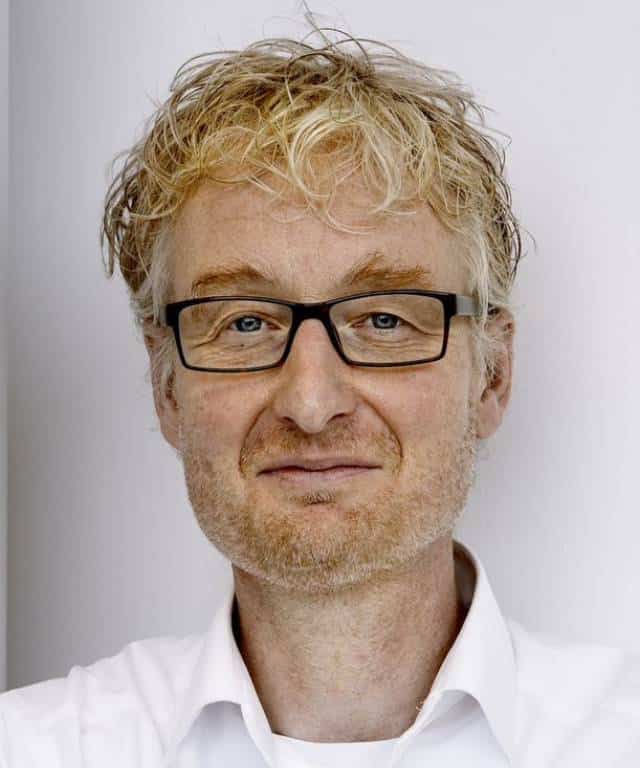
About Max Welling
Welling is a professor and chair of machine learning at the University of Amsterdam and a distinguished scientist at MSR. He started his career as a physicist but has now moved to machine learning. During his postdoctoral studies in London, he met Geoffrey Hinton, otherwise known as the “Godfather of AI,” and worked with him for several years in Toronto, Canada. He previously founded a startup called Scyfer, which he sold to chip design company Qualcomm, and later became head of research at Microsoft Labs in Amsterdam.
What does CuspAI do?
“Our technology mission is to build a platform where companies and researchers can find new materials, using the latest AI and machine learning techniques. Think of it as a kind of molecular search engine: you enter a query: 'I want material X with properties A, B and C'. Then, based on AI and chemical models, the machine starts calculating and suggests materials. At the end of this process, it has a list of materials that meet the requirements. “To begin with, we're focusing on metal-organic frameworks (MOFs),” he says.

Why did you choose MOF materials in particular?
“The choice is mainly socially driven. We want to contribute to something socially meaningful. With MOFs you can do a lot of good things: filter carbon dioxide from the air, store hydrogen, separate gases, do catalysis, etc. Initially, CuspAI is focusing on the carbon capture part.”
There are also technical reasons for this choice: this type of material can be optimized and has many atoms available, which machine learning models can work well with. “So this material is well within the realm of what machine learning can do well today.”
What is the current status of CuspAI?
“We've just closed our first round of investment and are in the process of putting together a team. We should be done by September 1st and then we can get started. The technology we're developing doesn't exist yet, but we expect to be in the market soon. We've partnered with Meta, for example, and are also talking to some chemical and carbon capture companies. We're building a platform, and they should start using it. In about a year, CuspAI should be fully operational. In addition to the team, we're also investing in computing power. Simulating a huge number of molecular combinations requires a huge amount of computing power.”
How difficult was it to raise $30 million for technology that doesn't exist today?
“Actually, it's not that hard. When quantum computers were proposed, we needed to be clear whether it would work or not. At the same time, our concept is one that gives us confidence that within six months there will be something out there. But the question is, how big is the market? How many other companies are doing this, and ultimately are we the ones that can do this best? It's very exciting. We really, really want to make it work.”
When will your mission be accomplished?
“We're good at generating molecules in a computer, so we can synthesize them in the lab and get predictable results. We can then work with larger companies that want to produce them at scale, so they can be used in carbon capture devices and other applications to fight climate change.”

Cradle founder Jere Prince: 'I thought I'd peaked when I left Uber'
When Apple launched the AppStore in 2007, Jere Prince felt it all: “I had to build an app.” He put his money where his mouth was, and it didn't go unnoticed.


