
Newswise — Deep learning has become a powerful tool in quantitative finance, with applications ranging from option pricing to model tuning. However, despite its accuracy and speed, one major concern remains. That said, neural networks often operate like “black boxes” and it’s difficult to understand how they reach their conclusions. This means a lack of validation, accountability and risk management in financial decisions.
In a new study published in risk scienceA team of Italian and British researchers is investigating how deep learning models can be created that are interpretable in financial environments. Their goal was to understand whether their interpretation tools could truly explain what neural networks had learned, rather than simply producing visually appealing but potentially misleading explanations.
The researchers focused on calibrating the Heston model, one of the most widely used stochastic volatility models in option pricing. The mathematical and financial properties of the Heston model are well understood. This makes it an ideal benchmark to test whether interpretability techniques provide explanations that are consistent with established financial intuition.
“We used synthetic data generated from the model itself to train a neural network that learned the relationship between volatility smiles and the underlying parameters of the Heston model,” said lead author Damiano Brigo, professor of mathematical finance at Imperial College London. “We then applied various interpretability techniques to explain how the network maps inputs to outputs.”
These techniques included local techniques such as LIME, DeepLIFT, and layer-wise association propagation, as well as global techniques based on Shapley values, originally developed in cooperative game theory.
The results showed that there is a clear difference between local and global interpretability approaches. “Local approaches that explain individual predictions by locally fitting a model often resulted in unstable or financially unintuitive explanations,” Brigo says. “In contrast, global methods based on Shapley values consistently emphasized input features such as option expiration and exercise in a manner consistent with the known behavior of the Heston model.”
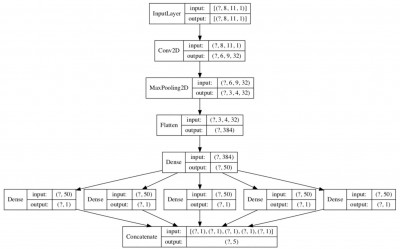
The team’s analysis also revealed that Shapley values can be used as a practical diagnostic tool for model design. By comparing different neural network architectures, the researchers found that fully connected neural networks outperform convolutional neural networks in both accuracy and interpretability for this calibration task, unlike what is commonly observed in image recognition.
“Shapley values not only help explain the model’s predictions, but also help choose better neural network architectures that reflect the true financial structure of the problem,” explains co-author Xiaoshan Huang, a quantitative analyst at Barclays.
By demonstrating that global interpretability techniques can significantly reduce the black-box nature of deep learning in finance, this study provides a path towards more transparent, reliable, and robust machine learning tools for financial modeling.
###
References
Toi
10.1016/j.risk.2025.100030
Original source URL
https://doi.org/10.1016/j.risk.2025.100030
journal
risk science


