

| Text by Zhou Xinyu
Editor | Su Jianxun
Yu Dong, former deputy director of Tencent AI Lab, recently plans to leave Tencent for personal career development reasons, according to multiple independent sources.
As of this article's publication, Tencent has not officially responded.
One of Tencent's early talent pools for large-scale AI models, Yu Dong is a veteran of Tencent's AI ecosystem. After joining Tencent in 2017, Yu Dong served as a special scientist, deputy director of Tencent AI Lab, and chief researcher of Tencent YouTu Lab. Mainly responsible for research and development of speech processing, natural language processing, and digital human-related technologies. Prior to that, he spent nearly 20 years in research and development at Microsoft.
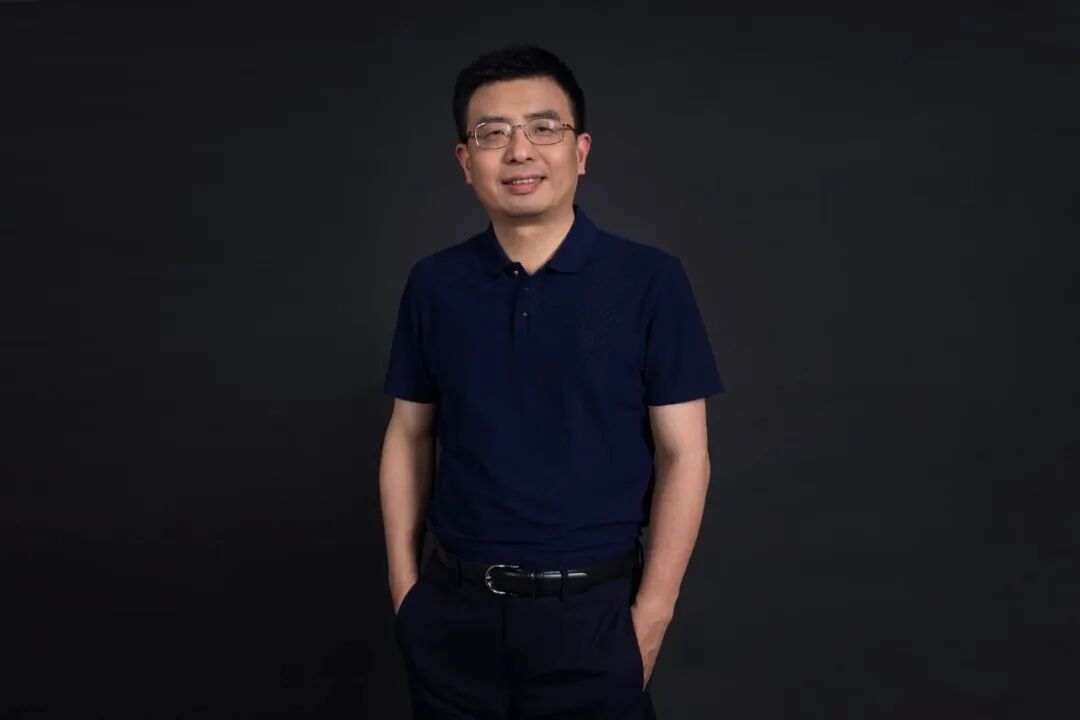
△Yudon. Image source: Internet
Yu Dong is an expert in the field of audio processing and deep learning. He is a former chairman of the IEEE Speech and Language Processing Technology Committee, has published more than 300 papers, and has been granted more than 100 patents. He is one of the first leading researchers to successfully apply deep learning techniques in the field of speech recognition.
During his tenure at Tencent, Yu Dong led research teams that published hundreds of papers in several top academic conferences and journals. He also drove the application of NLP, voice, and digital human-related technologies in Tencent's business.
Yu Dong also made great contributions to the research and development of Tencent's large model “Hunyuan”. The Hunyuan team is part of Tencent's Technology Engineering Group (TEG) and spans multiple departments, including big data, AI labs, and machine learning platform departments. In Hunyuan's research and development system, Yu Dong was also responsible for multimodal generation and understanding and text-related research work.
In building Hungyuan's talent system, Tencent dares not to slow down. Even though the “veterans” have left, there is still an influx of fresh blood.
Starting in 2025, with DeepSeek's aggressive entry, major technology companies quickly reached the following agreement: The underlying model is the core of competitive advantage, and the capabilities of the underlying model determine the upper bounds of the user experience for AI applications. Recently, Intelligent Emergence exclusively reported that Tencent is making a series of internal adjustments, focusing on the research and development of large models.
Meanwhile, Tencent is bringing in new talent and increasing investment in human resources. In late 2025, former OpenAI researcher Yao Shunyu joined Tencent and held positions such as chief AI scientist in the “CEO/President's Office”. Hunyuan quickly attracted several core employees from companies such as ByteDance, Alibaba, and Dark Side of the Moon.
Meanwhile, Tencent is also consolidating research and development resources for large models in-house.
Previously, model research and development teams and resources were distributed across different business groups, primarily to meet the needs of different businesses. However, this also led to a lack of focus in research and development efforts and a waste of resources. For TEG, Hunyuan's R&D spanned multiple departments, including the large-scale language models department, AI lab, and machine learning platform.
Recently, in order to integrate model research and development resources and clarify the division of labor in model research and development, Tencent has established new departments in TEG, such as AI infrastructure department, AI data department, and data computing platform department.
“The market is still in a highly competitive stage with no absolute leader,” Tencent Group President Liu Chiping said at the third quarter 2025 results conference. The research and development results of the adjusted model are very important to Tencent.

Welcome to Communication!


