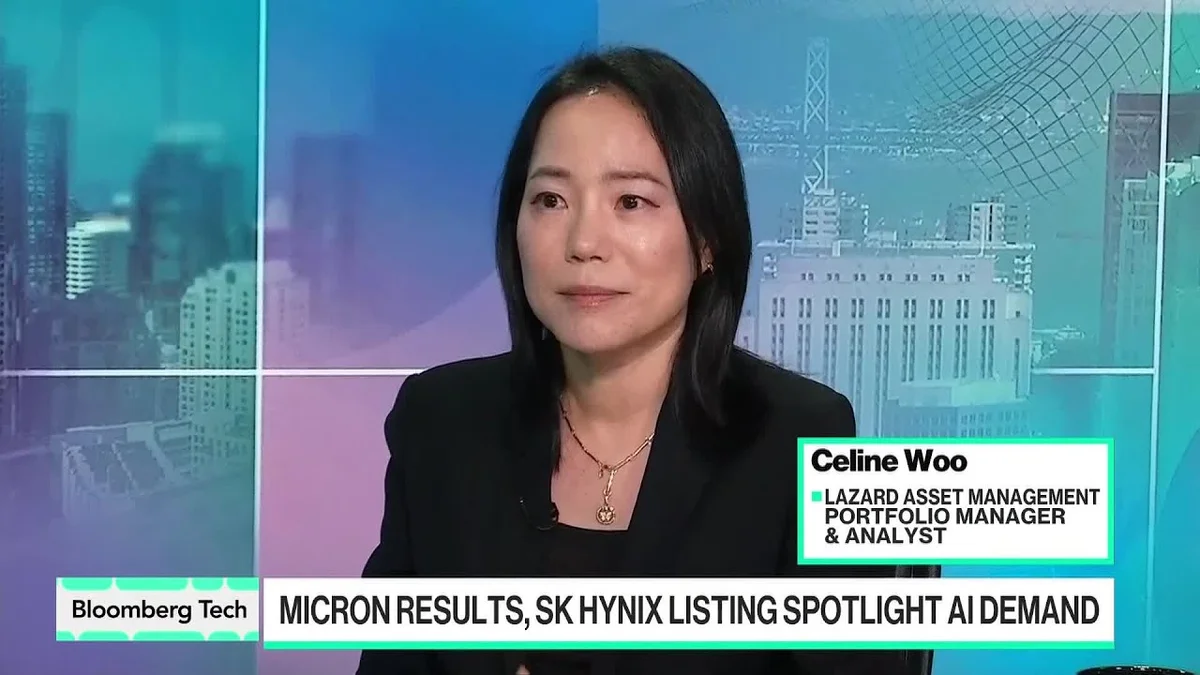
The semiconductor industry, particularly the memory field, has historically been characterized by boom and bust cycles. However, the widespread integration of artificial intelligence (AI) is poised to reshape this dynamic and create more stable and predictable demand. Celine Woo, Portfolio Manager and Analyst at Lazard Asset Management, discussed this evolving landscape and highlighted how AI’s insatiable need for processing power is creating a new baseline for memory consumption.
Visual TL;DR. Circular memory market transitions to AI integration. AI integration increases AI memory needs. AI’s memory needs create structural demand drivers. Structural demand factors lead to a non-cyclical future. A less circular future enables sustainable growth. Structural demand factors establish a new baseline consumption. A less cyclical future has implications for investment.
Cyclical memory market: Historical boom-bust cycles in the semiconductor industry
AI integration: Broad integration of artificial intelligence across applications
AI’s memory needs: Insatiable need for processing power and continuous access
Structural demand factors: AI applications require large amounts of continuous memory access.
A non-cyclical future: Creating more stable and predictable memory demand
Sustainable Growth: Creating sustainable growth opportunities for technology companies
New baseline consumption: Create a new baseline for memory consumption
Implications for investing: Discuss the implications for investing in the age of AI
Visual TL;DR
Woo pointed out that while traditional memory demands were often driven by individual product cycles, AI applications, from large-scale language models to advanced analytics and autonomous systems, require large amounts of continuous memory access. This sustained demand is very different from the sporadic nature of past cycles.
Complete discussion can be found here: bloomberg technologyYouTube channel.