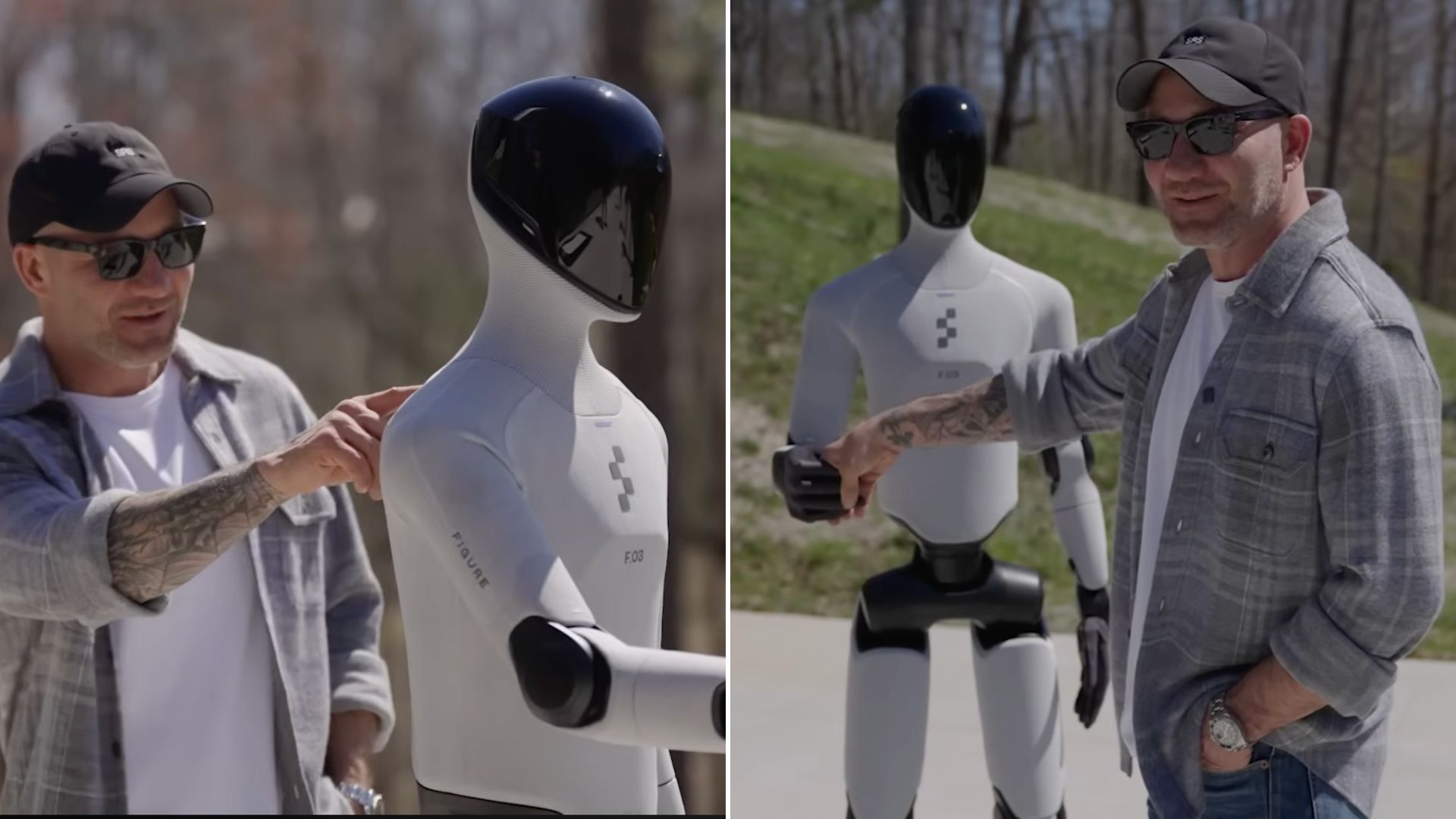
On a recent episode of The Sean Ryan Show, host Sean Ryan confronted something that until recently belonged primarily to science fiction. The former US Navy SEAL and CIA contractor walked alongside a fully functional AI-powered humanoid robot.
Figure 03, developed by robotics startup Figure AI, is designed to perform many of the same tasks humans do, from folding laundry and washing dishes to working in factories and distribution centers.
During a walkthrough demonstration with Figure AI founder and CEO Brett Adcock, Ryan interacted directly with the robot, testing its balance, movement, and responsiveness.
The short tour followed a much longer interview on the show in which Adcock explained how his company is working on developing general-purpose humanoid robots that could eventually find their way into workplaces and perhaps homes.
A friendly robot that walks, balances, and shakes hands
A short demo video shows the robot in Figure 03 walking alongside Ryan, fully guided by AI. Adcock said the robot is about 5 feet 6 inches tall and weighs about 130 to 135 pounds, which is similar to human proportions.
Unlike previous robotic systems that relied heavily on scripted movements, the robot’s movement and behavior is controlled through neural networks. As Adcock explained during the demo, the walking motion is generated by AI rather than traditional coded instructions.
The robot has about 40 joints and is powered by electric motors with sensors that help it maintain balance and perform tasks. Ryan was impressed by the light, foam-like appearance and wondered about the robot’s durability and ability to recover if it fell.
Fall recovery is an essential capability for robots operating in real-world environments and is an important part of any humanoid evaluation. And while the figures are trained in the simulation for dynamic stability, strength and coordination, Adcock said it depends entirely on how the body falls, sometimes even breaking the neck.
Another feature highlighted in the walkthrough is the robot’s hands. A camera embedded in the palm helps the machine visually track when it grasps an object, and tactile sensors on every fingertip measure the pressure during contact.
This combination allows robots to perform dexterous tasks. Figure’s machine can lift boxes weighing up to 40 pounds and can also fold T-shirts, Adcock said.
During the demonstration, Ryan jokingly asked whether the robot could crush your hand when waving. Mr Adcock reassured him that the machine’s force controls would prevent such an event.
Robots designed for real-world tasks
While the demonstration showcased the robot’s movements and interactions, a lengthy podcast conversation focused on Figure AI’s broader ambitions. Founded in 2022, the company aims to develop general-purpose humanoid robots that can replace or assist human labor in industries facing worker shortages. Adcock said early adoption is focused on commercial environments such as manufacturing and logistics.
The company is already working with several key partners, including BMW, and the robot is being tested on manufacturing sites. Figure is also working with large logistics and real estate organizations to evaluate how humanoid robots can be integrated into industrial workflows.
Inside the robot’s torso is most of the computing hardware, including the GPU and battery system that powers the machine. Adcock said a fully charged robot can operate for about four to five hours and then recharge in about an hour.
One unusual design feature is the charging system. Instead of plugging in a cable, the robot charges wirelessly through pads embedded in its feet, allowing it to replenish its energy simply by standing on a charging mat.
Adcock compared the development of humanoid robots to the early days of smartphones and predicted that they will advance rapidly with each successive generation of hardware.
“This is going to be similar to the iPhone lineup,” he told Ryan, suggesting that each new version will have significantly improved functionality.
Expanding production for a “robot economy”
Figure AI’s ambitions go beyond just building a few demonstrators. Adcock said the company has already set up a manufacturing facility that can produce robots at scale.
When the production line is running, the factory can currently assemble one robot approximately every 90 minutes. In the long term, the company wants to dramatically increase its production. He suggested that humanoid robots could eventually reach production levels comparable to household appliances, reaching millions of units per year.
The ultimate goal, he added, is a future where robots are as ubiquitous as smartphones, perhaps approaching “robots for all humans.”
Robots have already arrived at the White House
Humanoids increasingly appear outside the laboratory. Last week, a humanoid robot appeared at a White House event focused on artificial intelligence, greeting attendees and demonstrating its capabilities.
The widely publicized moment demonstrated how quickly humanoid robotics is moving from experimental prototypes to the public spotlight. This technology is increasingly entering the mainstream discussion.