
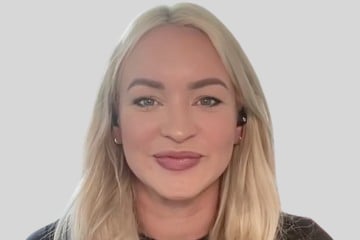
Kaleigh Moore has been a freelance writer and editor for 12 years. She has contributed to Shopify, Forbes, Vogue, Adweek, and various B2B providers, among others. Like all of us, she is currently grappling with the possibilities and limits of AI.
She calls AI an “information firehose” that can greatly improve efficiency. She also warns about things you can’t do, such as interviewing humans or learning from their experiences.
She shared these insights and more in a recent conversation, including her preferred AI platform, use cases for entrepreneurs, and getting started with AI-driven songwriting.
The entire audio is embedded below. The transcript has been edited for clarity and length.
Eric Bandholz: Please give us an overview of your activities.
Kayley Moore: I’m a freelance writer and editor. I have spent the past 12 years working with all types of B2B and SaaS companies within the e-commerce ecosystem.
One of the first case studies I wrote for Shopify featured Beardbrand. That was over 10 years ago.
Bandholz: Will AI commercialize texts?
Moore: New AI synthesis tools are amazing. It will greatly improve the efficiency of writing especially boring parts such as e-commerce product descriptions.
But remember, AI tools work on existing information. They aren’t creating anything new. The human makeup provides a unique perspective of experience, thought, and emotion.
Do we care about those perspectives? Some people really care. I’m a journalist first and foremost. I want to do my homework, check my facts, and make sure I can give my best no matter what my name is.
I worry about young people and how they will use these tools. I’m 37 years old. I grew up in a time before the internet and social media. I hope we always have human experiences and interactions, like talking to each other or going out for coffee. For me, AI is a great supplement, but it cannot replace human interaction.
It’s interesting in terms of recruitment. I sometimes consider a full-time in-house writer role. Over the past 18 months, many of these roles have transformed into ones that require AI operational skills to jump on an AI tool and create something. If you can’t actually use these tools, you won’t even be able to get an interview. Therefore, the ability to learn and be interested in tools is an important skill now.
Some people say that AI is just a bubble, but I don’t think so. It’s too strong.
Bandholz: How can writers and entrepreneurs learn and apply AI?
Moore: Information is delivered to the fire department every day. I approach it as a journalist. An important skill is to create very powerful prompts. The more advanced the prompt, the better the output.
Additionally, embrace a willingness to learn new features. All the new tools can be scary.
Claude by Anthropic is my go-to platform. Claude’s results are outstanding. Anthropic’s entire stance is open source and transparent. The company prioritizes ethical concerns and data privacy. For me as a writer, Claude is the best. It’s also a great place to start.
Generative AI platforms like Claude help entrepreneurs and marketers with applications such as promotional emails, social media posts, and LinkedIn articles. The platform remembers the voice and style of your existing content.
Bandholz: How do you train an AI like that?
Moore: I came here for my job. I provide Claude with great and powerful examples of my published articles, case studies, and guides to provide reference points. This is similar to notifying new employees, such as new writers or copywriters.
The aim is to provide a number of very specific guidelines. There are many things you should and should not do. Please use this word. Please don’t use this. Unlike humans, once you enter an input, AI will never forget it. And being able to update it over time is important. However, more examples is not necessarily better. AI can become confused with too much information.
A user’s top 10 tweets are a good, limited dataset to start with, and also include general instructions about their likes and dislikes. Teach AI the same way you would teach humans.
Let’s say a seller wants to publish a blog post. Enter a complete overview including target keywords, target audience, brand names to avoid, and data sources to cite. Just preparing the prompts can be a lot of work.
Sure, the seller could give it a paragraph and request a 500 word blog post about X for this reader. She will get pretty good results.
But if you give the full outline, you can get much better results with little editing or tweaking. In many cases, the choice is between spending time editing the output or preparing the outline.
For me, editing AI text usually depends on my writing preferences, but a lot of it is fact-checking. AI causes hallucinations. It makes things. Non-existent data will be quoted.
Additionally, AI cannot interview or talk to experts. You will need to integrate them later.
Bandholz: Where can people follow and contact you?
Moore: My site is KaleighMoore.com. I am on LinkedIn with X.


