Artificial intelligence did not suddenly appear with ChatGPT. It has evolved over more than 40 years through advances in computer graphics, game development, machine vision, and parallel computing. Graphics processors were originally built to draw pixels, but they have gradually become programmable computing engines that can train neural networks and run AI models. JPR has followed its evolution since its inception, covering graphics hardware, GPU computing, machine learning, and AI processors as each technology emerged. In retrospect, this progression seems surprisingly logical, even if it hardly felt like it at the time.
I may only exist for you.
We are often asked when JPR started covering artificial intelligence. The answer depends on what you mean by AI.
Today, AI refers to large-scale language models, generative AI, autonomous agents, and underlying models. Forty years ago, AI meant something completely different. The researchers talked about expert systems, neural networks, fuzzy logic, machine vision, and pattern recognition. Game developers used the term to describe scripted routines that control non-player characters, and engineers applied AI techniques to CAD, robotics, and image analysis. JPR and its predecessor JPA covered many of these technologies years before conversational AI was even imagined.
When Jon Peddie Associates opened its doors in 1985, the graphics industry was at the beginning of a transition from fixed-function hardware to programmable computing. Graphics workstations power CAD, scientific visualization, and digital content creation. Researchers had already experimented with neural networks and knowledge-based systems, but computing power was limited in what they could accomplish. AI remained an enabling technology rather than a market of its own.
The first AI many consumers encountered came in games. In the mid-1990s, developers used lookup tables, decision trees, and finite state machines to program enemy behavior. Characters responded to player actions, navigated the environment, and coordinated attacks through carefully designed logic rather than learning. In 1994, Matrox demonstrated that: public batha 3D game that showcases intelligent camera control and game movement on the Impression Plus graphics board. Although these techniques seem simple now, they established the principle that software can simulate intelligent behavior.

Figure 1. NPCs are now smarter and more dangerous. (Source: JPR)
The next milestone arrived before GPUs arrived. In the late 1990s, AnimaTek introduced Jennifer, an interactive three-dimensional virtual spokesperson developed for e-commerce applications. Jennifer greeted visitors, answered questions, and guided customers through the virtual auto show. This project leverages Barbara Hayes Ross’s pioneering work on intelligent software agents at Stanford University to demonstrate that trusted digital personalities can support commercial applications years before today’s AI assistants.
A few years later, Ananova took that vision even further. Introduced in 2000 and widely recognized in 2001, this animated news presenter reads stories on demand through text-to-speech and carefully designed digital personalities. Her creators trained their looks by studying thousands of human faces to create a friendly and approachable virtual presenter. Looking back from 2026, Ananova predicted many of the characteristics of today’s AI presenters, even though it lacked large-scale language models and modern speech generation. She represented an important step towards an AI-driven digital human.
The real tipping point for AI came from an unlikely source: cats.
In 2007, Fei-Fei Li launched ImageNet at Princeton University with the belief that computer vision required dramatically larger datasets, not incremental improvements in algorithms. Working with WordNet co-creator Christiane Fellbaum, the team organized millions of images into a structured hierarchy. Thousands of photos of cats across different breeds became part of the training data that teaches a computer to recognize visual concepts. By 2009, ImageNet had become the benchmark that reshaped computer vision research.

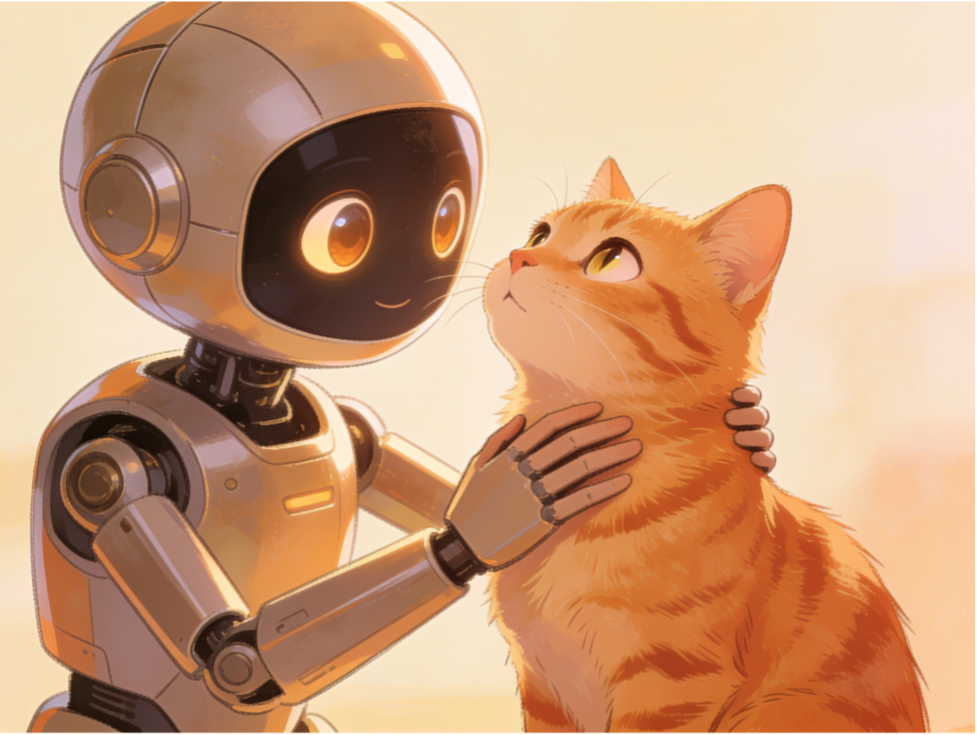
Figure 2. Trying to find the cat. (Source: JPR)
Google Brain expanded on that idea in 2012. Andrew Ng, Jeff Dean, and their colleagues trained a deep neural network on 10 million randomly selected YouTube images. No one told the network to find the cat. This concept was automatically learned because cat faces occur frequently throughout the training data. This experiment demonstrated that a sufficiently large neural network can discover meaningful visual features without explicit programming. These famous cats captured the imagination of researchers and the public alike and symbolized a new era of data-driven learning.
These breakthroughs relied on other technologies derived from graphics.
Graphics processing units didn’t start life as AI processors. Their journey began around 2001 with programmable shaders, allowing developers to use graphics hardware for scientific and engineering workloads. Researchers soon turned to general-purpose GPU computing (GPGPU) for image processing, simulation, and numerical analysis.
Everything changed in 2006 when Nvidia introduced CUDA. For the first time, developers can program GPUs directly in C without disguising computations as graphics operations. CUDA lowered the barrier to parallel computing and attracted researchers working on machine learning, neural networks, and scientific computing. GPUs have become programmable parallel processors.
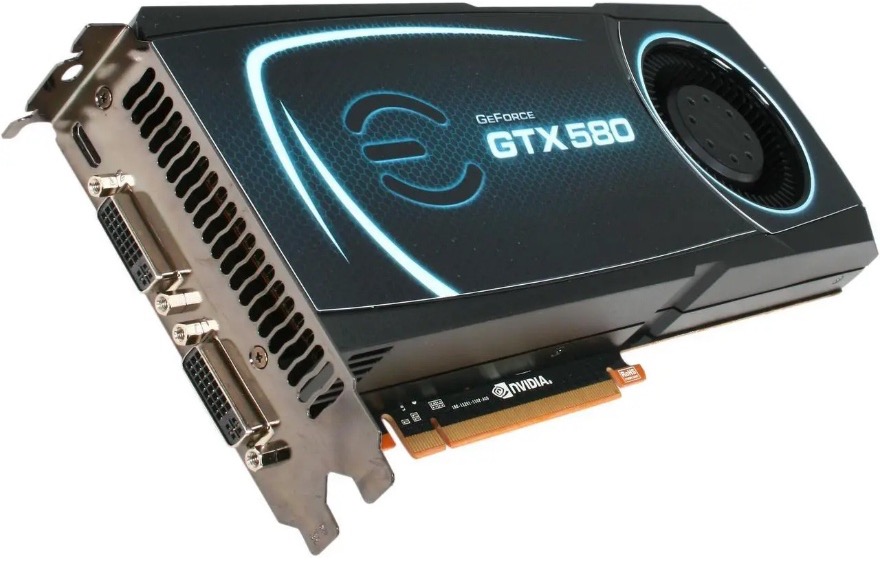
Figure 3. The Nvidia GTX 580 started as a game board and became a pioneer in AI processing. (Source:EVGA)
Another milestone followed in 2012. Alex Krizhevsky, Ilya Sutskever, and Geoffrey Hinton trained AlexNet on two Nvidia GTX 580 GPUs. Their convolutional neural network dramatically improved ImageNet’s classification accuracy and convinced the research community that GPU-accelerated deep learning represents the future of AI. From that point on, GPUs became the preferred platform for training neural networks.
JPR tracked each step of its evolution. In the early days, we focused on graphics processors, workstations, visualization, and CAD. As GPUs became programmable, they expanded into GPU computing, CUDA, and heterogeneous processing. Machine learning, computer vision, self-driving cars, and edge inference followed naturally. In 2014, we published our first article dedicated to AI, asking whether machine learning will be a job creator, a job killer, or humanity’s next essential tool. That same year, IBM introduced TrueNorth, a neuromorphic processor inspired by biological neural networks.
Our first dedicated AI market research was conducted in 2017. video processor unit quarter Report. VPUs accelerated computer vision, computational photography, and real-time inference before these functions migrated to the image signal processors now found in smartphones and self-driving cars. In many ways, VPUs were the first dedicated AI processors.
Currently, JPR’s AI research spans AI processors, AI PCs, NPUs, physical AI, photonic processors, and quarterly market tracking covering over 150 companies and hundreds of products. Although the subject matter has changed, the underlying story remains surprisingly consistent. Graphics processors have evolved into programmable processors. Programmable processors have evolved into AI accelerators. AI accelerators are currently powering the infrastructure behind generative AI, robotics, autonomous systems, and scientific discovery.
The graphics did not disappear. It became the computational basis for artificial intelligence.
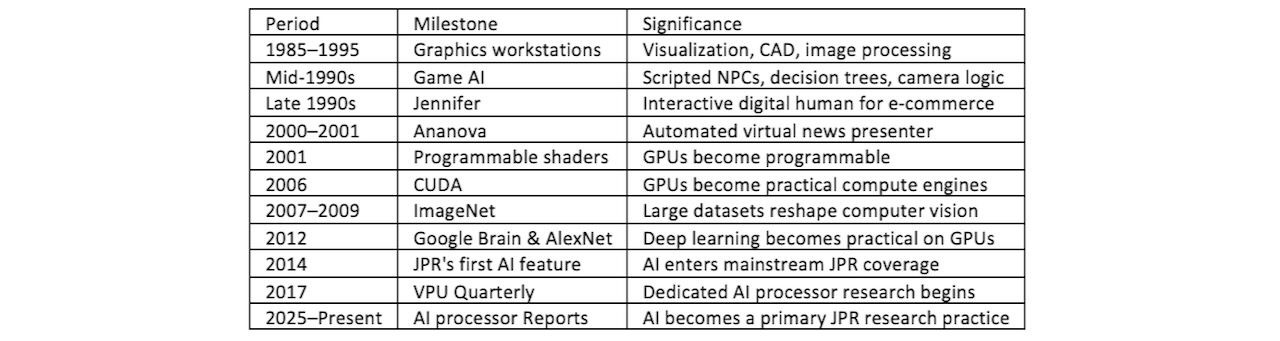
Table 1. Evolutionary timeline.
Looking back over 40 years, AI has not replaced graphics. It was born from graphics. Every step of the journey is built on advances in programmable hardware, software, algorithms, and data. The same GPUs that once rendered polygons now train foundational models and power large language models. JPR’s research traced the progress of accelerated computing as it continues to be the common thread connecting graphics, high-performance computing, machine learning, and artificial intelligence.
what do we think?
JPR’s AI coverage reflects continuity rather than reinvention. Graphics, GPU computing, machine learning, and AI represent successive stages of the same technological evolution. This perspective helps explain why graphics companies are now leading the way in AI infrastructure, and why many of today’s AI breakthroughs stem from technologies first developed for visualization, simulation, and interactive computing.
inflection signal
The evolution from graphics to AI is more than just a technology transition. It represents an inflection point in computing. Programmable graphics processors built the hardware foundation for deep learning, and large datasets and neural networks enabled new applications. Today’s AI infrastructure extends its trajectory into all areas of computing. Understanding this history makes it clear why GPUs, NPUs, and specialized AI processors are currently defining the direction of the industry, and why advances in accelerated computing will continue to generate future innovations.
Check out our AI library. There, 151 companies offering 292 AI processors are tracked. At JPR, we stand for AI with an “I” (as you probably know, intelligence, market intelligence).
Did you like it? Do you think your friends and colleagues will too? I wish you all the best.