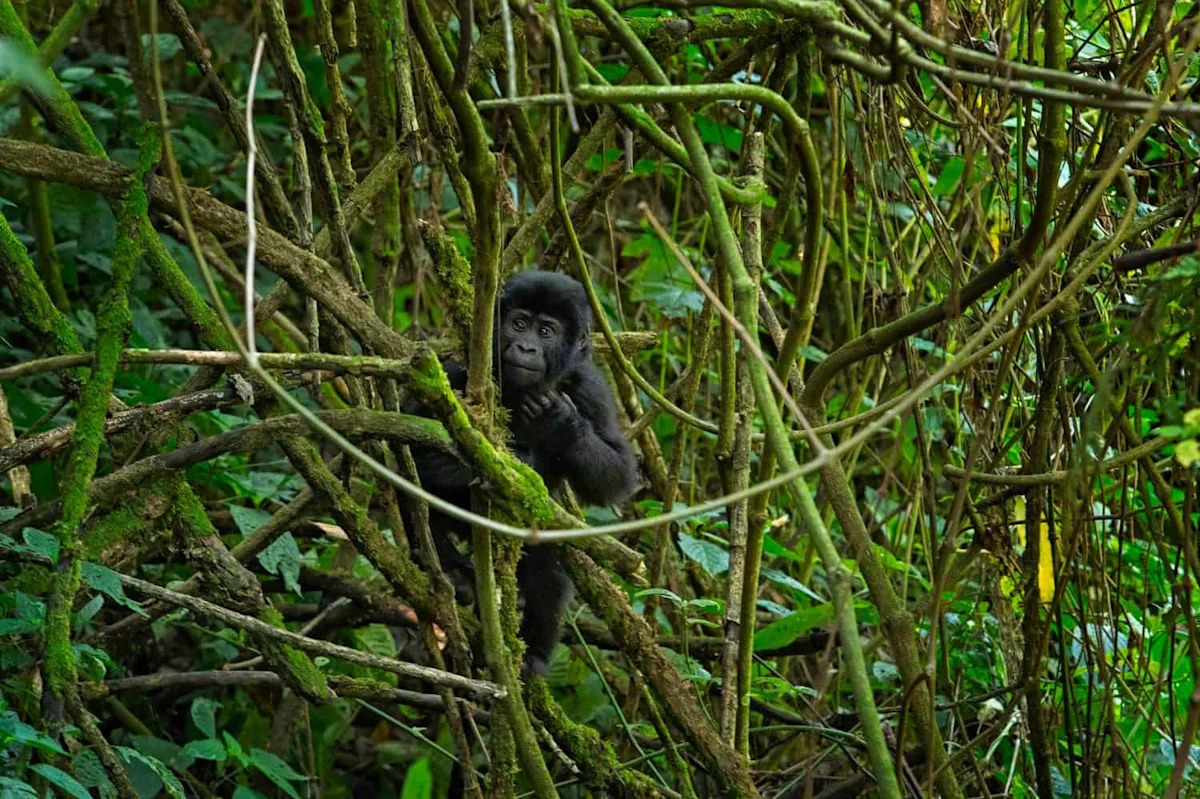
If a tree falls in the forest and no one is around to hear it, does it make a sound? That Zen koan may teach us a lesson about perception, but it doesn’t hold up against advances in technological innovation. For some people, AI is an all-powerful force. Some see it as a harbinger of disaster. But for researchers working in Southeast Asia, AI offers an unparalleled perspective on primate movements. That’s because they created an AI model that tracks multiple animals called PriMAT. This is a model that can track multiple species even in the densest jungles.
As any biological researcher who has spent time in this field knows, the data is truly rich. It’s just a matter of ability. Researchers spend countless uncomfortable hours hiding in dense jungle vegetation just to capture several hours of clear footage of monkeys. Now, researchers believe that by using AI and computer vision tools like PriMAT, they can avoid insect bites and capture even more valuable data. Let’s take a closer look at this innovative technology and why researchers believe it could be the key to collecting previously hidden data.
prehistoric approach
Keypoint detection allows scientists to track primates through their characteristics, but often fails in uncontrolled situations.
©Martin Mecnarowski/Shutterstock.com
Throughout the 20th and early 21st centuries, biologists had to rely on their physical strength and inconspicuousness to obtain the data they needed about animals. Even if a camera were able to photograph monkeys in their natural environment, the camera would probably have a hard time tracking them at distances of more than a few feet. Improved techniques such as keypoint detection have provided automated tracking strategies to identify specific appendages such as elbows, ridges, and feet.
Such detection worked well in controlled environments with constant lighting, but often failed in natural conditions. Particularly in jungles and dense forests, the tracked animal could become untrackable the moment it stepped into the shadows or moved behind a bush.
One can imagine the sheer frustration experienced by wildlife biologists around the world when camera traps and blind surveys become pointless after the target animal moves into dense brush. The simplest change in environmental conditions can undo hours of preparation and monitoring. But thanks to the advent of AI, researchers have figured out a way around these headaches.
Primat progress
AI has already made significant advances in the hard sciences. Animal detection and tracking appears to be no exception. A team of researchers from around the world, including Germany, has developed a multi-animal tracking model called PriMAT. Designed specifically to track non-human primates under natural conditions, PriMAT learns to “detect and track primates and other objects of interest from labeled videos or single images using bounding boxes instead of keypoints.”
As the researchers highlight, keypoint detection works well in controlled conditions, but often fails when changing lighting conditions or complex movements need to be taken into account. The researchers behind PriMAT believe they have solved this problem through the use of AI. Instead of tracking animal features, the model uses a dynamic bounding box to lock onto a primate target and track it through changing conditions, environmental features, and movement.
The scientists applied their model to two case studies involving Assamese monkeys and red lemurs living under natural conditions. The researchers were able to accurately predict the lemur’s identity 83% of the time with just a few hundred frames of video featuring bounding boxes. Not willing to rest on their laurels, the researchers tested the model on other primates, including Barbary macaques, Guinea baboons, gorillas, and chimpanzees. Remarkably, this simple AI-based technique has enabled researchers to track specific primate individuals regardless of their movements and behaviors. It also means you can go back and accomplish the same thing using years of footage.
mountain of images
The AI-powered PriMAT model was able to track the identity of the red-tailed lemur with 83% accuracy.
©Dirk M. de Boer/Shutterstock.com
The advantage of PriMAT’s approach is that it does not have to be done dynamically. Simply put, all the time primatologists and biologists spend filming in the jungle can be put to good use. Thanks to PriMAT’s ability to lock on to primate targets and track them through bushes or under fallen logs, once-useless footage can become a research treasure trove. Changing lighting conditions cannot compete with the power of AI computer vision detection.
In the past, researchers spent considerable time in the field trying to capture footage of primate life. Even if the captured footage turned out to be useful, it would still require hours of manual analysis to gain insight. Now, using tools like PriMAT, researchers can automatically analyze hours of old footage. Although such tools are still in their infancy, their current effectiveness shows that they can reveal previously hidden aspects of science.