

In this time-lapse video of a test conducted at JPL in June 2023, an engineering model of the Planetary X-ray Rock Chemistry instrument (PIXL) aboard NASA's Mars rover Perseverance is propped up against a rock to collect data.
Artificial intelligence is helping scientists identify minerals in rocks studied by the Perseverance rover.
Some scientists dream of exploring planets with “smart” spacecraft that know exactly what data to look for, where to find it, and how to analyze it. That dream will take some time to realize, but progress with NASA's Mars rover, Perseverance, represents a promising step in that direction.
For nearly three years, the rover mission has been testing artificial intelligence to hunt for minerals in rocks on the Red Planet, but this will be the first time that AI will be used on Mars to make autonomous decisions based on real-time analysis of rock composition.
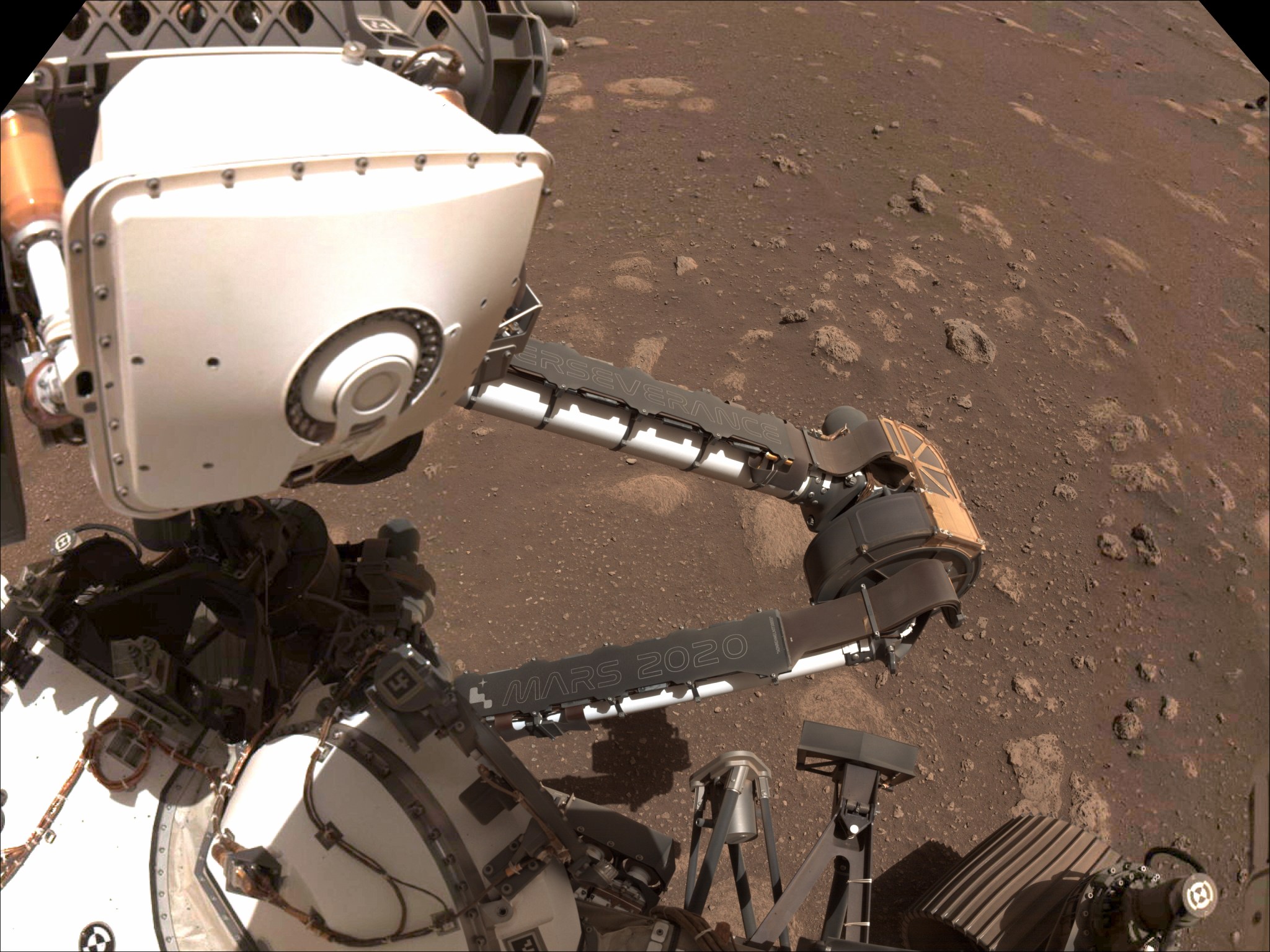
PIXL, the white instrument at top left, is one of the science instruments mounted on the end of the robotic arm aboard NASA's Mars rover Perseverance. This composite image was taken by the Mars rover's left navigation camera on March 2, 2021.
NASA/JPL-California Institute of Technology
The software supports PIXL (Planetary Instrument for X-ray Lithochemistry), a spectrometer developed by NASA's Jet Propulsion Laboratory in Southern California that maps the chemical composition of minerals on rocks' surfaces, helping scientists determine whether rocks formed in Mars' ancient past under conditions suitable for supporting microbial life.
Called “adaptive sampling,” the software automatically positions the rover near rock targets and then looks at PIXL's target scan images to find minerals worth studying further. This all happens in real time, without the rover needing to communicate with mission controllers on Earth.
“We use PIXL's AI to zero in on the science that matters,” said JPL's Abigail Allwood, the instrument's principal investigator. “Without AI, we might find a hint of something interesting in the data, but we would have to re-scan the rock for more detail. This AI allows PIXL to reach conclusions without humans having to examine the data.”
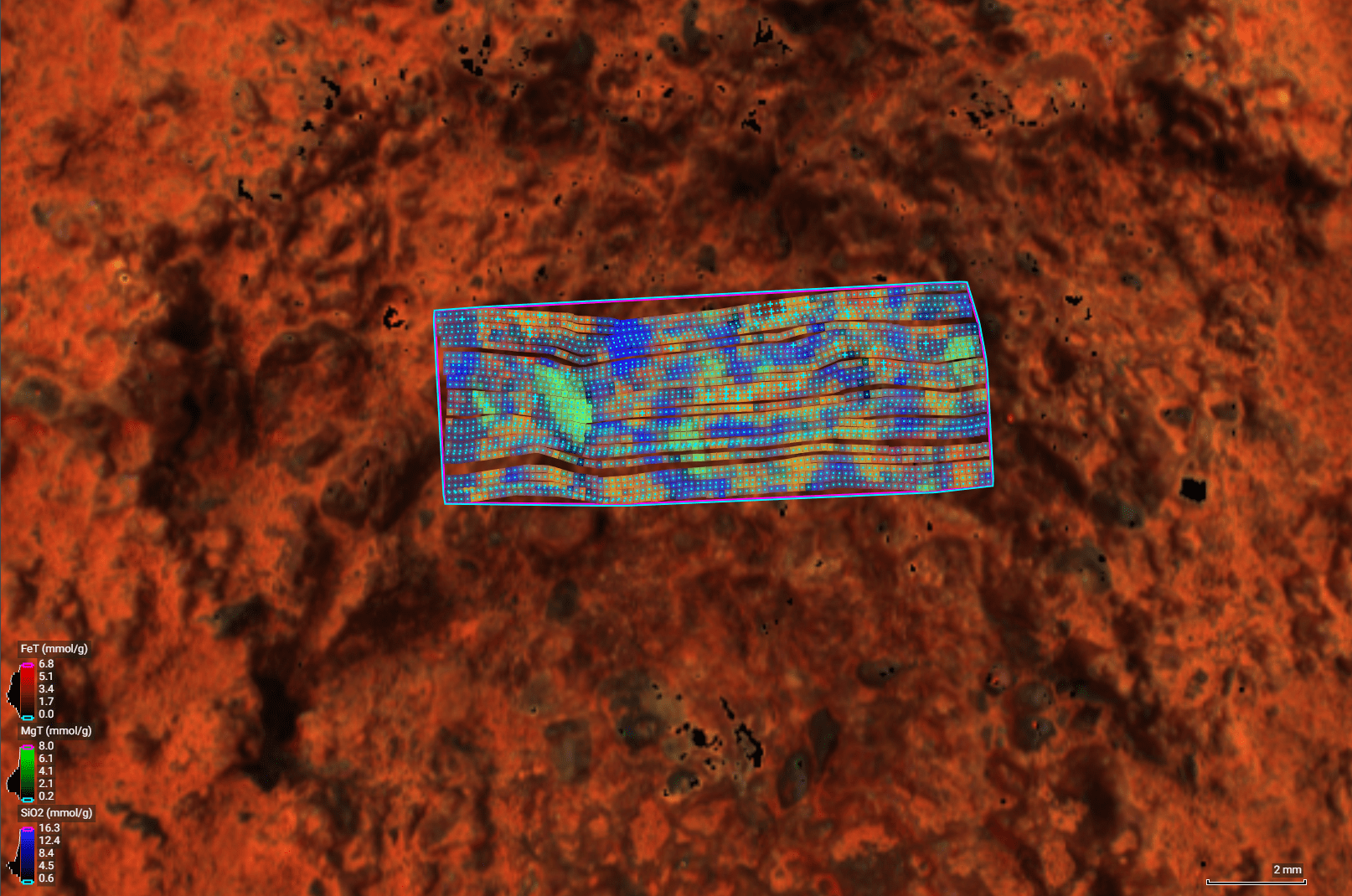
This image of a rock target nicknamed “Thunderbolt Peak” was created by NASA's Mars rover Perseverance using PIXL, a technique that bombards rocks with X-rays to determine their mineral composition. Each blue dot in the image represents a location where an X-ray hit it.
NASA/JPL-Caltech/DTU/QUT
Data from Perseverance's instruments, including PIXL, will help scientists decide when to drill a rock core and seal it in a titanium metal tube, which will allow it to be extracted along with other high-priority samples.
/Public Release. This material from the originating organization/author may be out of date and has been edited for clarity, style and length. Mirage.News does not take any organizational stance or position and all views, positions and conclusions expressed here are solely those of the authors. Read the full article here.


