

Craft experiences cannot be downloaded.
You can look up instructions, but the digital world doesn't give you the feeling of putting a pencil in a sketchpad, threading yarn between your fingers, or shaping clay into a new container.
Sitting down to create something, meet new groups, and be exposed to new ideas is an analog experience that more people are craving. Hobbies are, in some ways, the ultimate technology-proof activity, giving us a bright picture of what the future of AI will look like.
Diana Lind, an urban policy expert and author of Brave New Home, a book about the isolation and economic hardships of single-family homes in America, says: “It's not something you want AI to speed up or make better. The value of a hobby is that you're actually doing it and that it gives you personal fulfillment.”
Hobbyists and academics have told me that hobbies are an antidote to the perfect storm of affordability concerns, social isolation, and a yearning for a life outside the screen. People who tend to be more level-headed and hungry for community are attracted to jobs that allow them to get out of the house and offer high rewards. Some of the pressures of the AI revolution may simultaneously support a push toward hobby craze. Workplaces are shrinking, human interaction is reduced, and tasks are being taken over by AI agents.
Start a small hobby. A thriving hobby economy is perfect for the AI era and could provide labor market solutions for a workforce that needs to pivot on the fly.
“The hobby economy is helping people become really skilled at something,” Lind said. “You don't have to graduate high school, let alone college, to teach a gardening class or run a board game cafe.”
Hobbies are part of the “productive leisure” economy
Benjamin Chipman, a 24-year-old marketer and content creator from Brooklyn, has tried his hand at a variety of hobbies, from Spanish school to glassblowing and leatherworking. He loves trying new things, especially as a graduate student who misses classes and extracurricular activities. He is particularly drawn to classes and hobbies that focus on scent and the art of perfume making, which he hopes to one day pursue professionally.
“It's not an investment in anything other than yourself. If you're going to spend money on everything else, and you have some discretionary income, it supports your mental health and it also improves your productivity at work, because you're not just thinking about work all the time,” Chipman said. “It gives you a break, it gives you a break. It helps you meet new people.”
Chipman is part of a larger trend. In 2023, a majority of American adults say hobbies and recreational activities are very or very important in their lives, a 13-point increase from 2002, according to a Gallup poll. This is especially true for Americans between the ages of 18 and 34. Instead of doomscrolling, they're turning to analog bags filled with crafts. It's all part of a broader Luddite-inspired movement among young people who are smashing iPhones, introducing dumb phones, and hosting anti-social media parties.
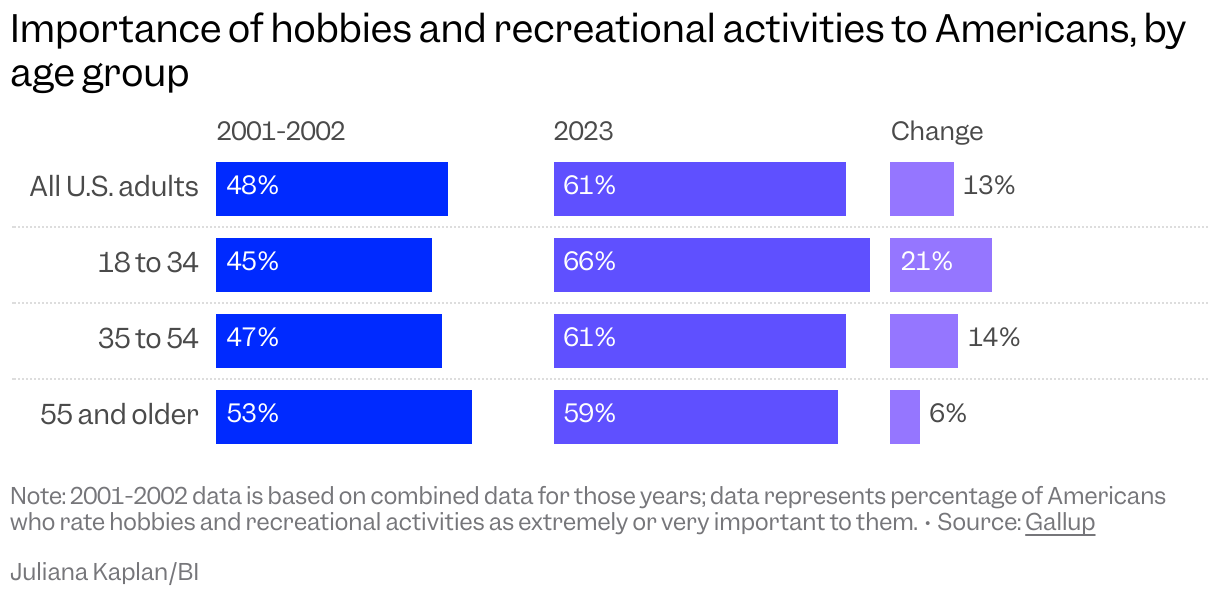
This sentiment comes as Americans face fewer third spaces, less time spent socializing, and more expensive nights out. As Chipman says, it feels more justified to spend money on a hobby class than going out. At least you'll walk away with something of value.
Benjamin Chipman is taking an introductory Spanish class. Benjamin Chipman via TikTok
This is a change that Lind has noticed as well. People aren't leaving their homes enough to participate in what she calls the “pure leisure” economy, which includes fine dining, shopping, movies, and more. Ironically, with the advancement and disruption of technology, all of this can now be done from home. In fact, consumers may find it increasingly worthwhile to go out in search of “productive leisure time” that cannot be replicated at home or by chatbots on their mobile phones.
In an era when people are especially concerned about getting the most out of their money, hobbies may be ripe for both consumption and sale. IBISWorld predicts that U.S. fabric, craft, and sewing supply stores' revenue will increase from $5.3 billion to $5.8 billion by 2030, and that revenue from online sales of hobby and craft supplies will increase from $22.6 billion to $25.1 billion.
Abby Glassenberg, president and co-founder of the Craft Industry Alliance, discusses some of her recent hobby interests, particularly those related to a more digital world and a newfound fascination with tactility.
“I think one of the feelings that young people in particular have is that they don't own anything. All their music is available on Spotify. They don't buy records or CDs, they don't have any physical collections. Everything is on their phones,” Glassenberg said. “As a human being, I don't think that's a very good thing.”
In contrast, as Glassenberg said, making things feels very real. You can see your mistakes and reserve the final result. This is very different from the AI ecosystem, which can increasingly create invisible alternative screen-based realities. If the past few decades were all about how easy it was to mass-produce things, the hobby pendulum may be swinging back toward handmade crafts.
“I think people will continue to really value real life and real objects and handmade beauty,” Glassenberg said.
What an AI-proof hobby economy means for work
In Lind's vision, hobbies have built-in benefits and provide a new economic foundation through consistent and spillover spending. In contrast to pure leisure, rock climbers, for example, regularly run into walls. They spend money on instructors and cafes within the gym. In contrast, very few people go to the movies every weekend. These are often one-time outings. The hobby is intentionally designed to be repeatable, which could be a boon for downtown and nearby businesses.
“These regular visits are also very healthy for people who use transit and those who support public transit,” Lind says. “It also creates regular foot traffic, and it can also have a better effect on people in that they might end up spending $100, but it's more than just going out for one night. It's probably going to be five different times to go back to that location.”
For workers in the hobby economy, this is an opportunity to develop skills beyond those required by traditional retail jobs without relying on traditional education. Their expertise opens the door to new wage opportunities and also directs more money to the communities where they live and work.
Of course, as Glassenberg points out, there are still serious headwinds for enthusiasts. The closures of major craft retailers such as Joan's and the tariffs have been a one-two punch for many retailers and crafters alike. This means there remains a huge gap between the vision of a hobby-focused AI future and the reality facing activity enthusiasts. But even so, optimists think there is a chance.
“I've talked to a lot of our members and they say this is the most difficult time they can remember. There's a lot going on,” Glassenberg said. “At the same time, I think I’m grateful that the zeitgeist is moving toward handmade.”


