

Artificial Intelligence (AI) has revolutionized many aspects of human life, from increasing industrial efficiency through Industry 4.0 and smart IoT devices to improving healthcare more recently through imaging and machine learning. While most of the advances in AI have been led by developed countries, some developing countries are also adopting AI, significantly enhancing their economic conditions.

Understanding the importance of AI is crucial as these countries have their own socio-economic challenges such as inadequate healthcare, infrastructure and financial services. AI offers customized solutions, increases economic opportunities and boosts productivity. AI can also transform public healthcare to improve patient experience and outcomes and revolutionize finance through efficient trading and risk management. The study conducted by IEEE members Visa Inc., Austin, Texas, Temur Khabibullaev, Hartwick College and Weian Wang, Department of Computer and Information Sciences, Hartwick College, Oneonta, New York, aimed to explore the use and impact of AI technologies such as generative AI, neural networks and deep learning in different sectors of third world countries. The main objective of the study was to explore how AI addresses socio-economic issues in third world countries and analyze how AI can generate revenue in different sectors of developing countries. Challenges and opportunities in using AI were also explored and various strategies were proposed for inclusive AI deployment and development in third world countries.
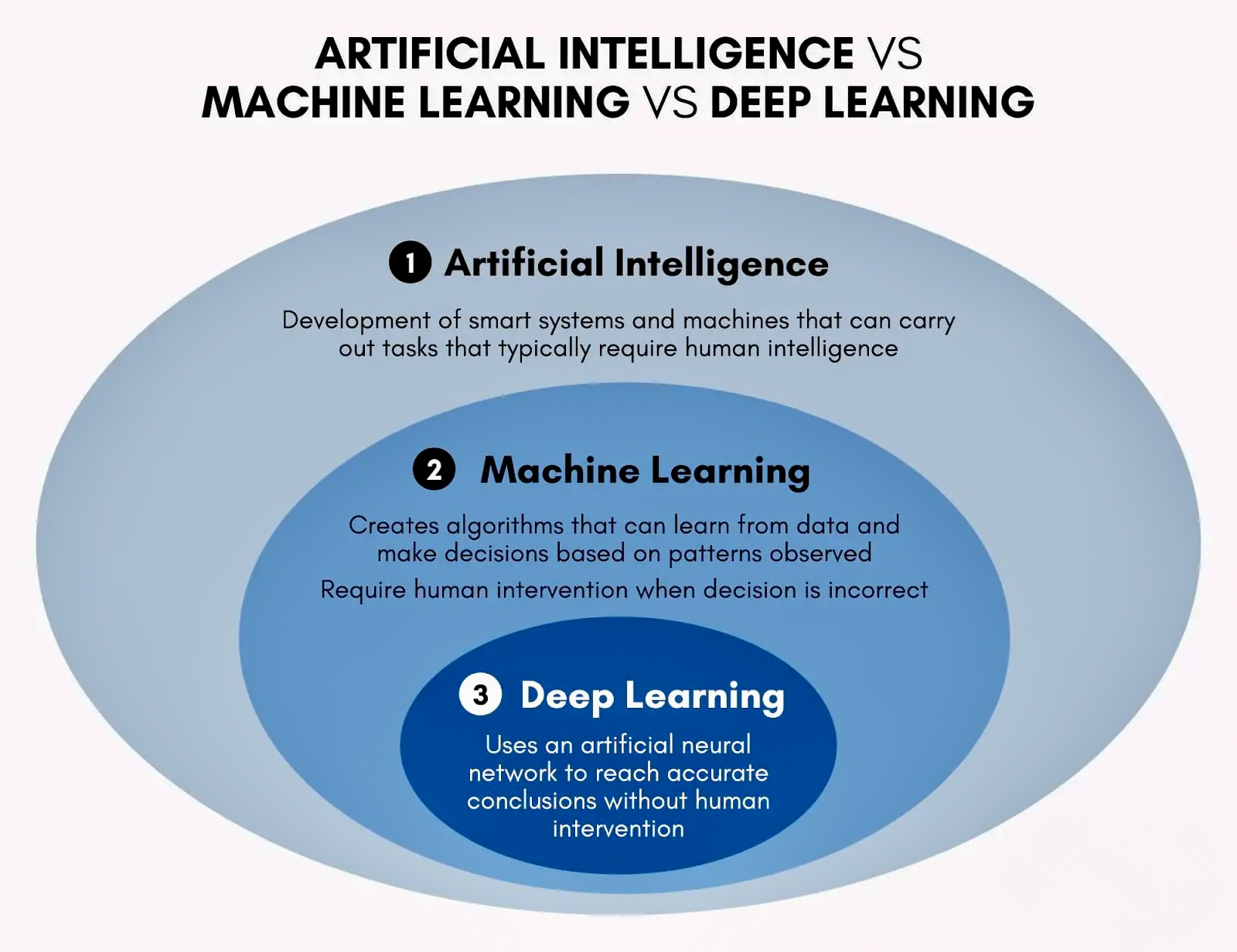
Technologies examined in the study
Generative AI: Generative AI is a new type of machine learning that creates content similar to human-created works. It uses a variety of approaches to generate images, text, and music, opening up opportunities for creativity in arts, culture, language translation, and content creation. This can help address resource limitations and promote economic development in third world countries by contributing to cultural enrichment.
neural network: Neural networks simulate the functions of the human brain and provide solutions for image and voice recognition, natural language processing, and pattern recognition. Neural networks can solve a large portion of socio-economic challenges. This technology can be optimized to develop urban infrastructure, increase agricultural yields, and personalize learning.
Deep Learning: Deep learning, a subset of machine learning, involves neural networks with multiple layers. It excels in complex scenarios such as visual identification and language processing, and addresses important problems in health, finance, and governance. In third world countries, where access to technology and knowledge bases is limited, deep learning has the potential to drive significant social and economic transformation.
Machine learning: Machine learning involves techniques that enable models to learn from data without human intervention, which can lead to increased agricultural productivity, enhanced diagnostic methods, improved healthcare facilities, and foster economic growth and rising living standards.
Existing examples of AI in developing countries
Agriculture and Agronomy: AI tools have the ability to boost productivity and manage natural resources that are essential for income and food security. Studies in East Africa and Pakistan have shown that deep learning and AI-based systems are improving water management, crop yields, and disease diagnosis. The report states, “Using a smartphone and low-cost sensors, small business owners can monitor soil contamination levels, weather conditions and crop health levels for AI-generated data and insights.Additionally, fog computing and AI predictive models can help conserve resources and optimize agricultural practices.
Disaster prediction: AI models have the potential to effectively predict and manage natural disasters. For example, in Nepal, deep learning models using Landsat imagery have detected landslides with high accuracy. In Bhutan, CNN-based models have enhanced landslide vulnerability mapping. AI is also predicting climate change and flood risks, improving disaster preparedness and response, as seen in Zimbabwe and Bangladesh. Furthermore, the study found that “In areas with high earthquake risk, machine learning models can be used to accurately predict earthquake performance and provide valuable insights for risk mitigation.”
Economic forecast: AI and machine learning improve economic forecasting and aid policy making in developing countries: a study on Bangladesh uses Autoregressive Integrated Moving Average Model (ARIMA) to forecast GDP, while neural networks and Support Vector Regression (SVR) models enhance GDP growth forecasts in African countries. “Economic intelligence from AI and machine learning can help developing countries understand their economic situation, decide where to invest their assets, and how to achieve sustainable development.” As stated in the study, advanced computational techniques provide accurate economic insights that can aid in better investment and development strategies.
health care: AI and machine learning are enhancing diagnostic accuracy and resource allocation to improve healthcare outcomes in various countries around the world. For example, in India, a hybrid model has predicted COVID-19 mortality rates with high accuracy. The study found that “The application of artificial intelligence and machine learning to healthcare systems in developing countries offers a unique opportunity to significantly improve patient outcomes and address resource shortages.” For example, in Pakistan, ANN models are predicting trends in infant mortality rates, helping to shape health policy. AI is also supporting health information systems, improving user satisfaction and system adoption in hospitals.
These applications demonstrate the potential of AI to address socio-economic challenges in developing countries and drive growth, resilience and improved quality of life.
Use of AI in finance in developing countries
Fintech and Fourth Industrial Revolution technologies foster financial inclusion and sustainable development in developing countries by increasing access to affordable finance. However, these benefits come with challenges, such as perpetuating biases and increasing risks. In India, for example, the adoption of Generative AI (GenAI) in banking improves customer engagement and operational efficiency, but requires strategic reskilling of banking professionals.
Barriers to AI Adoption
Research shows that developing countries face significant obstacles in integrating AI, including insufficient high-quality datasets and poor technical infrastructure, which hinder the adoption of effective AI solutions in their countries. Additionally, a shortage of skilled experts in AI, data science, and machine learning further slows progress. Addressing these barriers requires governments and the international community to work together to build supportive legal, educational, and infrastructural frameworks.
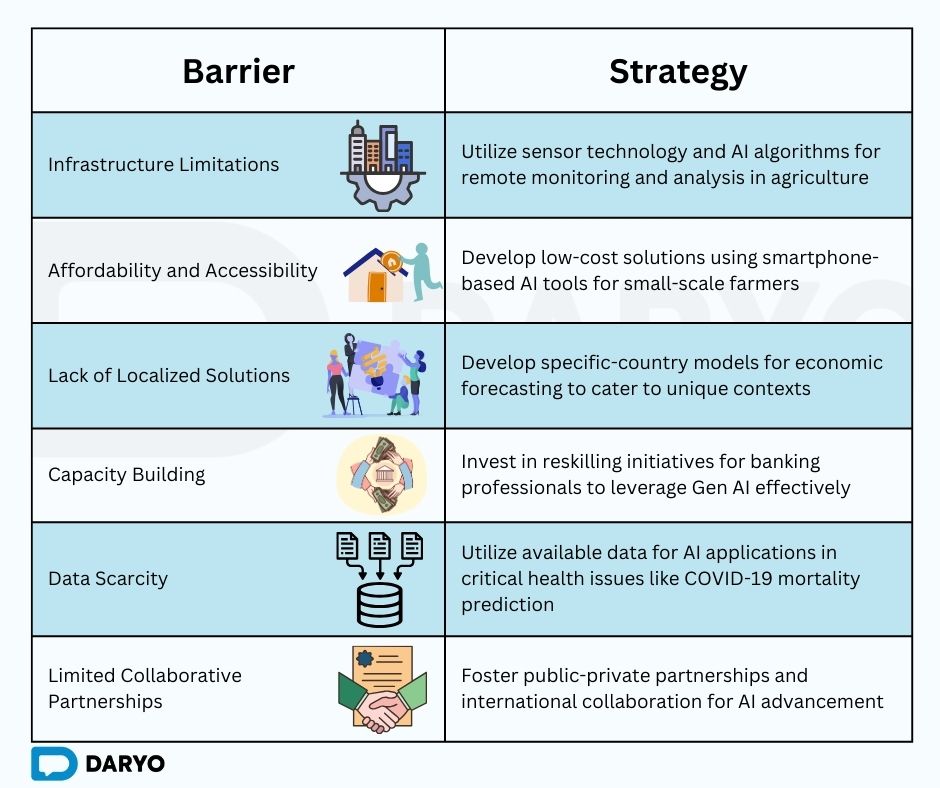
In conclusion, the study highlights the transformative potential of artificial intelligence in agriculture, disaster management, economic forecasting, the health sector, and finance in third world countries. Generative AI, neural networks, and deep learning have shown promising results in the aforementioned fields. However, today, widespread adoption of AI is hindered by limited access to quality data and inadequate infrastructure to support it. To overcome these barriers, governments of third world countries must work with companies and international organizations to foster scientific development and implement necessary reforms.


