

rebecca gibson
How can we solve our toughest critical infrastructure and manufacturing challenges? According to Guillaume Bouet, Head of Strategic Technology Partners at AVEVA, the answer lies in radical collaboration. But what is radical collaboration? And how can it help industrial sectors build reliable, scalable AI systems that transform the way they operate? Bouye shares his insights.
Can you explain the concept of radical collaboration and why it can help solve challenges?
Radical collaboration means sharing data across an extended ecosystem of departments, companies, and business partners, taking a multidisciplinary approach to problems, and leveraging systems thinking. This is a departure from the old way of working, where key stakeholders were locked away in protective silos. Radical collaboration is built on the recognition that sharing information increases its value, not diminishes it.
Collaboration creates synergies across the operational lifecycle and sparks innovation at the intersection of disciplines. Above all, radical collaboration is absolutely critical to delivering reliable and scalable AI based on industrial realities.
What does radical collaboration actually look like and why is it essential to effectively implementing and scaling AI?
Our partnership with Microsoft is an example of innovative collaboration. Together, we help our customers build industrial AI roadmaps rooted in domain expertise, operational realities, and shared innovation.
said Noel Phillips, AVEVA’s senior vice president for the Americas. “We found that the future of industrial AI is not about forcing new technology onto old systems, but rather about leveraging existing investments while allowing customers to imagine what will happen next.” Around the world, critical operations continue to run in tightly segmented on-premises environments, delivering critical functionality for very good business reasons. AVEVA brings deep expertise in industrial data management, while Microsoft brings cloud and AI leadership. Through bold partnerships, we are bringing these worlds together and unlocking data that has been underutilized in these segments for decades. Leaders like Dominion Energy, in particular, are proving what’s possible when you transform data into the intelligence that powers the next era of industrial innovation. ”
Our Industrial AI Assistant, an AI-powered tool that helps engineers make complex operational decisions in real-time, is one of the clearest examples of innovative collaboration in action. It is a collaborative innovation developed through CONNECT Visualization Services and powered by Microsoft Azure OpenAI Service, combining AVEVA’s deep understanding of industrial data and its specific context with Microsoft’s AI and cloud leadership.
This collaboration shows what happens when domain expertise and AI merge. Engineers can now ask complex operational questions in natural language and receive context-aware answers extracted directly from live source data, leading to faster, smarter decisions.
Do you have any examples of how radical collaboration is driving transformation across industries?
There are many examples, but one worth noting is Methanex, the world’s largest methanol producer. The company implemented the CONNECT Industrial Intelligence platform, built on Azure, to integrate massive operational data from six countries and enable AI agents and machine learning models to provide real-time insights to enable faster, smarter decision-making at scale. Since leveraging AI, Methanex has been able to make faster data-driven decisions, significantly reduce integration costs and complexity, and improve plant performance through predictive analytics.
Another example is food and beverage manufacturer Nestlé. The company partnered with AVEVA to enhance the manufacturing process for Nesquik and Ovaltine by addressing inefficiencies in manual agglomeration. As a result, Nestlé reduced powder waste by 10%. This equates to saving 1 jar for every 10 produced. At the same time, we improved product uniformity, reduced spillovers, and accelerated global scalability.
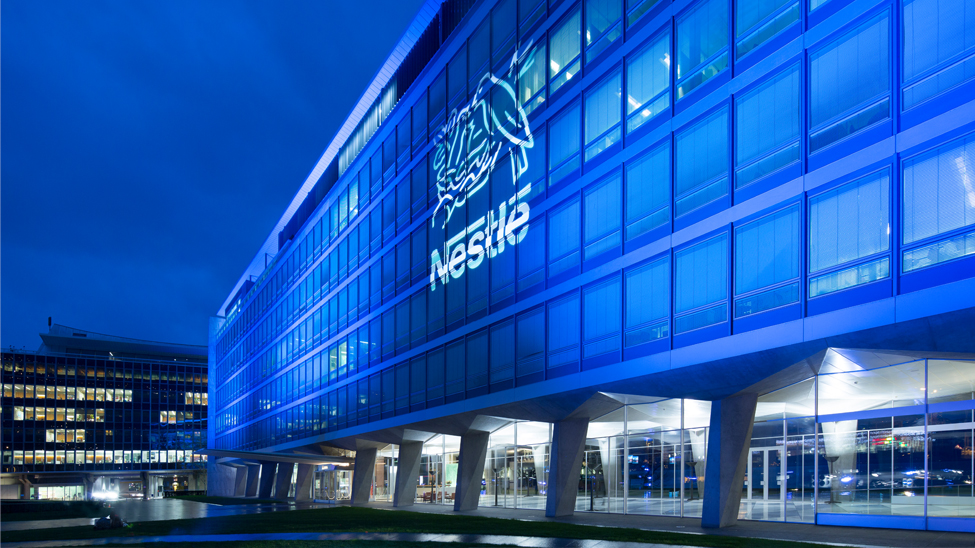
Food and beverage manufacturer Nestlé has been reducing waste and improving product quality since working with AVEVA to minimize inefficiencies in the manual agglomeration process for its Nesquik and Ovaltine products.
AI projects often fail due to silos between operational technology (OT) and IT. How can companies bridge that divide and build the right foundation for industrial AI?
AI project failures often have the same root causes. It’s industrial and enterprise IT teams working in silos. Companies chase the next shiny technology without building the right foundation. Others treat industrial time series data as if it were another corporate data set, ignoring its operational context and the idiosyncrasies of the physical world. In fact, streaming industrial data is at the heart of operations and requires a fundamentally different approach.
Enterprises can bridge this gap by securely integrating their existing systems (SCADA, historians, enterprise resource planning) with cloud-native architectures. This allows data to flow freely and meaningfully. It’s about unlocking what you already have, connecting it to modern AI frameworks, and enabling OT and IT collaboration.
AVEVA has been named Microsoft’s 2025 Manufacturing Partner of the Year. What does this award mean for the future of industrial AI?
This award is a shared achievement that reflects our commitment to innovation and customer-centric implementation. This recognition recognizes AVEVA’s leadership in delivering innovative industrial and manufacturing solutions powered by Azure. However, this achievement is not a goal, but a starting point. Our team’s work is transforming the way industry organizations leverage data and AI. Every customer success story strengthens the ecosystem where partners and customers thrive together.
If you could give one piece of advice to industry leaders starting their AI journey, what would it be?
The most successful AI journeys begin with collaboration, not disruption. Focus on securely connecting existing systems, unifying data, and fostering collaboration between teams and partners. No company can transform alone. Radical collaboration is more than just a strategy. This is the foundation for scaling AI that truly works in the real world.
Learn more about radical collaboration by following Guillaume Boué’s new blog series, PartnerTalk: Radical Collaboration in Action.
Read more insights like this in our Winter 2025 issue. Technical achievements. Don’t miss out – subscribe now for free and get future issues delivered straight to your inbox.


