

After winning the Best Poster Award in Processing at Graphene Week 2025, Dmitry Potelyaev from the Italian Institute of Technology shares insights about his research, presentation experience and future ambitions. Read our interview with this promising young researcher.
How did you first start working with graphene/2D materials?
I started researching graphene in the third year of my bachelor’s degree in Russia, and that’s when my scientific training began. I chose Irina Antonova’s research department at the Luchanov Institute of Semiconductor Physics (SB RAS) because I was fascinated by the field of 2D materials. It was very exciting and I was able to work on it with a fresh feeling.
Why are you excited to work on 2D materials?
I am driven by the novelty of this field and its huge potential impact on the semiconductor industry and beyond.
Who has been the biggest influence or mentor in your career so far?
I would like to express my gratitude to Professor Irina Antonova, who supervised my path during my bachelor’s and master’s degrees. I would like to thank Camila Colletti and Antonio Rossi for their great support in guiding me with my current research project while I am currently completing my PhD in Pisa, Italy.
What sparked your interest in your current research project?
My current research is at the intersection of nanotechnology and machine learning/AI. In my opinion, the most impactful results come from the intersection of fields, as in my case. I think this synergy is the most exciting part.
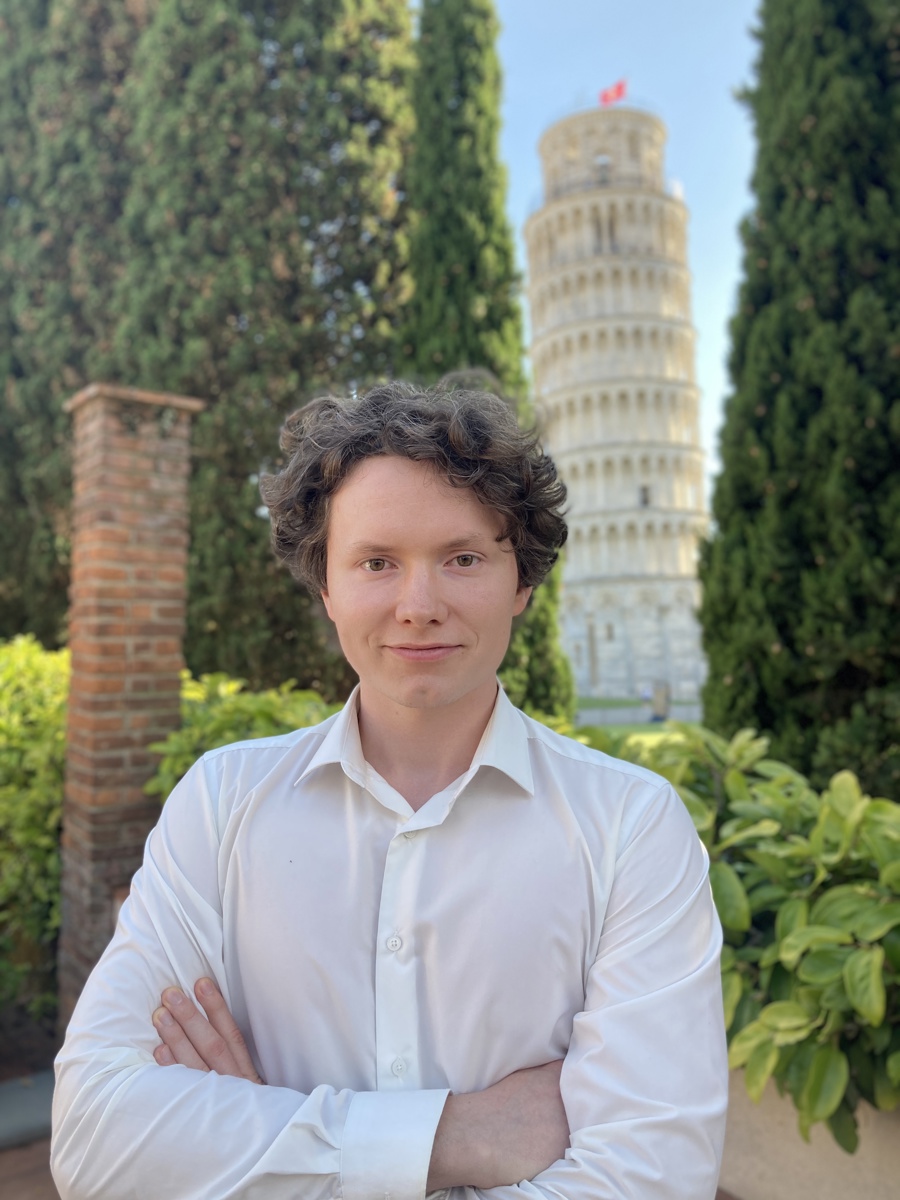
Dmitri Potelyaev
Italian Institute of Technology
Graphene Week 2025 Processing Category Poster Winner
What are your current research goals?
Currently, our team is working on several projects involving AI, particularly AI-based growth optimization and Raman spectroscopy characterization of various materials. Our AI model allows us to reveal weak material signals in regions that overlap with strong substrate contributions. We recently published an article on this. This was an important milestone as my first co-authored paper in my PhD. [https://arxiv.org/abs/2601.04445].
Our overall goal is to use reliable feedback from characterization to enable scalability and consistency in materials synthesis. We hope to reach wafer-scale high-quality graphene as well as other 2D materials.
Why do you feel your research is important and how might it benefit society?
I feel that the importance of my research lies in the fact that once long-standing scalability issues are resolved, we can change the rules of the game in that field. This may affect how semiconductor devices are manufactured. Although it is difficult to predict the full extent of the impact, there is no doubt that it will completely change our daily lives.
I feel that the importance of my research lies in the fact that once long-standing scalability issues are resolved, we can change the rules of the game in that field. This may affect how semiconductor devices are manufactured. ”
Italian Institute of Technology
In your early career as a researcher, where do you see your field heading?
I think the overall trend will favor quantum computing using new device designs, including new 2D materials. However, quantum manipulation is not possible without the appropriate device, and its design requires a solid-state material foundation.
It’s like building a house, you can’t build walls without bricks. Therefore, bridging this gap is an important step towards tomorrow.
What do you enjoy most about your career path?
I work with code frequently, learn about AI every day, and see how it changes the way we work in the lab. I also like to separate the chaff from the wheat by discussing ideas and thoughts with my colleagues..
Do you have a favorite anecdote or moment from your research journey?
I’m so happy when what I set out to do finally works out the way I want it to. It’s like Relief. That’s why I like to focus on consistency and reliability. There is no better feeling when it finally works and will continue to work.
For example, I had a data processing task where I needed to build a pipeline of data so that it could be used by a model in an AI training process. I worked on this for at least a week. Honestly, it was so hard that my mind may have erased my memory of the exact time. But the relief and satisfaction I felt when everything finally aligned correctly was indescribable. I love working on consistency and reliability. Because there is nothing more satisfying than when something “works out”.
What is the most challenging part of your current job?
As is often the case, The hardest part is the part that gives you the most joy when it’s completed.
If you could work on a dream project involving graphene/2D materials, what would it be?
We would like to work on the application of graphene and 2D materials at the industrial level. Converting electronic devices into ICs based on these. I always like to see the immediate effects of my work, so I can be involved in large-scale productions.
What are your future plans?
I’m open-minded about my future. I think there are many ways to do this, so I would like to consider each method.
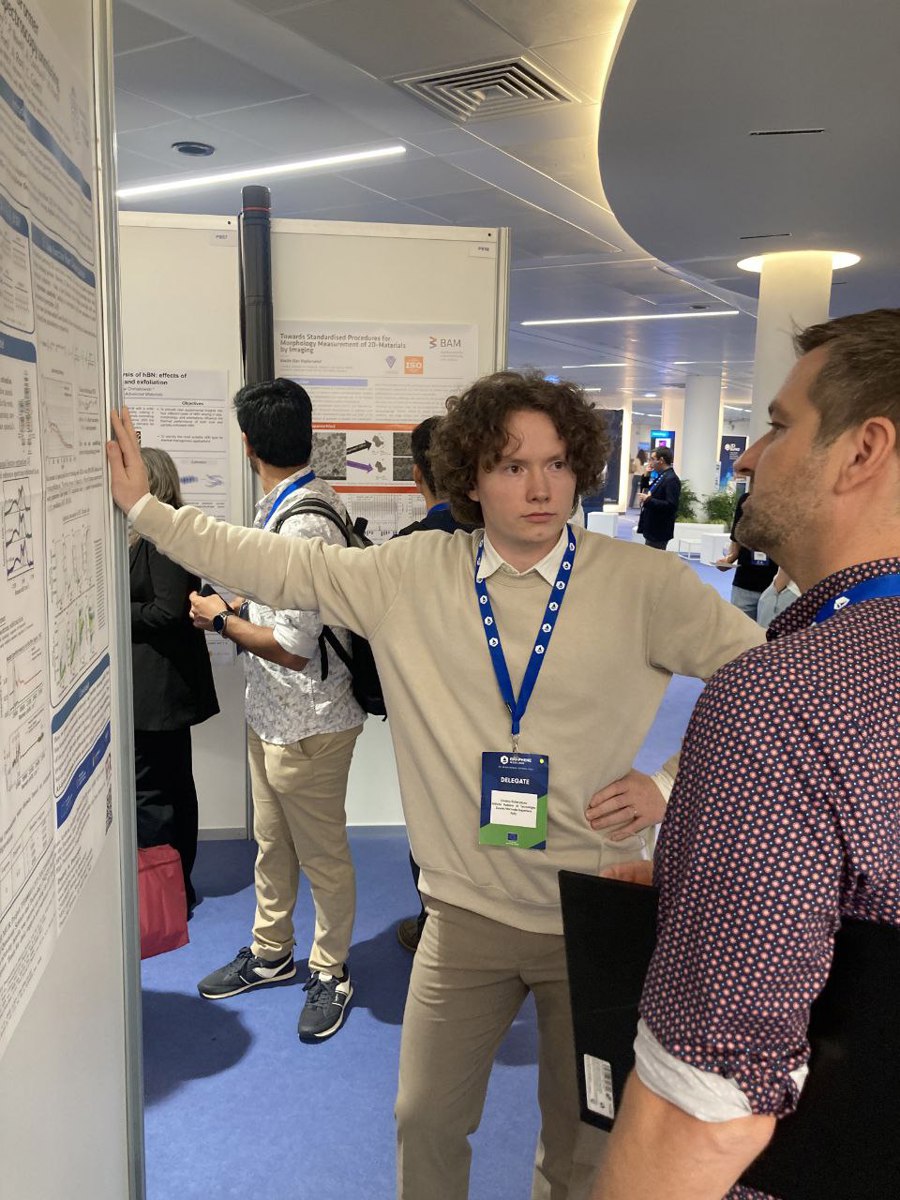
Dmitri Potelyaev
Graphene Week 2025 Poster Winners
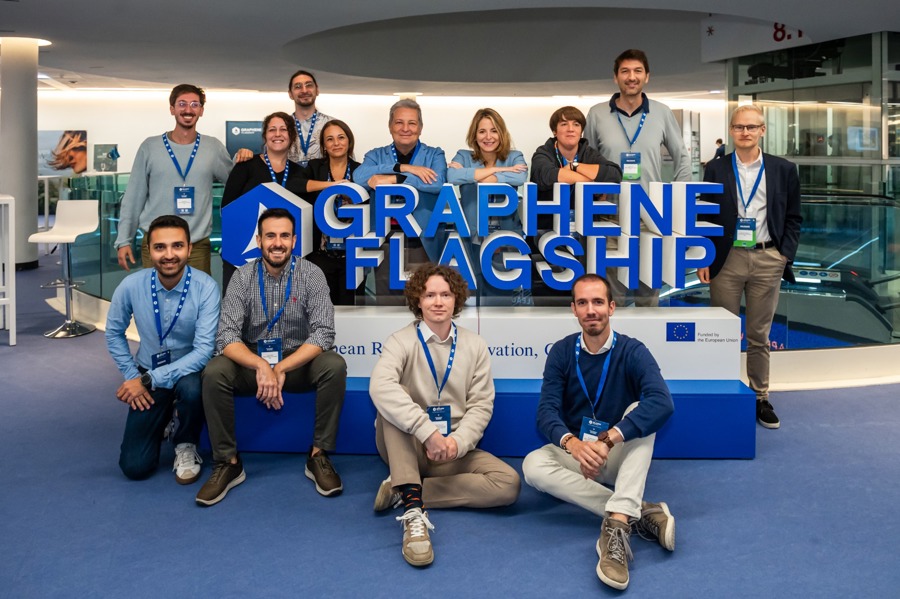
IIT Team at Graphene Week 2025
Tell us about your experience at Graphene Week 2025. What was this event like for you?
My experience at Graphene Week 2025 was breathtaking. High-level organization, relevant talks, and so many great people I met. I’m glad to have had the opportunity to join this large and welcoming community.
How does it feel to win the Graphene Week Poster Award?
To be honest, deep down I had a hunch that I might win, but I couldn’t believe it would actually happen. I’m confident in my results, but there are others who have put in just as much effort, or even more. I think it was a good idea that the organizers divided the poster session into two days. Otherwise, I would not have been able to meet so many interesting people and see their research.
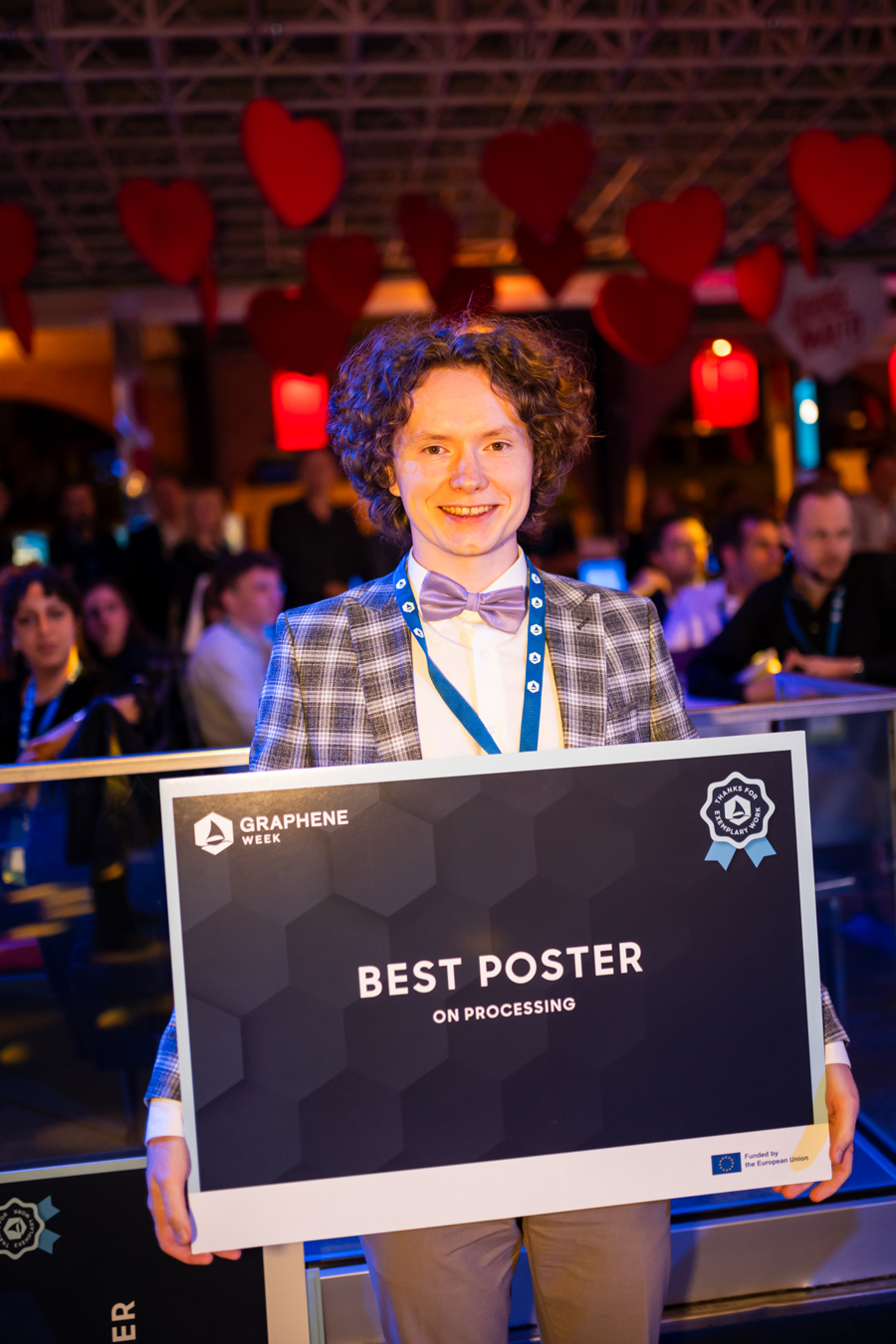
Dmitri Potelyaev
Italian Institute of Technology
Graphene Week 2025 Poster Winner: Processing


