
A Google DeepMind researcher has resigned over the company’s collaboration with the Pentagon, further escalating internal backlash against the tech giant’s military partnerships.
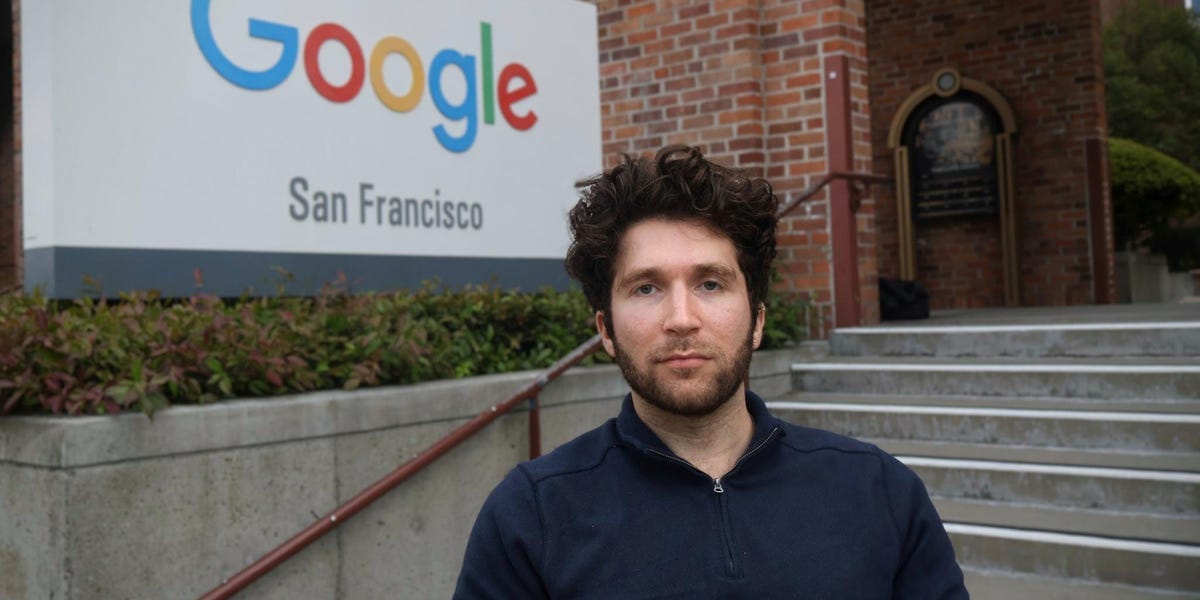
Alex Turner, a research scientist who worked for more than two years on AI safety at Google DeepMind, told Business Insider he resigned from his position in June. Turner said the decision came after Google signed an agreement that allows the Pentagon to use its AI for classified operations.
The Department of Defense confirmed in early May that it had signed contracts with Google and a group of other companies, including Microsoft, Amazon, and OpenAI, for “lawful operational uses.”
“When Google signed the deal, my conscience just said ‘no,'” he told Business Insider.
After the Pentagon announced the agreement with Google and other research institutions in May, a Google spokesperson said, “We remain committed to a public-private agreement that AI should not be used for domestic mass surveillance or autonomous weapons without appropriate human oversight.”
Google’s agreement with the Department of Defense has caused some backlash among employees. In April, about 600 of Google’s roughly 195,000 employees signed a petition urging the company not to enter into any sensitive deals. The confidentiality agreement limits the scope of Google’s oversight of how it uses AI.
One DeepMind researcher described Google’s agreement with the Pentagon as “embarrassing” on X, and another employee announced his resignation internally in May, also citing Google’s close relationship with the U.S. military.
Turner said he started thinking about leaving Google in February, when he first thought Google might sign a deal with the Department of Defense.
“If they hadn’t signed the deal, I think I would have stayed a few more months. When Google signed the deal, I couldn’t do any more work. My brain said ‘no’,” he said in a blog post published Wednesday. He told Business Insider he doesn’t have any plans for his next job yet.
Earlier this year, Turner proposed a military AI framework that included provisions to ensure human control over AI targeting systems, and said he hoped Google would adopt it.
A Google spokesperson told Business Insider that the company welcomed Turner’s ideas.
Changes to Google’s AI approach
In early 2025, Google updated its AI Principles to remove a pledge not to pursue the use of AI for weapons or mass surveillance. Google DeepMind CEO Demis Hassabis co-authored a blog post at the time announcing this change. The decision sparked a backlash from some employees at the time.
In an internal message to colleagues before leaving, Mr. Turner said there was a discrepancy between his comments in the employee hall that Mr. Hassabis’ principles had not changed and his decision to terminate the pledge.
“If we can’t trust this easily verifiable claim, how can we be reassured by the careful surveillance he says will protect us?” Turner wrote in the message, which was viewed by Business Insider.
Turner said he got the attention of Google executives earlier this year.
He said he had lunch with Google’s chief scientist, Jeff Dean, and discussed his concerns. He also helped write an employee letter to Dean that publicly showed support for Anthropic during its dispute with the White House over military uses of AI. The letter asked Google to draw red lines in its agreement with the Pentagon, including prohibiting Gemini from operating autonomous weapons without human supervision.
Turner said he sent a proposal for a military AI framework to Hassabis earlier this year and asked it to be evaluated by two senior policy executives at Google. Turner said he stopped receiving responses after several discussions about next steps. Shortly after, the Pentagon confirmed it had signed the agreement.
“At that point, I could not in good conscience remain at Google, so I left,” Turner wrote in a blog post.
Turner said he is working on an independent AI safety and security effort while plotting its next move.
“When employees leave a top AI lab, they are often transferred to another lab,” he wrote. “That’s usually how they rack up huge bonuses. I didn’t. I didn’t flirt with a competitor’s lab.”
“I’m currently unemployed,” he added.