
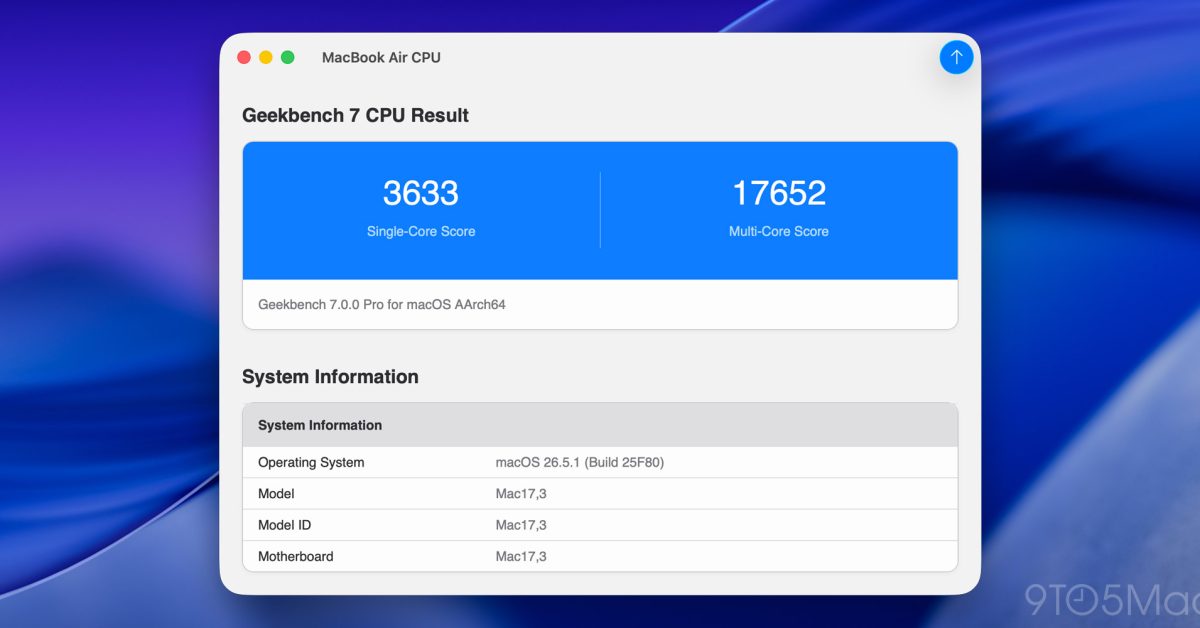
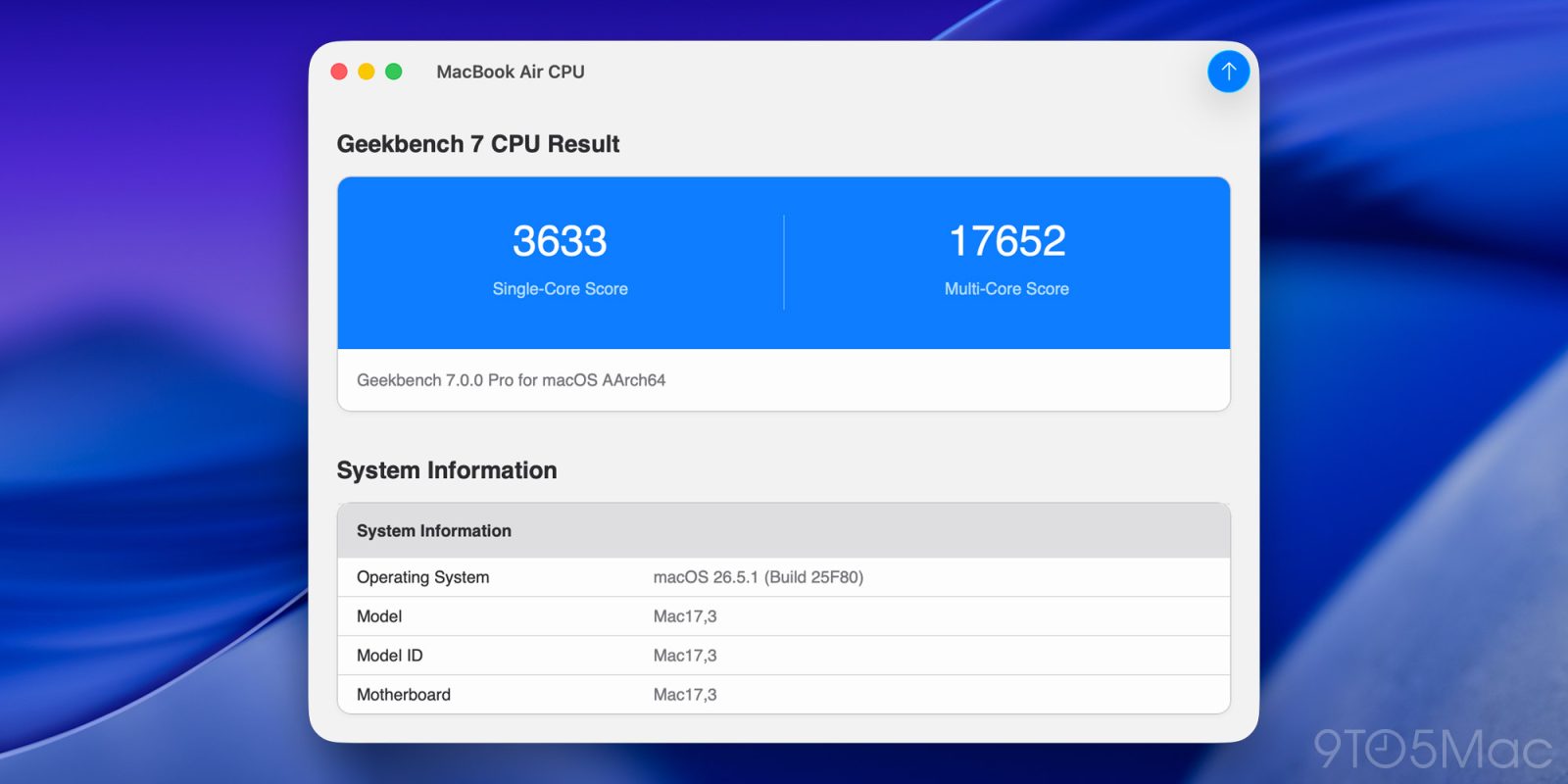
Primate Labs today released Geekbench 7, promising benchmarks that more closely reflect how people use their devices across daily work, gaming, and AI workloads. Here’s a new feature.
Geekbench 7 is now available
When Primate Labs released Geekbench 6 in early 2023, the company said: [had] The technology world has changed over the past three years, with AI and ML becoming “widespread in consumer and mobile applications.”
Three years later, that’s even more true. From on-device AI inference and image processing to video editing and increasingly demanding gaming, CPU and GPU performance are critical across a wide range of everyday tasks.
Today, Primate Labs released Geekbench 7 with “both new and improved workloads for measuring CPU and GPU performance.”
Geekbench 7 also revamps GPU benchmarks for apps, with a focus on machine learning and content creation workloads. The Primate Research Institute is:
For machine learning, GPU benchmarks include the following workloads:
- Model facial filters for social media apps by tracking faces and applying real-time filter effects to videos.
- Upgrade images using machine learning to model super-resolution features for content creation apps.
- Blurs the background of a video conferencing stream and models virtual background functionality in video conferencing apps.
Geekbench 7 also introduces new GPU image editing and compositing workloads such as RAW image processing, LUT-based video color grading, path tracing, and fluid simulation.
Additionally, Geekbench 7 adds Nvidia’s CUDA to the list of supported GPU APIs, along with OpenCL, Vulkan, and Metal.
Another improvement over Geekbench 6 is the way the updated benchmark handles multi-core performance.
Primate Labs explains that Geekbench 7 now runs workloads across multiple threads only when the actual task being tested typically does the same thing. For example, HTML5 browser testing is no longer part of the multicore suite. This is because web browsers are typically single-threaded or lightly threaded.
When it comes to media performance, Geekbench 7 adds new workloads to measure how your CPU handles audio and video encoding, decoding, and processing.
- Encode a screen share video using the AV1 codec to model screen sharing functionality in video conferencing apps.
- Compress music and spoken word audio using the Opus codec to model voice memos and podcast apps.
- Decode video and audio, enable automatic subtitles, and model video playback while generating live captions using the Whisper speech recognition model.
Finally, Geekbench 7 also increased the size and diversity of the datasets used across tests.
For example, file compression workloads now include more archives across source code, object code, and text documents. The PDF Viewer test covers a wider range of files, including park maps, technical documents, and academic papers. Similarly, developer and image processing workloads have been updated with more assets and additional image formats.
To celebrate the launch of Geekbench 7, Primate Labs is offering 20% off Geekbench 7 Pro until August 6th. The standard version remains free for personal use.
Click this link to learn more about Geekbench 7.
Worth checking out on Amazon


FTC: We use automated affiliate links that generate income. more.


