
As AI adoption accelerates in the fitness and wellness space, the real differentiator is no longer whether companies are using artificial intelligence, but how carefully they are implementing it.
It’s not “if,” it’s “how.”
AI is here to stay, but how companies incorporate it will be the difference between winning and losing. Nearly half of U.S. workers already use some form of AI, and more than half of U.S. companies have implemented AI or provide their employees with access to AI tools. What happens next will determine whether an organization’s AI efforts stall or gain a competitive edge.
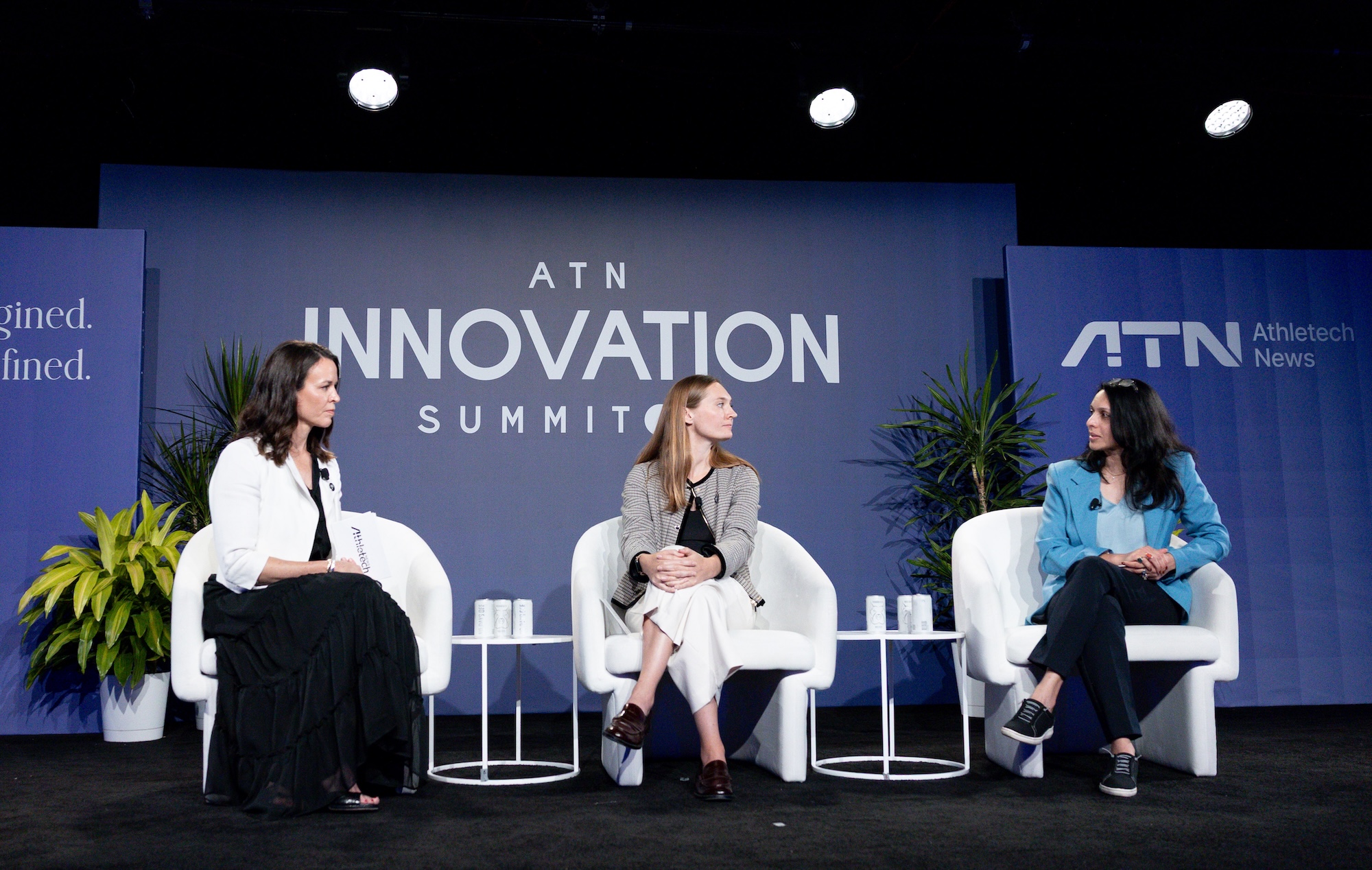
At the ATN Innovation Summit 2026 panel “Implementing AI: From the Inside Out,” executives from fit tech giant ABC Fitness discussed how the 30,000 operators it serves are approaching AI adoption.
Rachana Jain, chief human resources officer at ABC Fitness, says three ingredients are needed for successful AI implementation. The first is access, which makes AI tools and training available across the organization. The second is governance, ensuring employees use AI appropriately within compliance guidelines. Third, understand interdependencies and how AI connects functions across the business.
“We need to give people a sandbox for AI experiments, give them a rulebook to talk about what they should and shouldn’t do, and really think about how to evolve (and connect) all of their business processes,” she says.
Machine learning requires human learning
The AI transformation is ultimately a cultural transformation, argues Lacey Ford, chief marketing officer at ABC Fitness. She noted that while AI is powered by machine learning, human learning is just as important.
“Never underestimate the power of bringing your guys in,” Ford said. “It starts with the team. Different ways of working and a willingness to try, fail, experiment and try again.”
Once employees get over their initial fear of AI, they can begin to embrace its potential. At the most practical level, AI gives frontline staff, instructors, and trainers more time to focus on what they’re most excited about (which may not be administrative tasks like billing and collections).
At the end of the day, fitness is a people business, and that human connection is what keeps your gym members, and your team, engaged.
“The huge potential of AI is to uncover insights and connect the dots, so when you go talk to your members, the conversation is as personalized as possible,” said Madeline Verbeten, director of product operations at ABC Fitness.
“AI integrates various data points and recommends the assistance a person needs based on where they are in their journey, program, and lifecycle,” Verbeten said.
A good reception at the front desk can have a huge impact on member retention, making timely and personalized outreach even more valuable. Data also works proactively. For example, ABC Fitness’ Churn Predictor AI tool integrates membership data to identify individuals at risk of cancellation before it’s too late.
“So instead of spending all your time identifying[members at risk]once you have that list you can move the conversation to focus on action, remediation, and maintenance,” Verbeten explained.
Place basic elements in the right place
One common mistake, panelists said, is thinking of AI as a collection of point productivity tools. Instead, organizations need to embed AI across the member lifecycle to provide teams with insights to make better decisions, faster.
Another mistake is not preparing the basic elements. Without the right data, governance, and processes in place, even advanced AI initiatives can fall short.
AI is advancing rapidly, but implementation should not be rushed.
“There’s a fine line between speed and intentionality,” Ford said. “It doesn’t matter how fast an engineering team develops something, it doesn’t matter if it’s not moving in the right direction or if the company isn’t measuring the why and how behind customer outcomes.”


