

BEIJING, Nov. 20 (Xinhua) — Just after Yang Yucheng returned to campus to begin his second year of training in Monterey, a small town on California’s Pacific coast, he found out that his beloved translation program would be cancelled.
Yang studies interpretation and translation at the Middlebury Institute of International Studies in Monterey, also known as MIIS. Although the training is rigorous, demanding and unforgiving, it is offset by the rhythm of the coast and the institute’s reputation as a premier school for translators and interpreters around the world.
But in late August 2025, Vermont-based Middlebury College announced it would close its Monterey graduate program, including its flagship translation and interpreting course, by 2027.
The university cited a sharp decline in enrollment and applicants. Meanwhile, translation classes in China are also facing a decline in student numbers, with many pointing to the disruptive rise of artificial intelligence (AI) and rekindling old debates about whether learning a foreign language is still worth the effort.
“Our program has a very strong reputation,” Yang said. “Most students who want to study translation want to get in here,” she said, adding that she was “completely stunned” to hear the announcement.
Liu Leshan, a master’s student in the interpreting program at Guangdong University of Foreign Studies (GDUFS) in southern China, echoed similar sentiments, saying the news made him unsure about his chosen profession and path.
The reaction in China has been sharp, and for good reason. Over the decades, its foreign language programs have punched above its weight, helping to break its post-1949 isolation, introducing technology and managerial know-how during reforms that began in the late 1970s, then riding the wave of the WTO, and since 2001 fostering growth in trade, financial, legal, and scientific cooperation.
Along the way, these programs have attracted a significant proportion of the nation’s brightest students, offering them a glimpse of bright careers in international arenas such as the United Nations and the World Bank, where salaries are well-increased.
However, in recent years, this feeling has changed. Notably, some Chinese universities have canceled or eliminated foreign language programs, prompting educators and industry participants to adjust their curricula to adapt to market changes.
When the machine gets caught
The idea of machines replacing human translators and interpreters is nothing new. IBM tried machine translation in 1954, but humans were able to laugh at the results for decades.
This trend changed in 2016. Google’s neural machine translation system significantly reduces errors and delivers translations close to human quality for the first time. With the recent rise of generative AI tools like ChatGPT and DeepSeek, the industry is now facing a potential cliff-edge shock rather than gradual growth.
Luo Qing, who works in sales at a major translation company, said a recent quote about medical projects exemplifies this change.
She revealed that a full human translation costs 800 yuan (approximately $113 USD) per 1,000 Chinese characters, while a “machine translation and human editing” package costs 300 yuan.
Her company’s traditional translation business has shrunk by three-quarters, and AI-assisted tasks, from machine translation and post-editing to subtitling, have proliferated.
According to an April 2025 report from the China Translators Association, hybrid workflows have become the norm in the industry, with 97.1% of translation agencies using AI tools. Of the projects, 26 percent were delivered as pure machine translation, and the remaining 33.2 percent relied on machine translation combined with post-editing.
The situation is more complex in the interpreting market. Practitioners report that while human interpreters remain preferred in face-to-face scenarios, many online meetings now employ AI-generated subtitles.
elite human translator
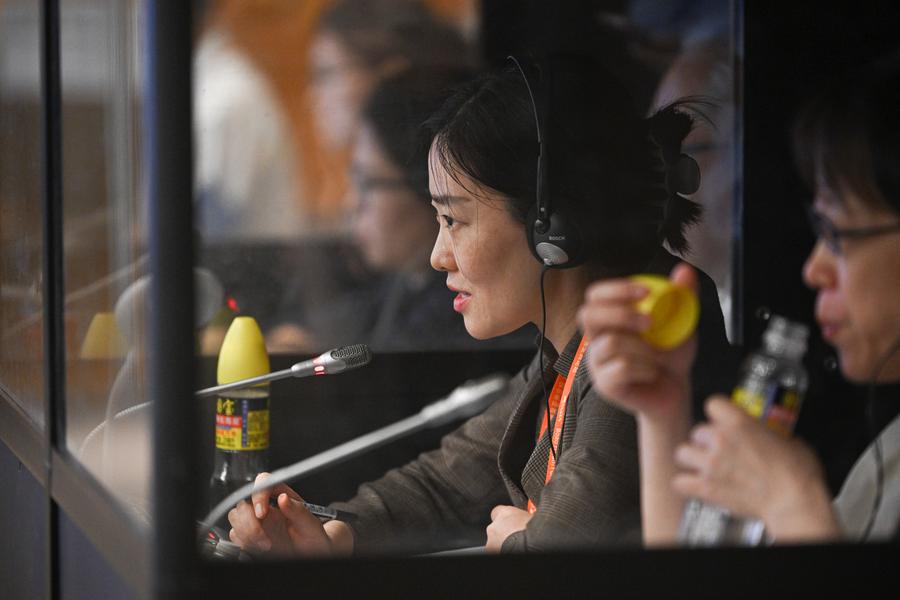
Ren Wen, dean of the Graduate School of Translation and Interpretation at Beijing Foreign Studies University, acknowledged that AI has improved translation efficiency, but said, “Although AI can replace the work of intermediate and lower-level humans to a certain extent, it is unlikely to replace first-class translators and interpreters anytime soon.”
Officials say human translators and interpreters remain far more reliable than algorithms in diplomatic negotiations, business negotiations, and policy disclosures. Concerns about data leaks and the confidentiality of political documents prevent AI from participating in this translation process.
Liability is also an issue. In legal, medical, and contractual texts, mistranslations can be costly, but humans cannot shift the blame to machines.
Chai Ying, deputy general manager of China Translation Corporation, said humans are still essential to judge and contextualize AI translations.
To succeed in the AI era, human translators still need to master the basics of their craft, Chai says. “To evaluate AI translation, we ourselves have to be good at language and translation skills.”
Many language and translation programs are moving toward more interdisciplinary programs, especially to broaden the skills that students have.
For example, GDUFS has partnered with the Macau University of Technology to introduce a dual degree program combining translation and computer-related disciplines at the undergraduate level.
Other institutions, such as the Shanghai University of International Studies, are also launching doctoral programs to train the country’s next generation of elite translators and interpreters.
“Future interpreters/translators may play many roles in their work, sometimes as editors, project managers, and cross-cultural consultants,” says Xu Lan, associate professor of interpretation at China Foreign Affairs University.
“It is important for aspiring learners to not only build a strong foundation in language and culture, but also to acquire a range of skills and learn how to work with AI,” she said.
spotlight on china
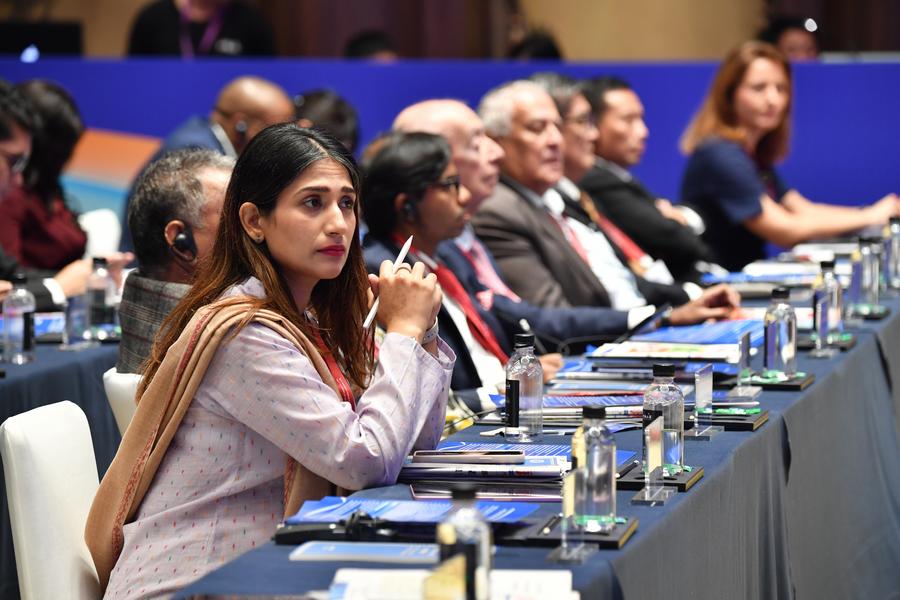
Analysts highlight that China’s translation industry faces not only the disruptive rise of generative AI but also unprecedented opportunities in Chinese-to-foreign language translation.
As China moves closer to the center of the world stage, they say, the world is increasingly eager to learn about China and participate in initiatives such as the Belt and Road Initiative (BRI).
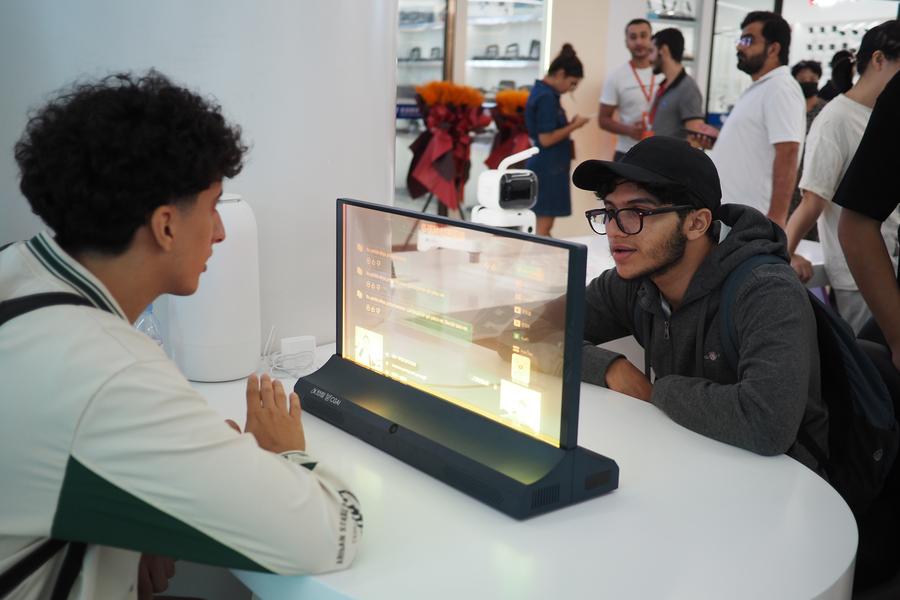
Chinese AI company iFLYTEK said its translation device, which has mastered more than 80 foreign languages, is proving popular among small business owners who increasingly travel to non-English-speaking countries that are part of the BRI.
Will increasingly versatile AI one day make human interpreters obsolete? Sun Jingting, director of AI translation at iFLYTEK, said this is not what such systems are designed to do.
“Business negotiations are also about conveying emotions and bridging cultures. There is no substitute for humans here,” he said.
Sun explained that AI adoption often reflects practical constraints, as human interpreters for some less-spoken languages are often in short supply, or the services are out of reach for small and medium-sized businesses.
In fact, while the traditional field of translation is shrinking, fields such as IT and the Internet, culture and media, and cross-border e-commerce are increasingly attracting language talent with cross-disciplinary skills.
For example, Mr. Liu has secured an overseas sales job with a domestic educational equipment manufacturer, which is now looking to expand into additional markets. He said the job requires nuanced, empathetic interactions that go beyond the cold, clinical precision offered by AI translation.
“AI is already integrated into the studies, work and daily lives of translation and interpretation students,” he said.
“I don’t think this is something that’s going to bury the profession. But I do see it as a tool that, if we get good at it, can make us even more competitive. And I think that’s a good thing, in my opinion.” ■


