Charles H. Josselin sat in a conference room in Los Angeles, looked into a nearby camera and lied.
“I'm definitely Tom Cruise,” he said with a laugh.
Josselin, COO and creative head of visual effects company VFX Los Angeles, visited Spectrum News Studios to show off a new technology called “deepfakes,” which allows people to transform their image into that of other celebrities in real time.
“There's always that 'wow moment,'” he said.
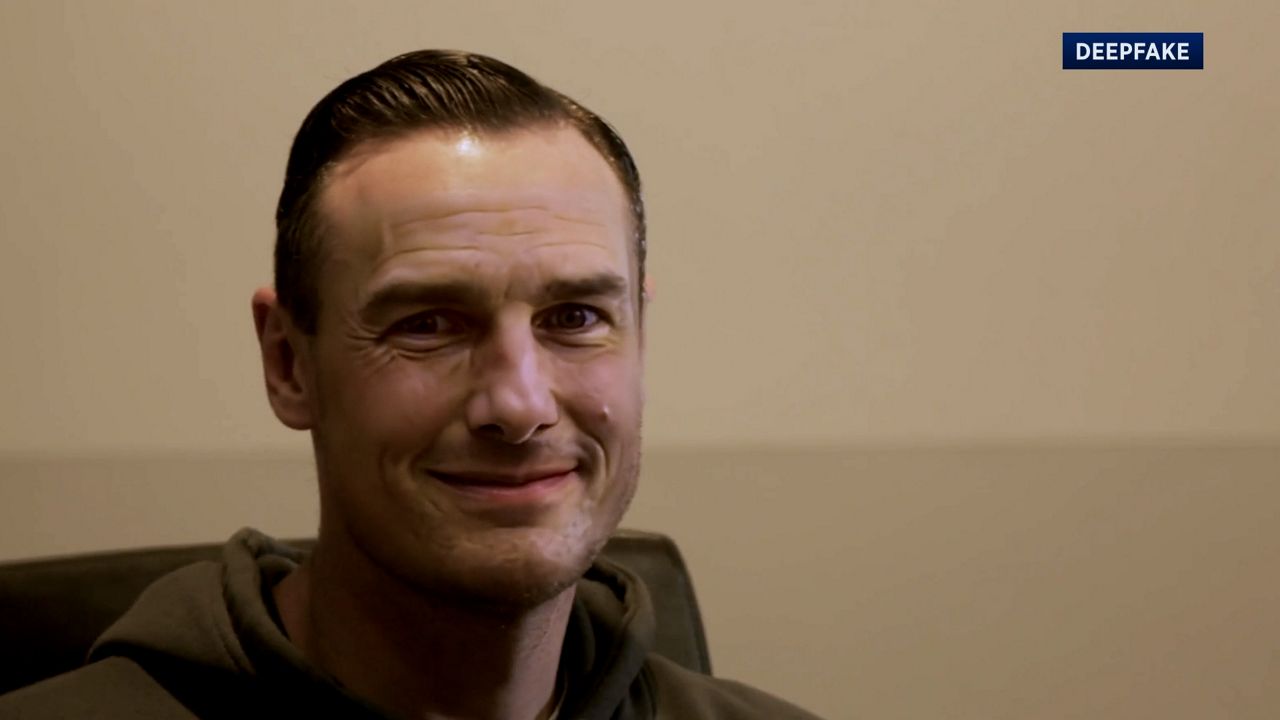
Visual effects and motion graphics firm VFX Los Angeles is involved in creating deepfakes for Hollywood, calling itself “one of the few deepfake experts in the world” doing this type of work for studios.
“At this point, I don't think there are any limits,” Josselin says. “Anything we can think of, anything we can write, we can create. There's really nothing we can't do.”
Deepfakes – Test it out:
To get a better understanding of what could be done, Spectrum News invited VFX Los Angeles to give a presentation. The test subject was Aaden, a broadcast engineer at Spectrum News Los Angeles, who agreed to sit in front of the camera and have himself transformed.
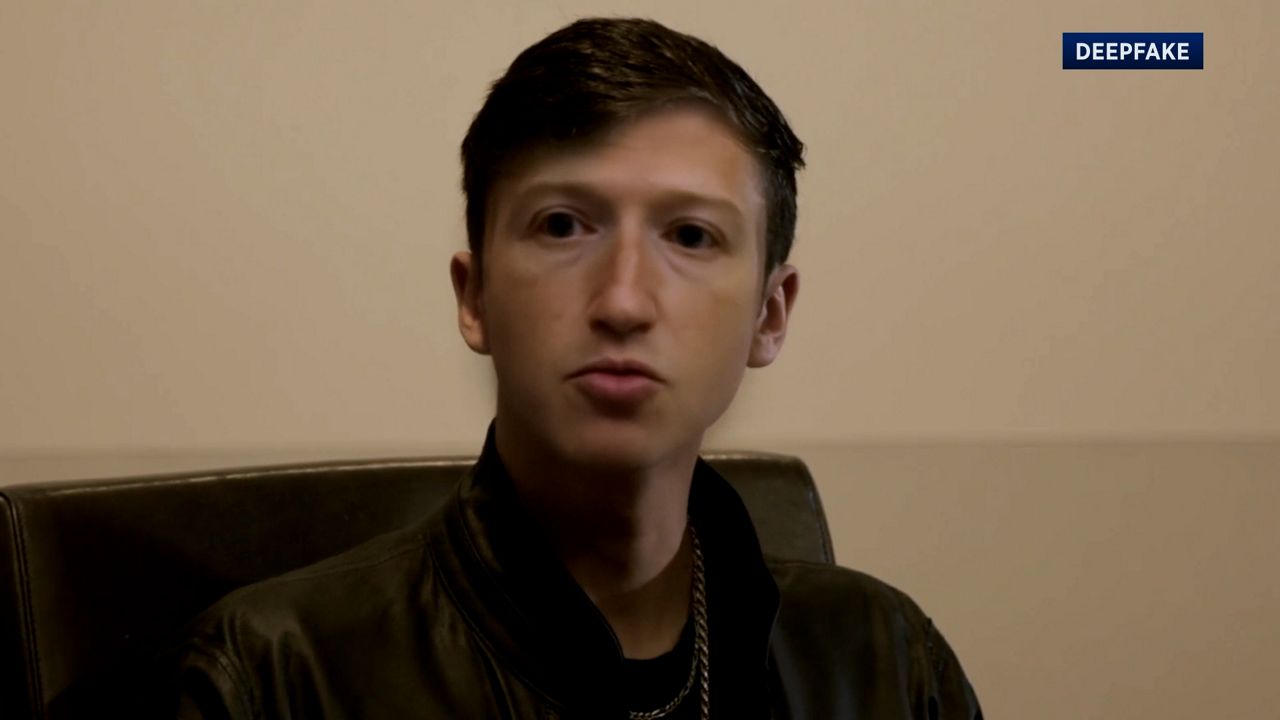
First up was Meta CEO Mark Zuckerberg. In real time, Arden's eyes got bigger, his eyebrows thinned, and his whole face transformed. Then he switched from one billionaire to another, his skin, nose, mouth, and eyes resembling Elon Musk. The technology can even transcend gender, and Arden transformed again to become Scarlett Johansson.
Finally, the VFX Los Angeles team transformed Arden again: her forehead became wrinkled, her eyebrows became gray, and our subject now resembled President Joe Biden.
“I'm happy to be president,” Arden said with a laugh.
The company's CEO and founder, Jiri Traub, said the demonstration was just the tip of the iceberg of what's possible with the technology: With better lighting, more cameras, more realistic body doubles and post-production editing, it's possible to create sophisticated, cinematic deepfakes that are indistinguishable to the human eye, he said.
“We're at the stage now where we're really pushing the envelope of what it can do,” he said.
After studying film at UCLA, Traub founded VFX Los Angeles and quickly began working in traditional visual effects, but he became increasingly intrigued by the potential of deepfakes, even though at the time they were considered a “gimmick.”
“Everything was so immature at the time,” Traub says, “I don't think anybody had any idea how to use it creatively, and we didn't think of it as a cinematic tool.”
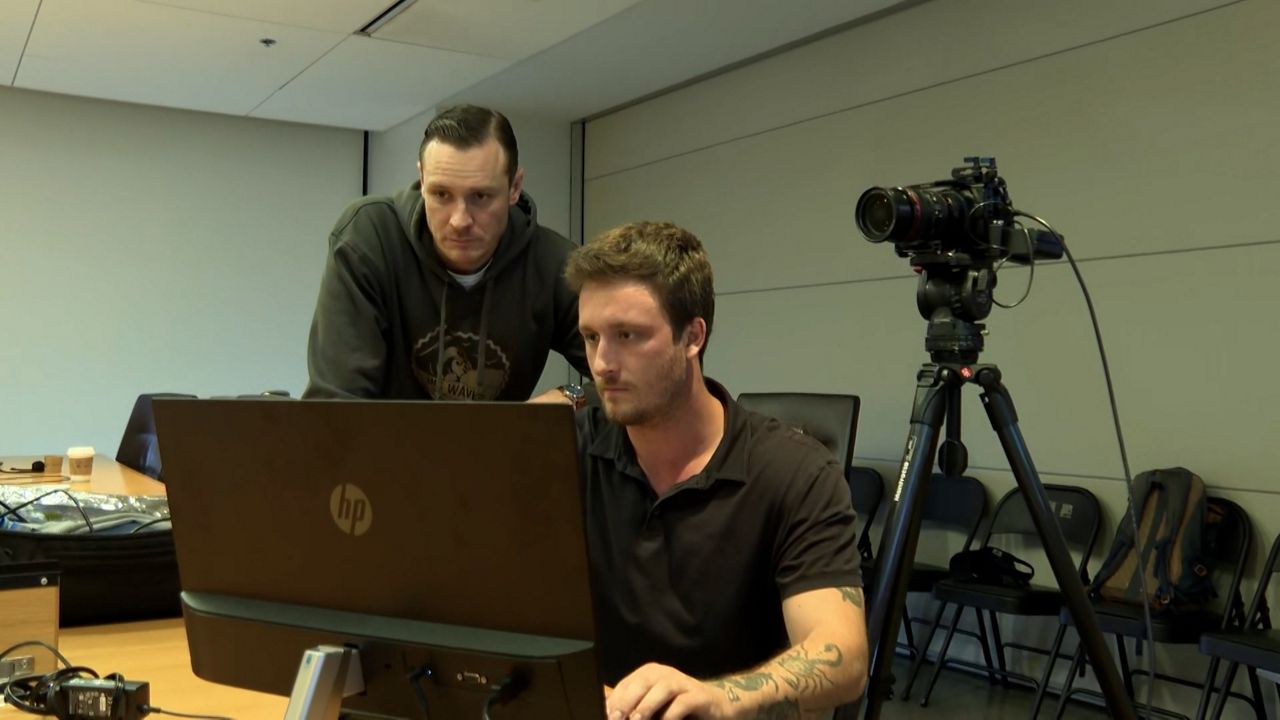
Traub says the first time deepfakes were used in production was for a de-aging project, and the technology has only improved since then. Josselin envisions a world where directors can shoot a scene without the lead actor and then use deepfake technology to place the actor's face on a body double.
“If you can't ask Tom Cruise to shoot for 20 days, you can ask him to do two days and just do close-ups, and then you hire other actors, you cast stand-ins who can effectively do the wide shots, the driving scenes, the getaway scenes. So now he's shooting a commercial in Tokyo on the same day he's shooting with Martin Scorsese in LA,” Josselin said.
The downside: Deepfakes are misinformation:
Despite the excitement, Traub and Josselin acknowledged that deepfakes come with risks: In the wrong hands, they could lead to the spread of misinformation.
“I think there's a real risk of personal defamation and retaliation,” Traub said.
“I think there's a real risk of personal defamation and retaliation,” Traub said.
Deepfakes could also cause further chaos at a local level, Josselin said, and the technology could be used in “corporate wars” or marital disputes. The more accessible the technology becomes, the more doubts there will be about what is real and what is fake, he said.
“Your Aunt Joan, who you don't really like, said something crazy about me,” he explained, explaining a possible scenario. “But did she really say something crazy about me? This just ruined my Thanksgiving.”
Across the country, there are numerous examples where this scenario is beginning to become a reality.
Last October, a group of teenage girls at a high school in Westview, New Jersey, were horrified to discover that their classmates were using AI-generated images to post nude photos of them.
In January, the principal of a high school in Pikesville, Maryland, was caught making racist and anti-Semitic remarks in an audio recording, which police later discovered was a deepfake created by another school employee out of resentment.
Then, ahead of the New Hampshire primary in January, Democratic voters in the state got a robocall from President Joe Biden urging them to stay home.
“It's important that you save your vote for the November election,” the recording said.
The recordings are deep fakes, meaning the audio is not real, and Steven Kramer, the political consultant who ran the AI-generated calls, is now facing $6 million in fines and more than 20 criminal charges.
Ahead of the 2024 elections, there are concerns the technology could be used to create political disinformation that could change how people vote.
“The reality is that when something is actually published and seen by a few thousand people, it does harm,” Traub said, “even if it's fake.”
The “Arms Race”: The Battle to Detect Deepfakes:
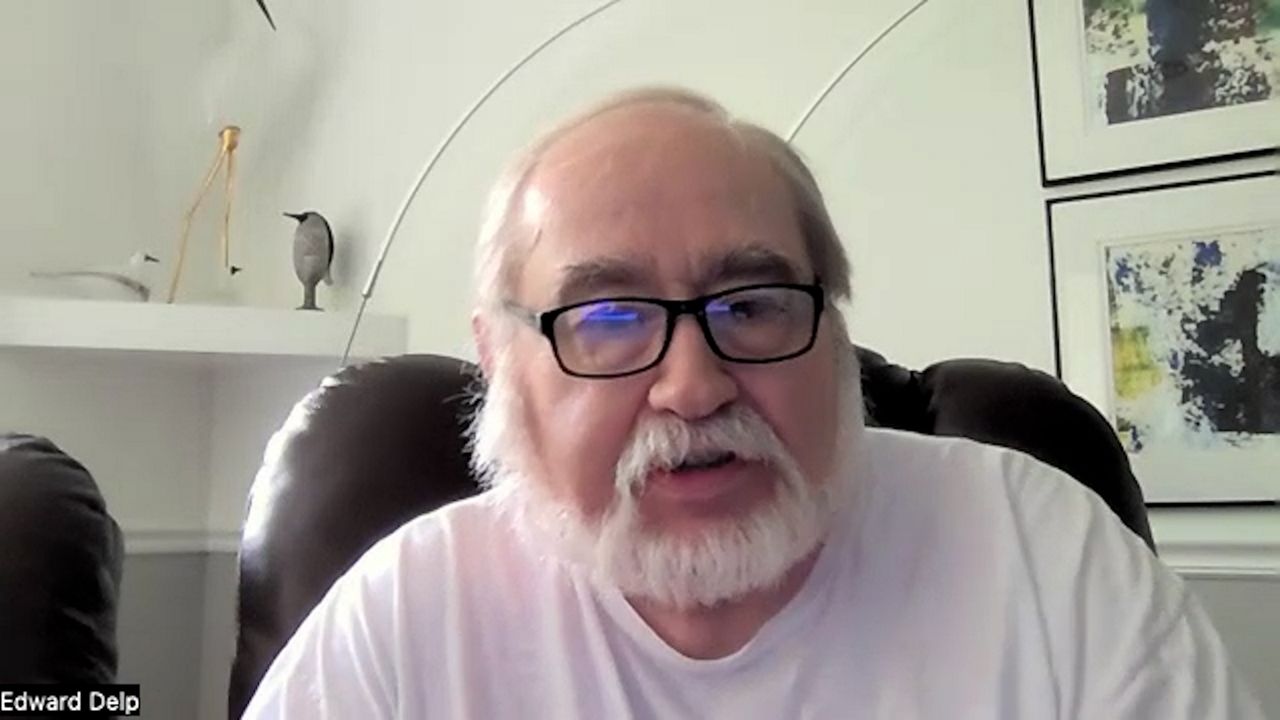
As deepfakes have improved and become more prevalent, so have efforts to combat them: Researchers like Purdue University's Ed Delp are working to develop detection software that can identify deepfakes in real time.
“The idea is that we can detect these things,” Delp said. “It's going to be like a continuing arms race.”
Delp has been selected to lead a Purdue University team in the Semantic Forensics (SemaFor) program, overseen by the Defense Advanced Research Projects Agency (DARPA) within the Department of Defense.
DARPA has played a key role in creating many of the most cutting-edge technologies over the past 60 years. The agency provides significant funding for research and development of emerging technologies in collaboration with academic and industrial partners.
The agency has helped create groundbreaking technologies like GPS, drones and even the internet, and now, through its SemaFor program, it is dedicating resources to creating deepfake detection tools.
Delp said that while a lot of progress has been made, he's still “concerned” about whether they'll be able to keep up.
“The people making these tools are getting better and better,” he says, “and we need to get better at detecting it.”
Delp said there has been a lot of progress, including from private companies. In 2022, Intel designed a deepfake detection tool called “FakeCatcher” that the company said can detect fake videos with 96% accuracy. The tool can detect “blood flow” within the pixels of a video to determine whether the video is real, according to the company's announcement.
“Blood flow signals are collected from the entire face, and algorithms convert these signals into spatiotemporal maps,” the release states. “Deep learning can then be used to instantly detect whether a video is real or fake.”
Delp said artificial intelligence, which is essential to deepfakes, is also becoming part of the solution, using AI to train computer programs by feeding them videos of faces to distinguish what is real and what is fake.
“Basically, this technique looks at very subtle changes in the video,” he says, “and from there we can determine whether the video created is a deepfake or not.”
Despite the incredible advances being made in detection software, Delp remains realistic, noting that deepfake platforms are constantly improving. He said what's most concerning is how the technology is becoming available to people at home without the need for complex software.
“They will be made available for the public to use. And it raises the question of what do we really believe? That's frightening.”
Capitol Hill: Searching for Solutions:
The rapid growth of deepfake technology has caught the attention of members of Congress, with a flurry of mostly bipartisan bills being introduced in both the House and Senate to address the issue.
Laws to protect consumers from deceptive AI:
In the House of Representatives, a bipartisan group of lawmakers, including Rep. Anna Eshoo of California and Republican Rep. Neil Dunn of Florida, are co-sponsoring the Protecting Consumers from Deceptive AI Act, which directs the National Institute of Standards and Technology (NIST) to expedite the development of standards for identifying and labeling AI-generated content.
This could include potentially requiring AI developers to embed digital watermarks and metadata that would make deepfake videos easily identifiable. The standard also includes specific requirements for online platforms like YouTube and Facebook to label deepfakes.
“AI holds incredible potential,” Eshoo said in announcing the bill in March, “but with that potential comes the risk of undermining trust and credibility. AI-generated content has become so persuasive that consumers need help discerning what they see and engage with online. Deception from AI-generated content threatens elections and national security, impacts consumer trust, and calls into question the trustworthiness of our institutions.”
Republican co-sponsor Rep. Neil Dunn of Florida also promoted the new bill.
“The rise of innovation in the world of artificial intelligence is exciting, but in the wrong hands, it has the potential to do great harm,” said Senator Dunn. “The Protecting Consumers from Deceptive AI Act would protect Americans from being fooled by deepfakes and other deceptive methods by establishing standards for identifying AI-generated content. Establishing this simple safeguard is essential to protect the security of our children, consumers, and our nation.”
Bill to protect elections from rogue AI:
A bipartisan bill has been introduced in the Senate targeting the potential risks of artificial intelligence disrupting elections. The Protecting Elections from Deceptive AI Act has numerous cosponsors, including Sens. Amy Klobuchar (D-MN), Josh Hawley (R-MO), Chris Coons (D-DE), Susan Collins (R-ME), and Michael Bennet (D-CO).
The bill would ban deceptive AI material in political ads and allow candidates for federal office to seek orders in U.S. courts to remove false AI information.
“We are currently seeing AI being used as a tool to influence our democracy,” Senator Klobuchar said in announcing the bill. “We need to put rules in place to stop the use of fraudulent AI-generated content in election ads. Voters deserve full transparency.”
Senator Hawley also supported the measure in a statement on the bill.
“We must protect Americans' right to vote without being controlled or manipulated by artificial intelligence companies,” he wrote. “Elections belong to the people, not to tech companies.”
The Cultivate Originals, Promote the Arts, and Keep Entertainment Safe (Anti-Counterfeiting) Act:
A separate Senate effort proposed for October 2023 has bipartisan support from a bipartisan group of senators including Sens. Chris Coons (Delaware), Marsha Blackburn (Tenn.), Amy Klobuchar (Min.), and Thom Tillis (N.C.).
According to a statement about the bill, the NO FAKES Act would “protect people's voices and physical likenesses from unauthorized copying using AI. The legislation was enacted after the release of AI-generated songs imitating the voices of Drake and The Weeknd raised major concerns among music industry insiders.
The bill would hold companies and individuals responsible for creating unauthorized copies, as well as platforms responsible for hosting these copies. The bill was originally published as a “discussion draft” in the fall of 2023.
In April, the Intellectual Property Subcommittee held a hearing on the bill and heard testimony from musicians and music industry executives who expressed concerns.