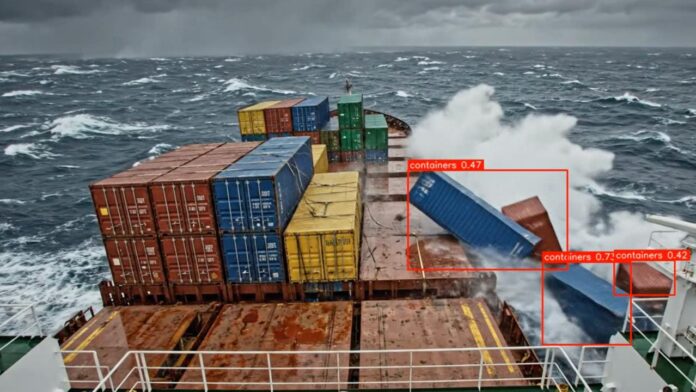
Eyesea and EVI Safety Technologies have announced a new artificial intelligence system designed to detect and report containers lost overboard in real time. The technology uses standard shipboard cameras and, after successful simulation tests, is ready for trials on operational vessels.
The system applies advanced computer vision and machine learning to existing deck and bridge cameras. Automatically identify and count containers that have fallen off ships or drifted at sea. Once detected, the system immediately transmits incident data to the vessel owner, flag state and, if necessary, coastal authorities.
This solution supports upcoming IMO mandatory reporting requirements for lost containers. These regulations require prompt reporting of container location, quantity and cargo details, especially in the case of dangerous goods. The Eyesea-EVI system produces geo-tagged images and structured incident data at the moment of detection, helping crews comply with regulatory obligations with greater accuracy and consistency.
Eyesea founder Graham Somerville-Ryan said lost containers were one of the first use cases built into the platform, and the move from simulation to real-world deployment was an important step for detection and environmental protection.
Vladimir Ponomarfev, CEO of EVI Safety Technologies, said the partnership demonstrates how AI and machine learning can address long-standing safety and environmental challenges in the maritime sector.
The system goes beyond compliance to address critical operational gaps. Container losses often go unnoticed or are reported too late to alert nearby vessels. Real-time detection improves situational awareness, increases navigation safety, and provides reliable data for drift modeling, investigation, and potential recovery efforts.
Onboard testing will begin next, with plans for wider deployment once real-world performance is verified.