Europe’s record heatwave exposes critical vulnerabilities in the global infrastructure supporting the AI boom. Data centers are increasingly concentrated in regions facing severe climate threats.
A study released by First Street on June 18, 2026 examined 97 data center markets worldwide and found that 79% of global data center capacity faces increased risk from severe climate disasters, such as flooding, polar winds, and wildfires, which can disrupt operations, increase downtime, and increase insurance and repair costs.
Patrick McBride, Zurich’s head of international construction, said severe weather has been the biggest loss driver in Zurich’s U.S. data center builder’s risk portfolio over the past three years, accounting for one-third of Zurich’s losses in the portfolio.
This problem is further exacerbated by where companies build.
This year, 64% of data centers under construction are outside of traditional clusters, such as Northern Virginia, and in new frontier markets, such as West Texas, Tennessee, Wisconsin, and Ohio regions, which are at risk from tornadoes, hail, and high winds.
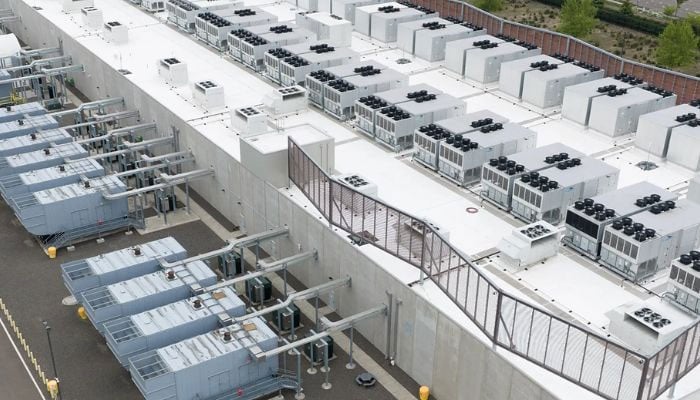
Even at normal temperatures, cooling accounts for about 40% of a data center’s energy use, according to Mishal Thadani, CEO of AI software platform Rhizome, and that energy usage rises even more in extreme heat, just as air conditioning is putting more demand on the power grid.
Turin, Italy, experienced temperatures of up to 38 degrees Celsius (100 degrees Fahrenheit) in May, putting heat stress on underground power cables and leading to frequent power outages. According to Thadani, “Data centers demand the most power precisely at the times when the grid has the least power.”
Microsoft claims its data centers are designed to “operate reliably across a wide range of environmental conditions, minimizing risks from excessive temperatures and extreme weather through site selection, redundancy, and environmental monitoring.”
Nvidia says its new AI servers can withstand coolant operation at 45 degrees Celsius compared to previous low temperatures, saving 4% in cooling power by increasing the cooler temperature by just one degree.