

Europe Artificial Intelligence in Social Media Market Size
The Europe artificial intelligence in the social media market size was calculated to be USD 0.96 billion in 2025 and is anticipated to be worth USD 13.29 billion by 2034, from USD 1.29 billion in 2026, growing at a CAGR of 33.85% during the forecast period.
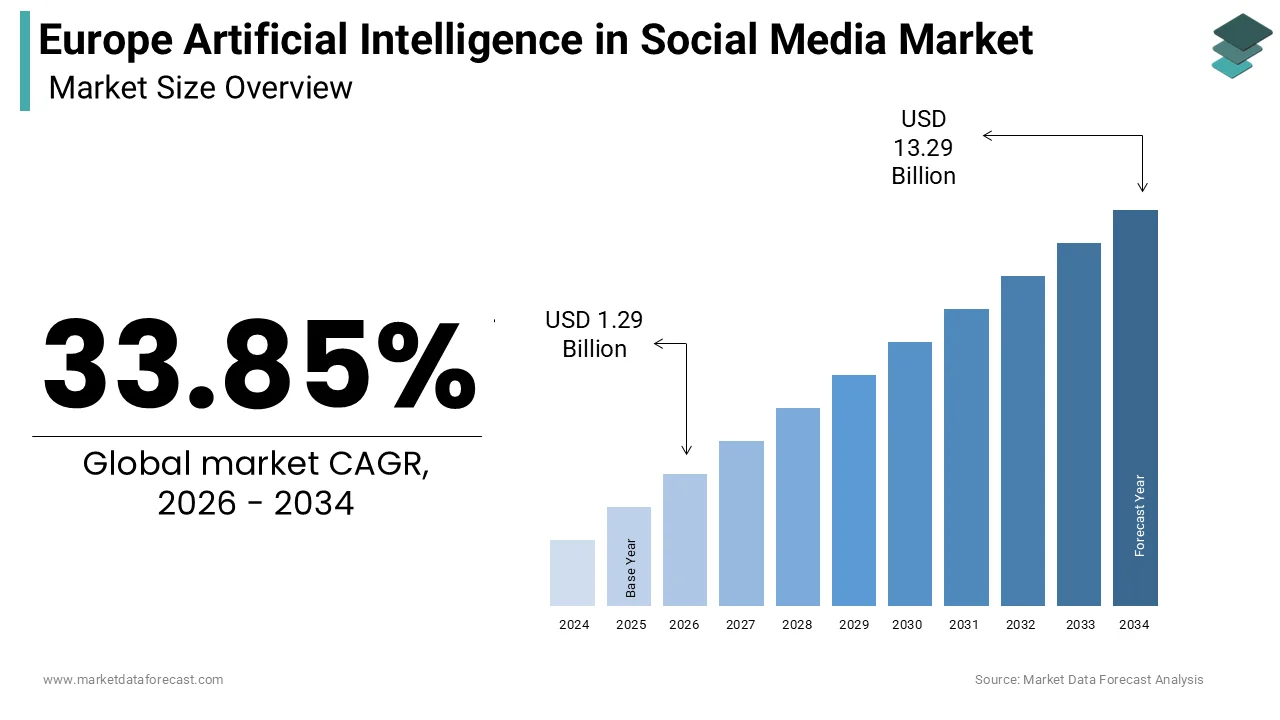
Artificial Intelligence (AI) in social media refers to the use of machine learning, natural language processing, and algorithms to automate, optimize, and enhance user experience, content creation, and marketing strategies across platforms like Facebook, Instagram, and X (Twitter). This technological integration enables brands and platform operators to automate content moderation, personalize user experiences, and derive actionable insights from vast volumes of unstructured data. According to Eurostat, nearly all residents in the EU are now online, with usage hitting 93% in 2024. The primary use case remains communication, with 85% of individuals using the internet for video calls or instant messaging. Furthermore, as per the Digital Decade 2024 Report, 70% of EU citizens now use e-government services. Leading nations like Denmark (98.5%) and the Netherlands (96.0%) have nearly reached total saturation, while countries like Romania (25.3%) continue to lag significantly. The General Data Protection Regulation fundamentally shapes this market by imposing strict constraints on data processing, thereby necessitating AI solutions that prioritize privacy by design. According to the European Commission, 45.2% of EU companies have integrated cloud computing into their operations as of 2023. While cloud usage is growing, AI adoption remains a secondary priority for many, with only 13% of EU enterprises actively utilizing AI technologies in 2024. The market is defined not merely by advertising efficiency but by the critical need for compliance, automated safety mechanisms, and enhanced customer engagement in a regulatory environment that demands transparency. The rise of generative AI allows enterprises to create localized content at scale. This ability is driving widespread adoption as companies seek to maintain relevance across diverse linguistic and cultural contexts.
MARKET DRIVERS
Stringent Content Moderation Requirements Under the Digital Services Act Accelerate AI Adoption
The implementation of the Digital Services Act by the European Union is a primary driver of European artificial intelligence in the social media market. This comprehensive legislation imposes rigorous obligations on online platforms to detect, remove, and prevent the spread of illegal content, including hate speech, terrorist propaganda, and disinformation. Manual moderation is insufficient to handle the sheer volume of data generated daily, necessitating the use of advanced AI systems capable of real-time analysis and decision-making. According to the European Commission, platforms must conduct regular risk assessments and deploy effective mitigation measures, which largely rely on automated tools. The act requires very large online platforms to provide transparency regarding their algorithmic systems, prompting investments in explainable AI technologies. As per data from the European Digital Media Observatory, the spread of misinformation during election periods has increased significantly, requiring sophisticated detection mechanisms. AI-driven natural language processing models can identify nuanced context and sentiment in multiple European languages, ensuring compliance with local legal standards. Furthermore, the requirement for rapid response to trusted flaggers means that automated systems must operate with high accuracy and speed. Companies are thus compelled to integrate AI solutions that not only moderate content but also document these actions for regulatory audits. This legislative pressure transforms AI from an optional efficiency tool into a mandatory compliance infrastructure, driving substantial investment in specialized social media monitoring and moderation technologies across the region.
Escalating Demand for Hyper Personalized Customer Experiences Drives AI Integration
The growing consumer expectation for personalized and immediate interactions on social media platforms propels the expansion of European artificial intelligence in the social media market. Modern users demand tailored content recommendations and instant customer support, which traditional manual processes cannot deliver at scale. AI-powered chatbots and virtual assistants utilize natural language understanding to engage with customers in their native languages, providing 24/7 support and resolving queries efficiently. According to BEUC (European Consumer Organisation), 9 in 10 online shoppers report concerns over being targeted by advertising. While consumers are willing to trade data for loyalty rewards, they increasingly reject personalized pricing models that result in “discriminatory practices by algorithms”. Machine learning algorithms analyze user behavior, purchase history, and social interactions to predict future needs and suggest relevant products or services. This level of personalization enhances customer loyalty and increases conversion rates for businesses operating in competitive digital markets. Furthermore, the rise of social commerce, where transactions occur directly within social media apps, relies heavily on AI to streamline the buying journey. As of Q1 2025, there are 577 million active social media users in the EU (731 million across broader Europe). The market is considered “mature” with an annual growth rate of just 1.5%, yet YouTube and Facebook remain the dominant channels for targeted marketing with 450 million and 260 million active users, respectively. AI enables marketers to segment audiences with precision and deliver dynamic content that resonates with specific demographic groups. The ability to automate these personalized interactions while maintaining a human-like touch allows brands to scale their engagement efforts effectively. Hence, the drive to meet evolving consumer expectations for relevance and immediacy continues to fuel the integration of AI technologies in social media strategies.
MARKET RESTRAINTS
Strict Data Privacy Regulations Under GDPR Limit Data Availability for AI Training
The General Data Protection Regulation imposes stringent restrictions on the collection, storage, and processing of personal data, which limits the growth of European artificial intelligence in the social media market. Consequently, these regulations significantly restrain the development and deployment of artificial intelligence within the social media sector. AI models require large datasets to train accurately and improve their predictive capabilities, but GDPR mandates explicit consent for data usage and grants individuals the right to be forgotten. This legal framework limits the amount of user data available for training algorithms, potentially reducing the effectiveness and accuracy of AI-driven insights. According to the European Data Protection Board, fines for non-compliance can reach up to 20 million euros or 4 percent of global annual turnover, whichever is higher, creating a high-risk environment for data-intensive operations. Many social media platforms and third-party AI providers struggle to balance the need for data with privacy obligations, leading to cautious adoption rates. As per a survey by the International Association of Privacy Professionals, obtaining valid consent for data processing remains a major challenge for organizations operating in Europe. The requirement for data minimization means that companies cannot collect excessive information just in case it might be useful for future AI applications. This constraint forces developers to create more complex privacy-preserving techniques such as federated learning, which can be costly and technically challenging. Consequently, the regulatory burden associated with GDPR acts as a significant brake on the rapid expansion of AI capabilities in the social media landscape as companies prioritize compliance over innovation.
High Implementation Costs and Technical Complexity Hinder SME Adoption
The substantial financial investment and technical expertise required to implement AI solutions are a significant restraint for small and medium-sized enterprises in the European artificial intelligence in social media market. Developing custom AI models or licensing advanced proprietary software involves considerable upfront costs, including hardware infrastructure, software licenses, and skilled personnel salaries. Many smaller businesses lack the budget to compete with larger corporations that can afford sophisticated AI-driven social media tools. The complexity of integrating AI with existing social media management systems also presents technical challenges that require specialized IT support. Small businesses often rely on basic analytics tools that do not offer the predictive capabilities or automation features of advanced AI platforms. As per the European Investment Bank, access to finance for digital transformation remains a barrier for many SM, Es particularly in Southern and Eastern Europe. The rapid pace of technological change means that investments in AI can quickly become obsolete, requiring continuous spending on updates and training. This financial and technical burden discourages widespread adoption among smaller players who form a substantial part of the European business landscape. Thus, the market growth is restrained by the inability of a significant segment of potential users to afford or manage complex AI solutions, limiting the overall penetration of these technologies.
MARKET OPPORTUNITIES
Expansion of Generative AI for Multilingual Content Creation Offers Significant Growth Potential
The emergence of generative artificial intelligence offers a lucrative opportunity for European artificial intelligence in the social media market. It achieves this by enabling the automated creation of high-quality multilingual content. Europe is characterized by linguistic diversity with 24 official languages in the European Union, creating a challenge for brands seeking to engage audiences across different regions. Generative AI models can produce text images and videos tailored to specific cultural and linguistic contexts at a fraction of the time and cost required for manual creation. According to the European Commission, the demand for localized digital content is rising as consumers prefer interacting with brands in their native languages. AI tools can translate and adapt marketing messages, ensuring that tone and nuance are preserved across different languages. This capability allows businesses to expand their reach into new markets without establishing large local teams. Research shows that consumers are significantly more inclined to complete a purchase when a website is presented in their native tongue, demonstrating the clear financial benefits of translation. Generative AI also enables the rapid production of varied content formats such as blog posts, social media captions, and video scripts, keeping feeds fresh and engaging. The ability to scale content production while maintaining relevance offers a competitive advantage for agencies and enterprises. Accessible technology is driving adoption among a broader range of users. This trend unlocks new revenue streams and boosts brand visibility across the European digital landscape.
Integration of AI-Powered Social Listening for Real-Time Crisis Management
The integration of AI-powered social listening tools paves the way for organizations to enhance their crisis management capabilities in real time, which is likely to promote the expansion of European artificial intelligence in the social media market. Social media platforms serve as primary channels for public discourse where reputational threats can emerge and escalate rapidly. AI algorithms can monitor millions of conversations simultaneously, detecting shifts in sentiment and identifying emerging issues before they become full-blown crises. Multiple studies emphasize that using sentiment analysis for early detection allows organizations to address public concerns before they escalate, shifting from a defensive to a proactive strategy. These tools can analyze context and emotion, providing deeper insights into public perception than simple keyword tracking. Sources indicate that organizations employing real-time digital tracking are able to resolve reputational crises more efficiently than those without such systems in place. AI-driven social listening also helps identify influencers and key opinion leaders who can amplify positive messages or help clarify misunderstandings during a crisis. The ability to track the spread of misinformation and coordinate corrective actions is increasingly valuable in an era of rapid information dissemination. Furthermore, these insights can inform strategic communication plans, helping organizations align their messaging with public expectations. As social media continues to shape public opinion, the demand for sophisticated listening tools that offer actionable intelligence will grow. This opportunity drives investment in advanced analytics platforms that provide comprehensive visibility into the social landscape, empowering organizations to protect and enhance their reputations effectively.
MARKET CHALLENGES
Algorithmic Bias and Lack of Transparency Erode User Trust and Regulatory Compliance
The presence of algorithmic bias and the lack of transparency in AI decision-making processes inhibit the growth of European artificial intelligence in the social media market. AI models trained on historical data may inherit and perpetuate societal biases, leading to unfair treatment of certain demographic groups in content moderation or ad targeting. This issue undermines user trust and can result in discriminatory outcomes that violate European equality laws. According to the European Union Agency for Fundamental Rights, biased algorithms can reinforce stereotypes and exclude marginalized communities from economic opportunities. The Black Box nature of many AI systems makes it difficult to understand how decisions are made, complicating efforts to audit and correct biases. While social media platforms face systemic risk obligations under the Digital Services Act, the AI Act primarily classifies their AI features, such as chatbots and content recommendations, as limited risk, mandating transparency rather than high-risk conformity assessments. Companies face the challenge of developing explainable AI that provides clear rationales for its actions while maintaining performance efficiency. The lack of standardized methods for detecting and mitigating bias further exacerbates the problem. Regulatory bodies are increasingly scrutinizing algorithmic practices, demanding greater openness from tech companies. Failure to address these issues can lead to legal penalties and reputational damage. So, developers must invest in diverse training datasets and rigorous testing protocols to ensure fairness. This ongoing struggle to balance algorithmic complexity with ethical considerations remains a persistent challenge that hinders the seamless integration of AI in social media environments.
Rapid Evolution of Deepfake Technology Threatens Information Integrity and Security
The rapid advancement of deepfake technology is a major barrier to the integrity of information on social media platforms in the region, and it is holding back the expansion of European artificial intelligence in the social media market. Deepfakes use artificial intelligence to create hyper-realistic but fabricated audio and video content that can be used to spread disinformation, damage reputations, or manipulate public opinion. The sophistication of these tools makes it increasingly difficult for users and even automated systems to distinguish between real and fake content. According to the European External Action Service, state and non-state actors are actively using deepfakes to interfere in political processes and destabilize societies. The spread of such content erodes trust in digital media and poses a threat to democratic institutions. As per the European Commission, the detection of deepfakes requires continuous innovation in AI countermeasures, creating an arms race between creators and detectors. Social media platforms struggle to keep pace with the evolving techniques used to generate deceptive content. The sheer volume of uploads makes comprehensive screening impractical, leading to gaps in coverage. Furthermore, the legal framework for addressing deepfakes is still developing, creating uncertainty for platforms regarding liability and enforcement. The psychological impact of encountering manipulated media can also lead to cynicism and disengagement among users. Addressing this challenge requires collaboration between technology providers, policymakers, and civil society to develop robust detection tools and educational initiatives. Until effective solutions are widely deployed, the threat of deepfakes will remain a critical obstacle to the safe and trustworthy use of AI in social media.
REPORT COVERAGE
|
REPORT METRIC |
DETAILS |
|
Market Size Available |
2025 to 2034 |
|
Base Year |
2025 |
|
Forecast Period |
2026 to 2034 |
|
CAGR |
33.85% |
|
Segments Covered |
By Application, Technology, Vertical, and Region |
|
Various Analyses Covered |
Global, Regional & Country Level Analysis; Segment-Level Analysis; DROC, PESTLE Analysis; Porter’s Five Forces Analysis; Competitive Landscape; Analyst Overview of Investment Opportunities |
|
Regions Covered |
UK, France, Spain, Germany, Italy, Russia, Sweden, Denmark, Switzerland, Netherlands, Turkey, and the Czech Republic |
|
Market Leaders Profiled |
Meta Platforms Inc., Alphabet Inc., Microsoft Corporation, IBM Corporation, Amazon Web Services, Adobe Inc., Salesforce Inc., Oracle Corporation, Sprinklr Inc., Hootsuite Inc., Brandwatch, Talkwalker, Meltwater, Buffer Inc., Zoho Corporation |
SEGMENTAL ANALYSIS
By Application Insights
In 2025, the sales and marketing segment dominated the Europe artificial intelligence in social media market and accounted for a 38.1% share. This dominance is primarily driven by the urgent need for brands to optimize advertising spend and enhance customer acquisition through precise targeting and personalization. AI algorithms analyze vast amounts of user data to identify high-value prospects and deliver tailored content that resonates with individual preferences. The European digital advertising landscape is highly competitive, requiring sophisticated tools to stand out in crowded feeds. These technologies enable real-time bidding and dynamic creative optimization, which improve return on investment for marketers. Furthermore, the ability to predict consumer behavior allows companies to anticipate needs and engage users at the right moment in their journey. The integration of AI ensures that marketing efforts are not only efficient but also compliant with privacy regulations by using anonymized data patterns. This strategic imperative to maximize engagement and conversion rates cements the sales and marketing segment as the primary revenue generator in the market. A key factor sustaining the dominance of the sales and marketing segment is the unparalleled efficiency of precision targeting and programmatic advertising enabled by artificial intelligence. Traditional broad-spectrum advertising is becoming less effective due to banner blindness and ad fatigue among consumers. AI-driven solutions utilize machine learning to analyze user interactions, demographics, and psychographics to create hyper-specific audience segments. This granularity ensures that ads are shown to individuals who are most likely to convert, reducing wasted impressions and lowering cost per acquisition. AI algorithms continuously optimize bidding strategies in real time, ensuring that advertisers pay the optimal price for each impression. Additionally, predictive analytics help marketers determine the best times and platforms to post content, maximizing visibility and engagement. The ability to automate these complex decisions allows marketing teams to focus on strategy and creativity rather than manual execution. This performance advantage drives continuous investment in AI-powered marketing tools as businesses seek to maintain competitiveness in an increasingly digital economy. The seamless integration of these tools with existing customer relationship management systems further enhances their utility, making them indispensable for modern marketing operations.
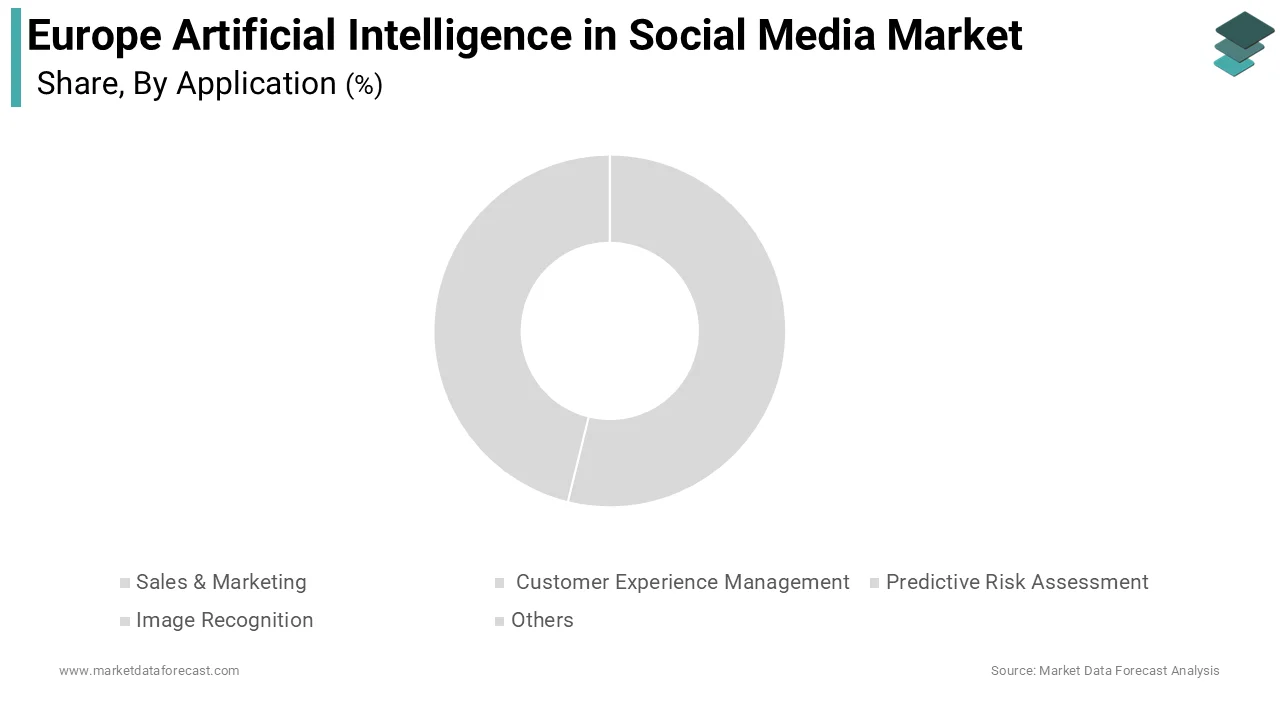
The customer experience management segment is estimated to register the fastest CAGR of 22.4% from 2026 to 2034. This quick surge of the segment is attributed to the rising consumer expectation for instant and personalized support across digital channels. Social media has evolved into a primary customer service interface where users expect immediate responses to inquiries and complaints. AI-powered chatbots and virtual assistants provide 24/7 support, handling routine queries efficiently and freeing up human agents for complex issues. The ability of AI to understand context and sentiment allows for more natural and effective interactions, improving customer satisfaction scores. Furthermore, the integration of AI with social listening tools enables companies to proactively address issues before they escalate, protecting brand reputation. The scalability of AI solutions allows businesses to handle spikes in volume during promotions or crises without compromising service quality. This operational efficiency, combined with enhanced user experience, drives rapid adoption of AI technologies in customer experience management. As competition intensifies, delivering superior service becomes a key differentiator, fueling the expansion of this segment. The primary factor for the rapid growth of the customer experience management segment is the integration of omnichannel support systems that provide a seamless user experience across multiple touchpoints. Consumers often switch between social media platforms, email, and live chat when seeking assistance, requiring businesses to maintain consistent context and history across these channels. AI facilitates this integration by synchronizing data in real time, allowing agents to access complete customer profiles regardless of the communication channel. AI algorithms analyze past interactions to predict customer needs and suggest relevant solutions, improving first contact resolution rates. This holistic view enables personalized recommendations and proactive support, enhancing overall satisfaction. AI helps manage this complexity by providing multilingual support and cultural adaptation, ensuring that international customers receive appropriate assistance. The ability to deliver consistent and high-quality service across all channels builds trust and loyalty, which are critical for long-term business success. Therefore, companies are investing heavily in AI-driven omnichannel platforms to meet evolving consumer expectations and maintain a competitive advantage in the European market.
By Technology Insights
The machine learning and deep learning segment led the Europe artificial intelligence in the social media market and captured a 55.3% share in 2025. This leading position of the segment is supported by the fundamental role these technologies play in processing and analyzing the massive volumes of unstructured data generated on social platforms. Machine learning algorithms identify patterns in user behavior preferences and interactions, enabling accurate predictions and recommendations. Deep learning models, particularly neural networks, are essential for complex tasks such as image and video recognition, natural language understanding, and sentiment analysis. These technologies power core social media features, including news feed algorithms, content moderation systems, and ad targeting engines. The ability of machine learning models to improve over time with more data makes them invaluable for optimizing platform performance and user engagement. Moreover, the versatility of these technologies allows them to be applied across various use cases from fraud detection to trend forecasting. This broad applicability ensures that machine learning and deep learning remain the foundational technologies driving innovation and value creation in the social media ecosystem. A major factor driving the dominance of the machine learning and deep learning segment is the enhanced capability for predictive analytics regarding user behavior and trend forecasting. Social media platforms generate immense amounts of data every second, which can be leveraged to anticipate future actions and preferences. Machine learning models analyze historical data to identify correlations and predict outcomes such as the likelihood of purchase churn risk or content virality. Deep learning algorithms excel at processing complex data types such as images and videos, enabling richer insights into user interests. For instance, computer vision models can identify products in user-generated content, facilitating social commerce opportunities. This agility is crucial in the fast-paced social media environment where trends can rise and fall within hours. The ability to forecast demand and optimize inventory based on social signals also benefits retail and supply chain operations. So, the strategic value of predictive insights drives sustained investment in machine learning and deep learning technologies, solidifying their position as the leading technology segment in the market.
The natural language processing segment is anticipated to witness the fastest CAGR of 24.1% during the forecast period due to the increasing need to understand and generate human language in diverse linguistic contexts across Europe. NLP technologies enable machines to interpret sentiment, intent, and emotion in text, speech, and video transcripts, facilitating more meaningful interactions between brands and consumers. The multilingual nature of the European market, with over 24 official languages, creates a strong demand for advanced translation and localization capabilities. NLP powers chatbots, voice assistants, and content generation tools that enhance user engagement and operational efficiency. The rise of generative AI further accelerates NLP adoption by enabling the creation of high-quality written content at scale. These technologies help businesses overcome language barriers and connect with customers on a deeper level. The ability to analyze sentiment in real time also supports crisis management and brand monitoring efforts. As social media conversations become more complex and nuanced, the demand for sophisticated NLP solutions will continue to surge, driving substantial market expansion. One of the major drivers of the rapid growth of the natural language processing segment is the advancement in multilingual sentiment analysis and contextual understanding capabilities. European social media users communicate in a wide variety of languages and dialects, requiring AI systems that can accurately interpret meaning across cultural boundaries. Modern NLP models utilize transformer architectures to capture context and nuance, enabling more accurate sentiment classification than previous rule-based systems. These technologies allow brands to detect subtle shifts in public opinion and identify emerging issues before they escalate. NLP also facilitates the detection of sarcasm, irony, and slang, which are common in social media discourse. This deeper understanding enables more effective community management and engagement strategies. Furthermore, the integration of NLP with other AI technologies, such as computer vision, creates multimodal models that can analyze text and images together, providing a comprehensive view of social media content. As these capabilities mature, they unlock new possibilities for automated content creation and personalized communication. Consequently, the strategic importance of language understanding in connecting with diverse European audiences fuels the rapid adoption of NLP technologies.
By Vertical Insights
The retail and e-commerce segment held the majority share of 32.8% of the Europe artificial intelligence in social media market in 2025. This supremacy of the segment is attributed to the intense competition in the online retail sector and the critical role social media plays in driving traffic and sales. AI technologies enable retailers to personalize shopping experiences, recommend products, and optimize advertising campaigns on social platforms. The integration of social commerce features such as shoppable posts and live streaming requires sophisticated AI to manage inventory pricing and customer interactions in real time. AI-driven recommendation engines analyze user behavior to suggest relevant products, increasing conversion rates and average order values. Furthermore, sentiment analysis helps retailers monitor brand reputation and respond to customer feedback promptly. The ability to track trends and predict demand allows retailers to optimize inventory levels and reduce waste. This operational efficiency, combined with enhanced customer experience, makes AI indispensable for modern retail operations. As consumers increasingly discover and purchase products through social media, the reliance on AI-driven tools will continue to grow, solidifying the retail segment’s market leadership. A key factor sustaining the dominance of the retail and e-commerce segment is the delivery of personalized shopping experiences and seamless integration of social commerce functionalities. Consumers expect tailored recommendations and easy purchasing options directly within social media apps. AI algorithms analyze browsing history, purchase patterns, and social interactions to create individualized product suggestions that resonate with user preferences. Social commerce platforms leverage computer vision to allow users to search for products using images found in posts, facilitating discovery and purchase. AI also powers virtual try-on features and augmented reality experiences that enhance confidence in online purchases. These interactive elements increase engagement and reduce return rates. Furthermore, AI-driven chatbots assist customers with sizing questions and order tracking, improving overall satisfaction. The seamless blend of entertainment and shopping created by AI technologies transforms social media into a powerful sales channel. As retailers compete for attention in a crowded digital landscape, the ability to deliver personalized and convenient shopping experiences becomes a key differentiator, driving continued investment in AI solutions.
The media and advertisement vertical segment is likely to experience the fastest CAGR of 23.8% over the forecast period, owing to the shifting consumption habits of audiences who increasingly consume news and entertainment through social media platforms. Media companies and advertisers rely on AI to curate content, optimize distribution, and measure campaign performance in real time. The demand for personalized news feeds and targeted advertising requires sophisticated algorithms that can process vast amounts of data quickly. AI enables dynamic content creation and A/B testing, allowing marketers to refine messages for maximum impact. The ability to identify influencers and measure their impact also drives investment in AI-driven analytics tools. Furthermore, the rise of short-form video content requires automated editing and captioning solutions to scale production. As media consumption becomes more fragmented and interactive, the need for intelligent tools to manage and monetize content will accelerate. This technological imperative ensures that the media and advertising vertical experiences sustained high growth rates, outpacing other industries. A key booster of the rapid growth of the media and advertisement vertical is the capability for real-time content optimization and advanced influencer marketing analytics. In the fast-paced world of social media, content relevance is fleeting, requiring brands to adapt quickly to changing trends. AI tools analyze engagement metrics in real time, allowing marketers to adjust headlines, images, and targeting parameters on the fly. Influencer marketing has become a cornerstone of social media strategy, but measuring return on investment remains challenging. AI-powered platforms evaluate influencer authenticity, audience quality, and engagement rate,s providing data-driven insights for partnership decisions. AI helps identify micro influencers who offer higher engagement rates and niche appeal. These tools also track sentiment and brand mentions across multiple platforms, providing a holistic view of campaign impact. The ability to quantify the value of social interactions and optimize content delivery enhances the effectiveness of marketing spend. Consequently, media companies and advertisers are increasingly adopting AI solutions to navigate the complex landscape of digital influence and content consumption.
REGIONAL ANALYSIS
Germany Artificial Intelligence In Social Media Market Analysis
Germany outperformed other countries in the Europe artificial intelligence and social media market and occupied a share of 21.5% in 2025. This position of the German market is driven by a robust industrial base and a strong emphasis on data privacy and regulatory compliance. German companies are increasingly adopting AI solutions to enhance customer engagement and streamline marketing operations while adhering to strict General Data Protection Regulation standards. The federal government has launched the AI Strategy of the German Federal Government, which promotes research and development in artificial intelligence applications, including social media analytics. According to the Federal Statistical Office, digital technologies are a major driver of national economic growth, with private and public sectors increasingly adopting online platforms to enhance professional networking and internal communication. The presence of major automotive and manufacturing industries drives demand for B2B social media marketing tools that leverage AI for lead generation and brand building. Germany’s high internet penetration rate and tech-savvy population create a fertile ground for social media innovation. Furthermore, the country hosts several leading technology hubs in Berlin and Munich, fostering collaboration between startups and established firms. The strong focus on ethical AI and transparency aligns with European values, ensuring sustainable market growth. As German businesses continue to digitize their operations, the adoption of AI-driven social media tools will intensify. This strategic combination of regulatory rigor and technological innovation ensures that Germany remains the dominant force in the European market.
United Kingdom Artificial Intelligence In Social Media Market Analysis
The United Kingdom followed closely behind in the Europe artificial intelligence in social media market and accounted for a 19.4% share in 2025. This expansion of the UK market is credited to its vibrant digital advertising sector and a highly developed social media landscape. London serves as a global hub for fintech and adtech companies, many of which are pioneering AI-driven solutions for social media marketing and analytics. The UK government has identified artificial intelligence as a key technology for economic growth and has invested in initiatives to support its development. According to the Department for Digital Culture, Media and Sport, the UK has one of the highest social media usage rates in Europe, with over 50 million active users. This large user base generates vast amounts of data that fuel AI algorithms for targeting and personalization. The presence of leading universities and research institutions fosters innovation in natural language processing and machine learning. Furthermore, the UK’s creative industries heavily rely on social media for promotion, driving demand for content creation and management tools. The post Brexit regulatory environment continues to align with European standards, ensuring cross-border compatibility for digital services. As UK businesses seek to expand the adoption of sophisticated AI tools, social media engagement will continue to rise. This dynamic ecosystem of innovation and creativity ensures that the UK remains a key contributor to the European market.
France Artificial Intelligence In Social Media Market Analysis
France plays a major role in European artificial intelligence in the social media market, owing to a strong cultural emphasis on language and content quality, which drives demand for advanced natural language processing solutions. French companies are increasingly leveraging AI to create localized content and engage with audiences in a culturally relevant manner. The French government has launched the France 2030 investment plan, which includes funding for digital technologies and artificial intelligence research. According to the French Ministry of Culture, the creative and media sectors are key drivers of the economy, with social media playing a central role in content distribution. The presence of major luxury and fashion brands in France creates a unique demand for AI-driven visual recognition and influencer marketing tools. These brands use AI to monitor brand sentiment and identify trending styles on social platforms. Furthermore, France has a strong startup ecosystem in Paris known as Station F, which supports the development of innovative AI applications. The country’s commitment to digital sovereignty encourages the development of homegrown AI technologies that comply with European regulations. As French businesses expand their digital presence, the adoption of AI solutions for social media management will grow. This focus on cultural relevance and technological independence ensures France’s significant role in the European market.
Italy Artificial Intelligence In Social Media Market Analysis
Italy expanded steadily in the Europe artificial intelligence in social media market due to a rapidly growing e-commerce sector and increasing social media penetration among small and medium-sized enterprises. Also, Italian businesses are adopting AI tools to enhance their online visibility and compete in the digital marketplace. The National Recovery and Resilience Plan allocates funds for digital transformation, encouraging companies to invest in advanced technologies. Data from the Italian National Institute of Statistics indicates that while social media remains a staple of daily life, the market has reached a state of maturity where users are becoming more selective about the platforms they engage with for brand interactions. The tourism and hospitality sectors heavily rely on social media for promotion, driving demand for AI-driven content creation and sentiment analysis tools. These industries use AI to manage reviews and engage with travelers in real time. Furthermore, Italy has a growing tech scene in Milan and Rome, fostering innovation in digital marketing solutions. The country’s rich cultural heritage provides ample content for social media campaigns, which AI helps to optimize and distribute. As Italian SMEs continue to digitize their operations, the demand for affordable and effective AI solutions will rise. This trend towards digital adoption ensures Italy’s continued growth in the European AI in social media market.
Spain Artificial Intelligence In Social Media Market Analysis
Spain is expected to showcase a promising CAGR in the Europe artificial intelligence in social media market over the forecast period, owing to high social media engagement rates and a vibrant youth demographic that drives trends and content creation. Spanish consumers are among the most active social media users in Europe, creating a fertile environment for AI-driven marketing and engagement tools. The Spanish government has implemented the Digital Spain 2025 agenda, which aims to boost digital skills and infrastructure supporting the adoption of new technologies. According to the National Statistics Institute of Spain, a high proportion of the population regularly accesses social media, providing a substantial foundation for targeted digital advertising and the growth of the influencer marketing sector. The tourism and retail sectors are key adopters of AI solutions for social media management, leveraging these tools to attract international visitors and customers. AI helps these industries personalize offers and manage reputations across multiple platforms. Furthermore, Spain has a growing startup ecosystem in Barcelona and Madrid, focusing on digital innovation. The country’s favorable climate for remote work also attracts international tech talent, contributing to the local AI landscape. As Spanish businesses continue to embrace digital transformation, the adoption of AI in social media will accelerate. This high level of user engagement and strategic government support ensures Spain’s prominent position in the European market.
COMPETITION OVERVIEW
The competition in the Europe artificial intelligence in social media market is intense and characterized by the presence of global tech giants alongside innovative regional startups. Major platforms like Meta and Alphabet dominate due to their vast data resources and advanced AI infrastructure, which enable superior targeting and personalization capabilities. However, emerging players are gaining traction by offering specialized AI solutions for niche markets such as influencer marketing analytics and automated content moderation. The market sees frequent innovation as companies strive to differentiate themselves through unique features like generative AI tools and enhanced privacy protections. Regulatory compliance with the General Data Protection Regulation and the Digital Services Act serves as a critical competitive factor requiring substantial investment in legal and technical frameworks. Companies that successfully balance innovation with compliance gain a strategic advantage. Collaboration with local entities helps international firms navigate cultural nuances and build trust with European users. The rapid pace of technological change means that competitive positions can shift quickly, necessitating continuous investment in research and development. This dynamic environment fosters a culture of innovation but also creates barriers to entry for smaller firms lacking sufficient resources. Strategic agility and customer centricity remain essential for sustaining long-term success in this highly competitive sector.
KEY MARKET PLAYERS
A few major players in the Europe artificial intelligence in the social media market include
- Meta Platforms Inc
- Alphabet Inc
- Microsoft Corporation
- IBM Corporation
- Amazon Web Services
- Adobe Inc
- Salesforce Inc
- Oracle Corporation
- Sprinklr Inc
- Hootsuite Inc
- Brandwatch
- Talkwalker
- Meltwater
- Buffer Inc
- Zoho Corporation
Top Strategies Used by the Key Market Participants
Key players in the Europe artificial intelligence in social media market primarily focus on strategic partnerships and collaborations to enhance their technological capabilities and expand market reach. Companies frequently partner with local tech firms and research institutions to develop AI solutions tailored to specific regional needs and regulatory requirements. Another major strategy involves significant investment in research and development to innovate new AI features such as generative content tools and advanced analytics platforms. Acquisitions of specialized AI startups allow established players to integrate cutting-edge technologies quickly and eliminate potential competitors. Market participants also emphasize compliance with European data protection laws by implementing privacy by design principles in their AI systems. This approach builds trust with users and regulators alike. Additionally, companies are expanding their cloud infrastructure to support the computational demands of AI applications. Marketing strategies highlight the efficiency and creativity benefits of AI tools to attract business clients. These multifaceted approaches enable key players to maintain competitive advantages and drive sustained growth in the evolving European social media landscape.
Leading Players in the Europe AI in Social Media Market
- Meta Platforms Inc remains a dominant force in the Europe artificial intelligence in social media market by leveraging its advanced AI infrastructure to enhance user engagement and advertising efficiency across Facebook and Instagram. The company heavily invests in generative AI tools that allow creators and businesses to produce diverse content variations automatically. Meta recently introduced AI Studi,o enabling brands to create custom AI characters for interactive customer experiences. Their commitment to responsible AI development includes robust content moderation systems that detect harmful material in multiple European languages. By integrating AI into its Reels algorithm, Meta improves content discovery and retention rates significantly. The company also focuses on privacy-preserving machine learning techniques to comply with strict European data regulations. These initiatives strengthen its position as a leader in social media innovation while addressing regulatory concerns. Meta’s continuous enhancement of its ad targeting capabilities through AI ensures high return on investment for advertisers, maintaining its competitive edge in the dynamic European digital landscape.
- Alphabet Inc significantly influences European artificial intelligence in the social media market through its ownership of YouTube and integration of AI across its digital ecosystem. The company utilizes sophisticated machine learning algorithms to optimize video recommendations and enhance creator tools such as automated captioning and editing features. Alphabet recently launched Dream Screen for YouTube Shorts, allowing users to generate video backgrounds using text prompts, which boosts creative possibilities. Its AI-driven content identification system effectively manages copyright and community guidelines enforcement at scale. Google Cloud provides essential AI infrastructure for enterprises analyzing social sentiment and trends across platforms. Alphabet’s focus on ethical AI principles aligns with European regulatory expectations, fostering trust among users and policymakers. By continuously refining its natural language processing capabilities, Alphabet improves search relevance and ad personalization. These strategic advancements enable Alphabet to maintain a strong presence in the European market by delivering superior user experiences and powerful analytical tools for businesses seeking to leverage social media data effectively.
- TikTok Ltd has rapidly become a key player in the Europe artificial intelligence in social media market by utilizing its proprietary recommendation engine to drive unprecedented user engagement. The platform’s AI algorithms analyze user behavior patterns to deliver highly personalized content feeds, keeping users immersed for extended periods. TikTok recently expanded its AI-powered creative tools, including auto captions and script generators, to support content creators in various European languages. The company invests heavily in AI-driven safety measures to detect and remove inappropriate content proactively, ensuring a secure environment for users. TikTok’s collaboration with local artists and brands enhances cultural relevance and drives viral trends across the region. Its innovative approach to short-form video commerce integrates AI for product recognition and seamless shopping experiences. By prioritizing algorithmic transparency and user control, TikTok addresses regulatory concerns while maintaining its growth trajectory. These efforts solidify its position as a major influencer in the European social media landscape, appealing to younger demographics and forward-thinking marketers seeking innovative engagement strategies.
MARKET SEGMENTATION
This research report on the European artificial intelligence in social media market has been segmented and sub-segmented based on application, technology, vertical & region.
By Application
- Sales & Marketing
- Customer Experience Management
- Predictive Risk Assessment
- Image Recognition
- Others
By Technology
- Machine Learning & Deep Learning
- Natural Language Processing (NLP)
By Vertical
- BFSI
- IT & Telecom
- Retail & E-Commerce
- Media & Advertisement
- Education
- Others
By Region
- UK
- France
- Spain
- Germany
- Italy
- Russia
- Sweden
- Denmark
- Switzerland
- Netherlands
- Turkey
- Czech Republic
- Rest of Europe


