
Agadir – Artificial intelligence in the Middle East and Africa is witnessing an increasingly remarkable transformation, and Egypt is at the center of this change with the launch of Ai Everything Middle East & Africa (MEA) in Cairo, which brings together government officials, global technology companies, investors, and startups to address how AI systems are built, hosted, managed, and deployed at scale.
The Cairo gathering will feature a range of discussions, workshops and conferences covering AI in general, with a focus on data centres, cloud infrastructure and energy capacity.
Beyond digital services to sovereign AI infrastructure
Egypt is entering a period of establishing a large technical talent base, working with AI services, cloud operations, and applied research, to advance the development of AI infrastructure and platforms.
This direction is reinforced by Egypt’s Second National AI Strategy (2025-2030). This strategy treats AI as a sovereign capability rather than just a technology trend, prioritizing access to computing resources, data governance frameworks, and sector-level AI deployment.
According to Ai Everything MEA organizers, the Cairo event is designed to operationalize these priorities by bringing policy, investment and infrastructure stakeholders together in one place.
AI-generated models require large-scale computing power and depend on foreign cloud and data hosting environments. Meanwhile, Egypt’s geographic location and energy profile make it an increasingly attractive location for regional data centers serving Africa, the Middle East and parts of Europe.
This appeal has led to increased interest from global AI and infrastructure companies seeking a compliant hosting environment, skilled workforce, and proximity to emerging markets.
The Cairo event provides a platform for these infrastructure considerations to evolve into investment discussions in new partnerships.
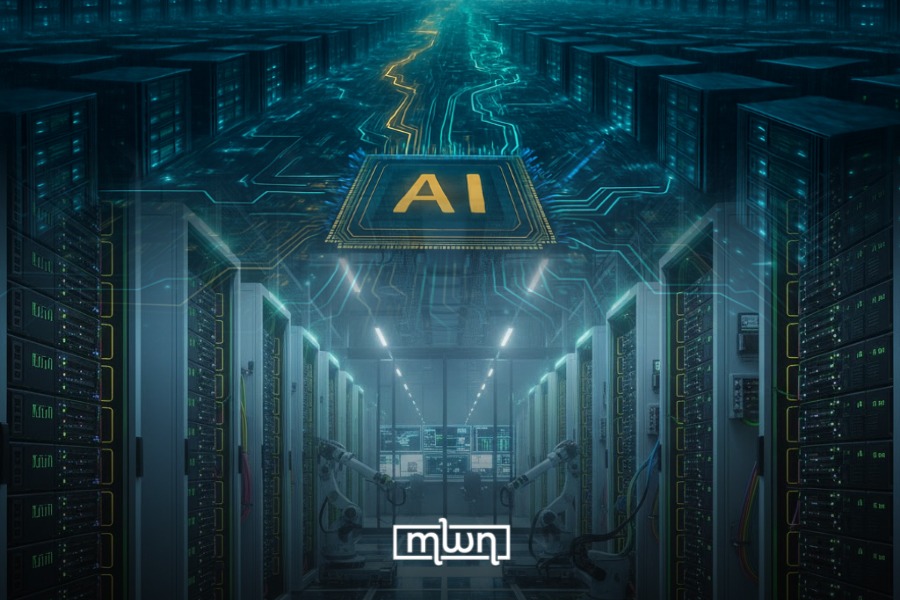
AI data center at the core
Generative AI and large-scale language models also require specialized infrastructure that can handle very heavy workloads.
A single AI server rack can consume 40 to 250 kW of power, several times more than a standard data center. This gives you an idea of the scale and intensity of resources needed to power modern AI.
As a result, the AI industry is driving rapid global development. expansion of data center infrastructure. Over the next decade, AI-centric data centers are expected to grow significantly with new facilities designed for high-density computing, advanced cooling systems, and renewable energy integration to efficiently manage power.
modern AI data center Liquid cooling, modular design, and edge computing setups are often used. These innovations help effectively distribute workloads, manage heat, and reduce latency, allowing AI systems to run continuously without overheating or wasting energy.
The demand for AI computing power is also driving the construction of large data center campuses around the world. These centers are being built to support local and international AI operations, making regions with robust infrastructure increasingly attractive to investors and technology companies.
Data centers are becoming the foundation for Africa’s vision of digital transformation. this field cherished It is expected to reach approximately $3.49 billion in 2024 and grow to approximately $6.81 billion by 2030, with an estimated annual growth rate of approximately 11.8%.
These centers enable local data storage and processing, reducing dependence on offshore servers, improving performance, and supporting services such as cloud computing, mobile finance, and AI systems.
Applied AI and infrastructure-driven growth
Egypt’s AI agenda, reflected in the event’s program, presents the potential for applied AI in fields such as finance, medicine, logistics, manufacturing, agriculture, and government, as opposed to the usual AI domination by consumer tools.
The rise of startups working to further develop Arabic models, computer vision, and enterprise automation is an example of this AI in action. Arabic remains underrepresented in global AI systems, and locally trained models require local data storage, computing power, and governance structures. However, investors are increasingly turning their attention to companies that address infrastructure and deployment challenges.


