

The latest update to Salesforce's Agentforce Commerce (formerly Commerce Cloud) introduces AI-powered communication, personalization, and purchasing tools across a number of shopping channels, including email, SMS text messaging, and WhatsApp.
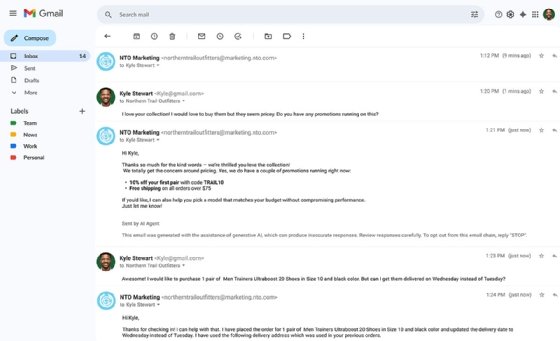
The idea, according to Salesforce, is that most marketing communications, including texts, emails, and messaging app messages, are currently one-way, with “do not reply” verbiage and email addresses depending on the channel. To continue shopping, customers click a link to claim an offer or discount code. New features in Salesforce allow customers to respond to these messages, allowing AI agents to manage the conversation, create personalized offers, upsell when opportunities arise, and complete sales by accepting payments and facilitating orders.
Conceptually, Salesforce's two-way email, two-way SMS, and two-way WhatsApp features have the potential to turn your marketing efforts into two-way conversations. In fact, these tools can help marketers manage the 1,000 or even 10,000 responses they receive after sending a mass email to hundreds of thousands of customers, says Constellation Research analyst Liz Miller.
According to her experience as a marketer, a small percentage of customers usually respond to e-mail offers, for example coupons. Many of those people will just say, “Thank you!” However, some may wish to negotiate terms of purchase, such as expanding the range of items covered. Some people get confused because they receive multiple offers and don't know how or whether they can be combined. Still others wanted more information before using the coupon.
The problem is that when a million emails are sent out, a few percentage responses add up to a lot of individual requests for marketers and customer service teams to respond to. sales force bidirectional Automation provides a way to feed these conversations to an AI agent and potentially capture some sales in the process.
“This solves the human resource problem of sorting through 6,000 email responses and finding the five emails that are important,” Miller said. “If I'm a marketer, you know what's the least important thing in my day? Sorting through 6,000 emails. I have other things to do. I have to drive growth. I have to generate business.”
AI search and personalization functions also available
We're also developing an AI-powered Agentforce Commerce tool that personalizes your customer's buying experience across mobile and web channels.
- Agentforce Commerce Guided Shopping includes conversation analysis to determine agent actions so you can offer promotions and other effective services to close sales.
- Contextual search provides agents and customers with more targeted results based on ongoing customer interactions.
- Marketing and Commerce Connected Journeys incorporates customer data into triggered events such as email sign-ups and re-engagement after cart abandonment.
Miller said this batch of Agentforce Commerce features may look like an incremental update on the surface. However, when used effectively, they can help most retailers rethink their processes and create greater alignment between marketing and commerce teams.
“They're trying to impose new strategies on marketers themselves,” Miller said. “We need to create an intentional strategy to deploy content within these spaces in a very different way. I don't think we're ready for that.”
Agentic AI is evolving rapidly and requires users to stop and think about how they are rewriting proven processes.
“Marketers are still being bombarded by the potential of AI and Agentforce and how we can deploy all these agents,” Miller said. “Just pause for five seconds, step back, [consider] In a world of two-way email conversations, guided searches, and changing context-sensitive websites that direct customers to websites, how do you ensure that experience happens every time?”
Some Agentforce Commerce features are available starting today as part of the Salesforce Winter '26 release, and others will be available in February. Contextual search is in open beta.
Nitin Mangtani, senior vice president and general manager of Agentforce Commerce, said looking at holiday shopping data collected from Salesforce customers, consumers are taking the time to look at more content about what they're buying before making a purchase. In Salesforce's view, tools like guided search and AI personalization can help retailers make sales at critical pre-purchase moments.
“During the 2025 holiday season, shoppers spent 35% more time on brand sites before making a purchase compared to the previous year, and traffic to AI search channels like ChatGPT doubled,” Mangutani said. “This shows that consumers are becoming more discerning. Their need for more product information and reassurance leading up to their purchase is increasing, making conversational commerce a key means of conversion.”
Salesforce released and previewed generative AI tools for retail at the National Retail Federation's NRF '26: Retail's Big Show.
Don Fluckinger is a senior news writer at Informa TechTarget. He is responsible for customer experience, digital experience management, and end-user computing. Any tips? send him an email.


