

About 70 seed potato growers gathered to witness a demonstration of an autonomous winnowing robot designed to identify potato plants infected with the virus. The event highlighted ongoing efforts to automate one of the most labor-intensive tasks in seed potato production, with three Dutch organizations developing robotic solutions for this sector: H2L in Delft, Croptimal in Mensingewör and Begniek in Emerold. Their efforts reflect the Netherlands’ strong reputation for innovation in potato breeding and cultivation.
The H2L robot moved autonomously through the potato rows, scanning the plants for visual symptoms of viral infection. During the demonstration, the developers said the robot’s disease recognition ability is currently comparable to that of a novice medical examiner. Although further improvements are needed to match the accuracy of experienced professionals, this system shows the potential of artificial intelligence and machine vision to support crop inspection.
If plants infected with the virus are left untreated, the quality of the seed potatoes will deteriorate and the disease may spread throughout the field. As a result, growers regularly inspect fields and remove infected plants. This is a process known as loosing, which requires skilled labor and multiple operations during the growing season. Automating disease detection can help producers improve consistency while reducing the time required for on-site testing.
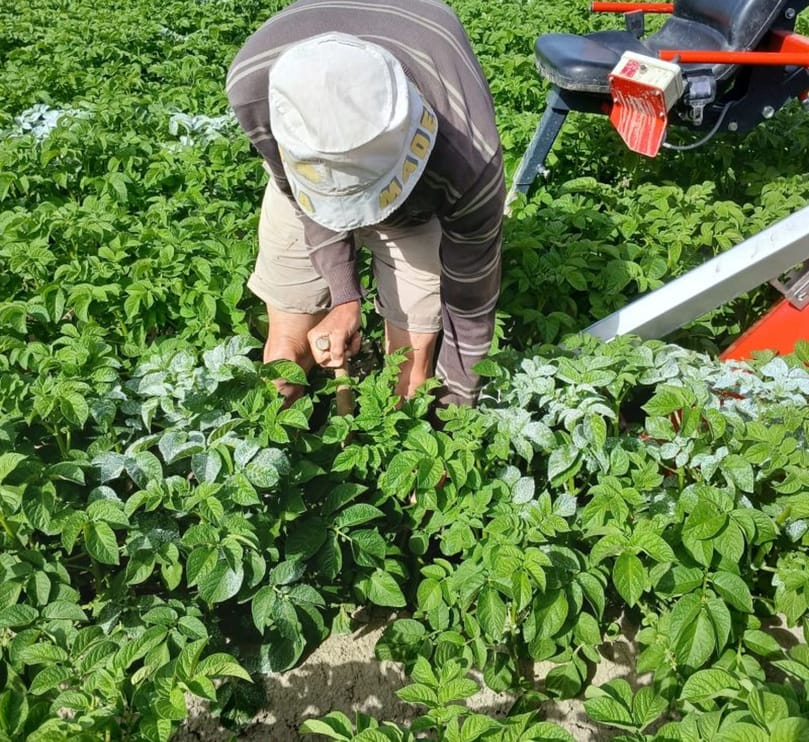
Field workers manually removing virus-infected potatoes after robotic detection and marking, demonstrating the integration of AI technology and traditional loosing methods.
Marking plants for efficient removal
Now, rather than removing the infected plants themselves, the robots use white lime to mark the diseased plants and the plants before and after them. Markings make it easier to identify infected plants and allow workers to quickly locate and remove infected plants during manual ruzing. This approach combines automatic detection with human verification, reducing the risk of missing diseased plants.
Focus on fully automatic lugging in the future
Plant removal remains a manual process, but developers are exploring the possibility of equipping future versions of the robot with automatic grippers that can remove infected plants directly on site. If successfully implemented, these technologies could further reduce labor demands, improve disease management, and help seed potato producers maintain high crop quality, where labor shortages are a challenge in the agricultural sector.
The demonstration showed that although autonomous potato sorting technology is still under development, significant progress has been made. As artificial intelligence, robotics, and precision agriculture continue to advance, autonomous field reconnaissance is likely to become an increasingly important tool in seed potato production in the coming years.


