
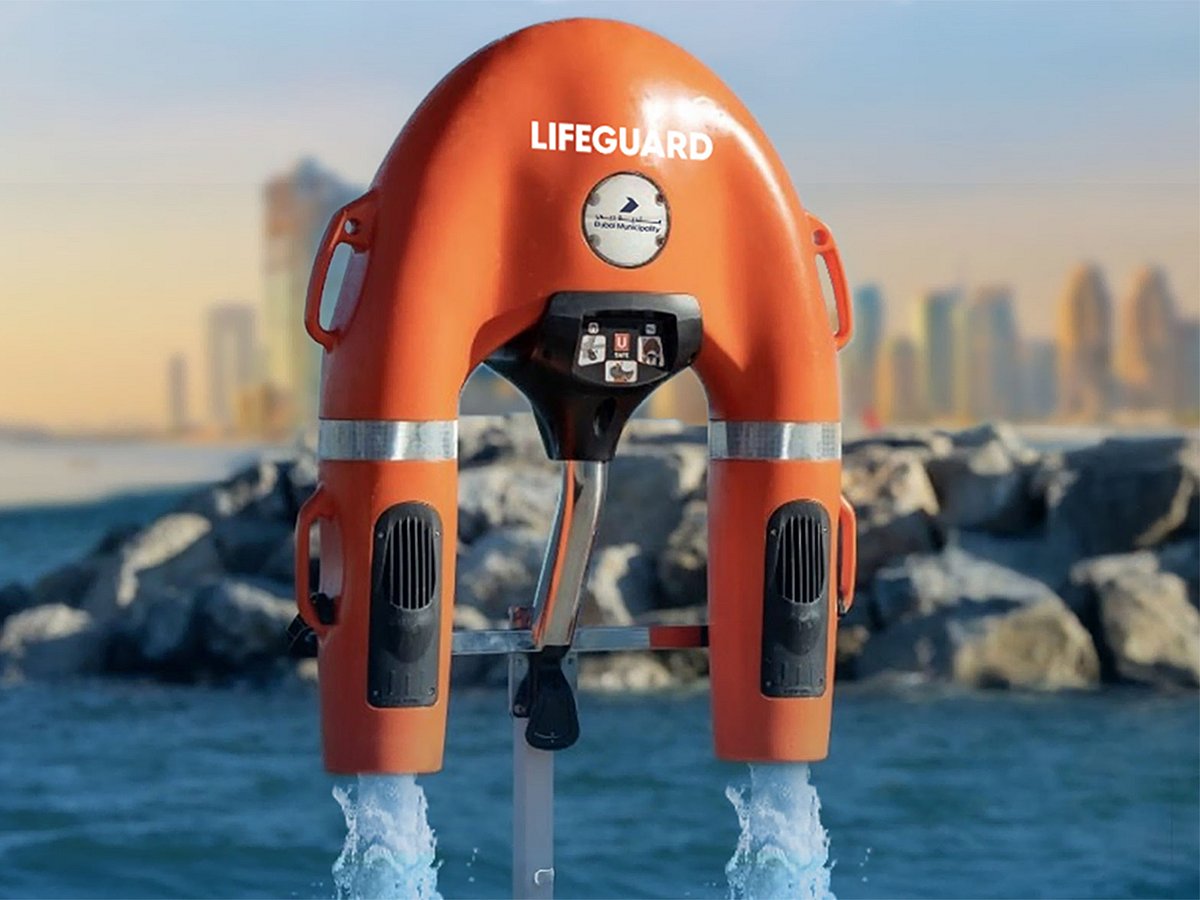
A robot that reaches swimmers faster
At the heart of this system is an underwater rescue robot, the first of its kind in the Middle East. This remote-controlled, self-propelled device can reach swimmers in distress up to five times faster than traditional lifeguards. Operating up to 1 kilometer from shore and capable of towing up to 500 kilograms, lifeguards can respond quickly while reducing physical risk in difficult sea conditions.
The system is complemented by water rescue drones, often described as “flying lifebuoys.” Drones can quickly deploy on water, land on the surface, and provide instant buoyancy to people at risk. Equipped with live feed cameras, it provides lifeguards with real-time footage for faster incident detection, better risk assessment, and smoother rescue coordination.
An integrated approach to safety
Underwater robots and drones work together within an integrated framework supported by trained lifeguards, continuous monitoring, and centralized control. Combining air and water-based technologies will enable Dubai to quickly respond across a wide coastal area, especially in complex or emergency situations, while establishing an international benchmark in beach safety.

Balaram has over 20 years of experience in the media industry, combining keen editorial judgment with a deep understanding of the dynamics of digital news. A core member of the gulfnews.com digital team since 2004, he has played a key role in shaping its identity. Passionate about current affairs, politics, cricket and entertainment, Balram is obsessed with topics that spark conversation. His strength lies in adapting to the rapidly changing news environment and curating engaging content that resonates with readers.


