machine learning The process of using computers to detect patterns in large data sets and then making predictions based on what the computer learns from those patterns. This makes machine learning a specific and narrow type of artificial intelligence. Full artificial intelligence includes machines that can perform abilities associated with human and intelligent animal minds, such as perception, learning, and problem solving.
All machine learning is algorithm-based. Generally, an algorithm is a specific set of instructions that a computer uses to solve a problem. In machine learning, algorithms are rules for how to analyze data using statistics. Machine learning systems use these rules to identify relationships between data inputs and desired outputs, usually predictions. First, scientists feed a machine learning system a set of training data. The system applies algorithms to this data to train itself how to analyze similar inputs it receives in the future.
One area where machine learning shows great promise is cancer detection in computed tomography (CT) imaging. First, researchers collect as many CT images as possible to use as training data. Some of these images show tissue with cancer cells, while others show healthy tissue. Researchers also collect information about what to look for in images to identify cancer. For example, this could include what the borders of a cancerous tumor look like. Next, create rules for the relationship between the data in the image and what the doctor knows about identifying cancer. These rules and training data are then fed to the machine learning system. The system uses rules and training data to teach itself how to recognize cancerous tissue. Finally, the system acquires a CT image of the new patient. The system uses what it learns to determine which images show signs of cancer faster than humans can. Doctors can use the system’s predictions to help make decisions about whether a patient has cancer and how to treat it.
Depending on how the training data is set up, machine learning systems are divided into two broad types: supervised and unsupervised. training data a label is attachedthe system is supervised. Labeled data tells the system what the data is. For example, CT images can be labeled to show cancerous lesions or tumors next to healthy tissue. Essentially, this means that machine learning systems learn by example. Given the large amount of data required to train the dataset, labeling the data can be very time consuming.
If the training data is unlabeled, the machine learning system will not monitored. In the cancer scan example, an unsupervised machine learning system is given a huge number of CT scans and information about tumor types to learn what to look for to recognize cancer. This eliminates the need for humans to label the data used in the training process. The disadvantage of unsupervised learning is that there are no explicit labels, so the results may not be as accurate.
Some machine learning systems can improve their capabilities based on the feedback they receive about their predictions. these are called reinforcement Machine learning system. For example, the results of a doctor’s other tests regarding whether a patient has cancer can be communicated to the system. The system can then fine-tune its algorithms to produce more accurate predictions in the future.
DOE Science Office: Contributing to Machine Learning
The Department of Energy’s Office of Science supports machine learning research through the Advanced Scientific Computing Research (ASCR) program. ASCR has a portfolio of data management, data analytics, computer technology, and related research that contributes to machine learning and artificial intelligence. As part of this portfolio, DOE owns some of the world’s most powerful supercomputers.
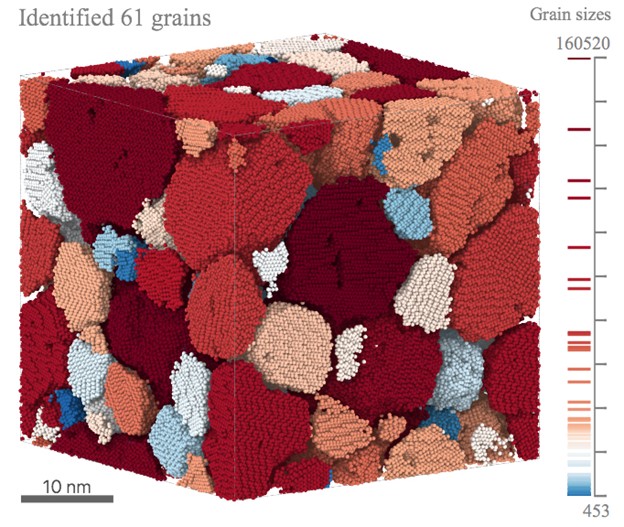
The DOE Office of Science as a whole is committed to using machine learning to support scientific research. Science relies on big data, and Office of Science user facilities such as particle accelerators and X-ray light sources generate large amounts of data. Researchers are using machine learning to identify patterns and designs in data from these facilities that are difficult or impossible for humans to detect, hundreds to thousands of times faster than traditional data analysis techniques.
simple facts
- DOE’s newest supercomputer (Summit at Oak Ridge National Laboratory) has an architecture particularly suited for artificial intelligence applications.
- Machine learning allows scientists to analyze large amounts of data that were previously inaccessible.
- Researchers funded by the DOE have used machine learning to develop new cancer screens, better understand the properties of water, and autonomously drive experiments.
- Physics-based machine learning uses deep neural networks that can be trained to incorporate specific physical laws to solve supervised learning tasks and scientific problems.
- Machine learning algorithms are not a silver bullet. Machine learning system development is susceptible to human error and bias and, like software engineering, requires careful design.
resource
Scientific terminology can be confusing. DOE explains We explain basic science keywords and concepts in an easy-to-understand manner. We also discuss how these concepts apply to the work that the Department of Energy’s Office of Science conducts to help the United States excel in research across scientific disciplines.