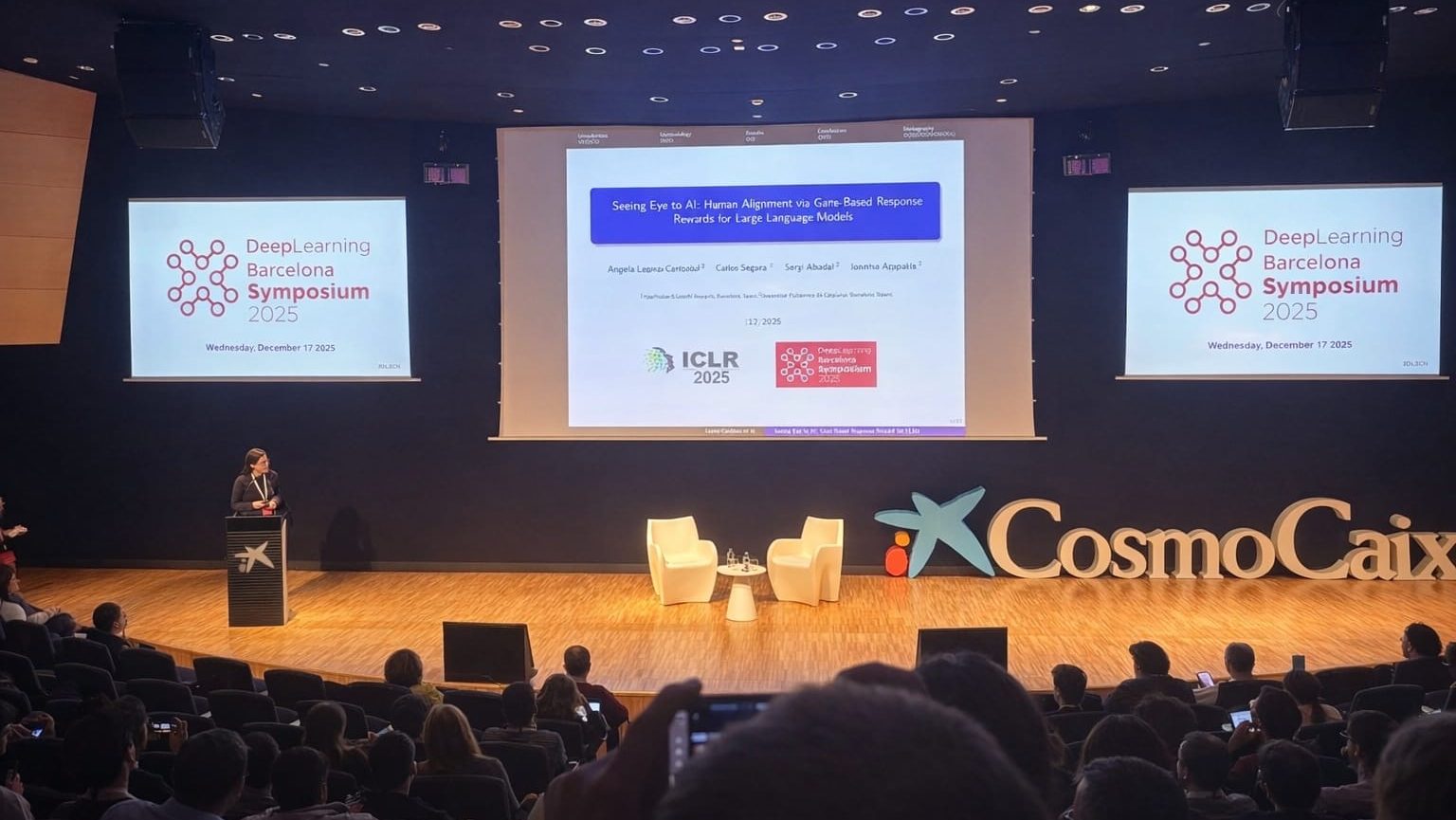
We were recently lucky enough to attend the 7th edition. Deep Learning Barcelona Symposium (DLBCN 2025)Held at Cosmo Caixa Science Museum.
DLBCN has a very clear (and very necessary) purpose. Raise the profile of deep learning research conducted by scientists with Barcelona connections; for those who currently work here or have passed through this city at some point in their career, and at the same time to strengthen Barcelona’s role as the AI hub of the Mediterranean. In 2025, the symposium was also integrated. ELLIS PRe-NeurIPS Fest This will connect local communities with the European ecosystem of machine learning excellence for the first time.
A program designed to foster dialogue among deep learning researchers
One of the things I liked most about this edition is that the program is designed to maximize interaction. There will be 1 keynote speech, 6 invited talks, 9 spotlights, and 99 posters. In fact, a new format was promoted in 2025. Those selected as Spotlight + Posters first presented for 5 minutes in an oral session and then defended their work in poster format. And the response from the community was overwhelming. More than 345 people attended the free event that day, thanks to our sponsors. This really helped make access truly inclusive.
Deep learning with impact: The value of dialogue between academia and industry
DLBCN is special because people from multiple disciplines and multiple “houses” such as universities, research centers, and industrial institutes come together without much ceremony. Organizations and programs saw the participation of relevant profiles and teams. Amazon, apple, Sony AI, AstraZenecaand keynote speech Nvidia. Invited sessions also include: Google Deep Mind and metaalong with other academic and scientific institutions.
This balance was also evident in the hallways. The conversation begins with methodological questions and continues with ethical concerns (there was a discussion session). AI governance and EU AI law) and finally, how to translate all this into a useful, evaluable, and accountable system.
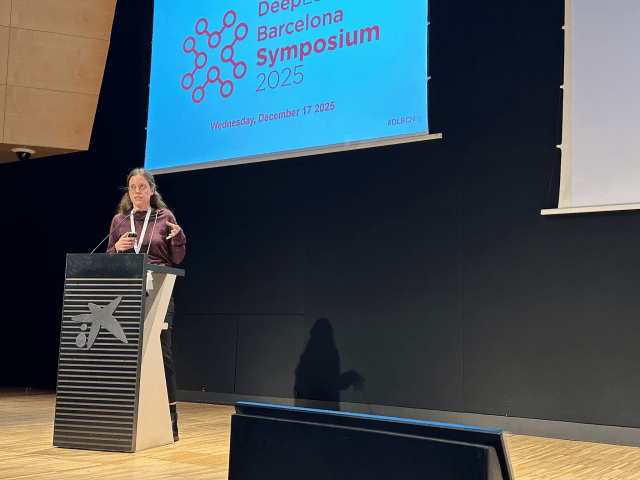
Telefonica Innovación Digital’s contribution to DLBCN 2025
The Telefonica Digital Innovation team arrived with a particularly strong presence. Announced 5 papersone of them too spotlight The format focuses on two axes that are very important to us. (1) How to match the model with real human signals and (2) how to better understand the diversity of people when interacting with intelligent systems;
The results we shared were linked to the following papers:
- OASST-ETC dataset: Alignment signal from eye-tracking analysis of LLM responses (PACMHCI, ACM ETRA 2025)
- Consistency of brain and language models: Insights into the Platonic hypothesis and the benefits of the middle class. (JMLR/UniReps 2025)
- Seeing Eye to AI: Human conditioning with gaze-based response rewards for large-scale language models (ICLR 2025) – also presented as. spotlight
- Beyond clicks: Eye-tracking insights into user responses to different recommendation types (RecSys 2025)
- Beyond one-size-fits-all: A study of neural and behavioral variation across different recommendation categories. (ICTIR 2025)
Besides the title, what was valuable was the feedback. Tough questions, practical suggestions, and most of all, confirmation that there is a growing community interested in person-centric metrics and signals, not just benchmarks.
Looking to 2026
None of this happens without collaboration. We would like to thank the Telefonica Scientific Research team for promoting research that combines scientific ambition and methodological consideration, and for generous discussions.

We close out 2025 with renewed energy and new partnerships. If there’s one thing DLBCN makes clear, it’s that when communities come together around lecture halls and posters, progress naturally accelerates.
See you there DLBCN 2026.